

 Image 1 of 1
What It Is
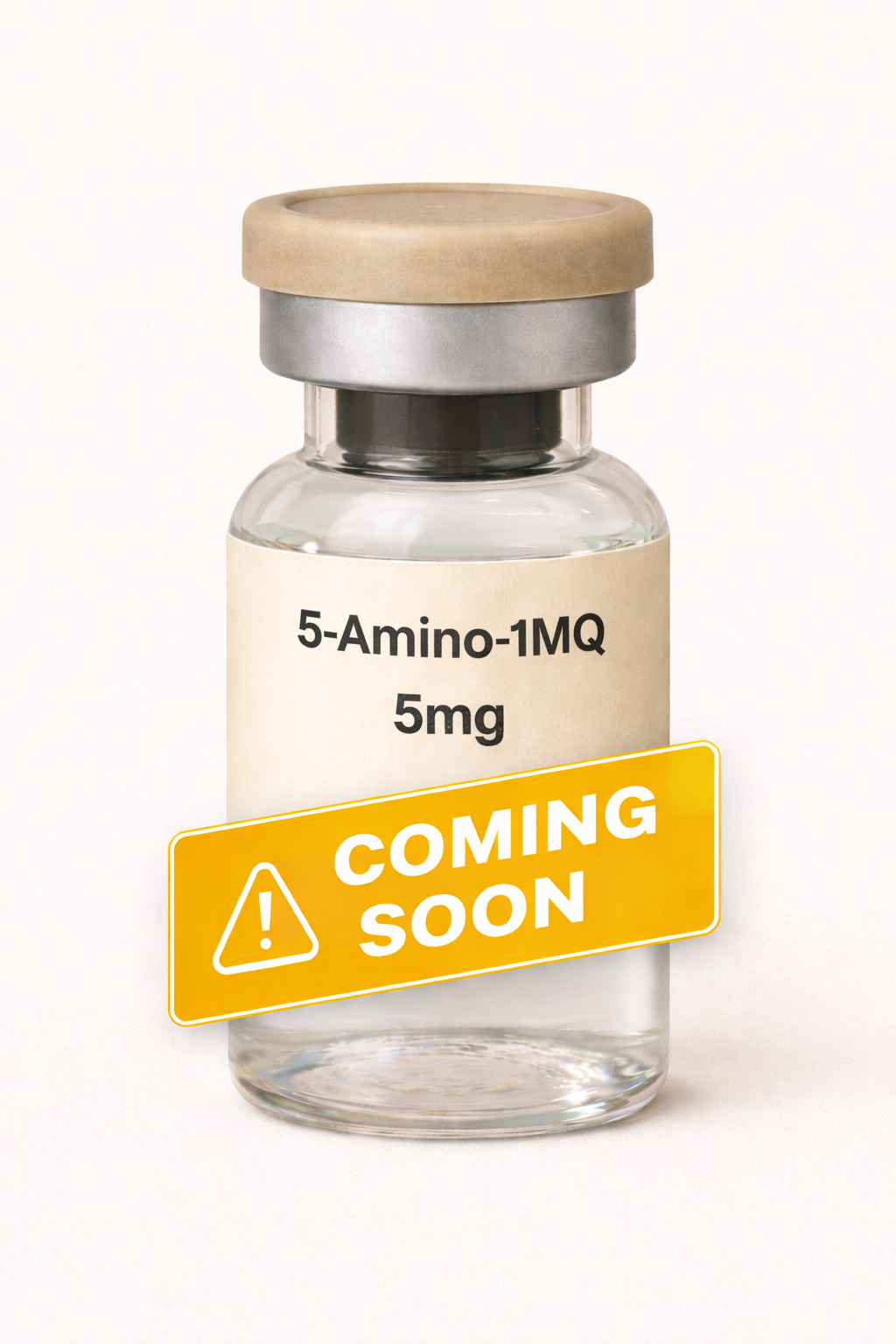
5-Amino-1MQ is a small molecule compound that blocks an enzyme called NNMT (nicotinamide N-methyltransferase). This enzyme plays a central role in how your body stores and burns fat. When NNMT activity is high, your metabolism shifts toward fat storage. When you inhibit NNMT, the opposite happens: your body becomes better at burning fat for fuel.
Unlike most compounds in this series, 5-Amino-1MQ is not a peptide. It is a small molecule, which means it has different properties. Most notably, it has poor oral bioavailability, so it needs to be injected subcutaneously to work effectively.
The compound was developed by researchers at the University of Texas Medical Branch who were looking for new ways to treat obesity and metabolic dysfunction. In animal studies, mice treated with 5-Amino-1MQ lost significant body fat without any reduction in food intake. The fat loss came entirely from increased energy expenditure at the cellular level. This is a fundamentally different mechanism than GLP-1 drugs like semaglutide, which work primarily by suppressing appetite.
5-Amino-1MQ is a research compound that has not been approved by the FDA. Human clinical trial data is limited, though the preclinical evidence is promising.
How It Works
NNMT is an enzyme found in your fat cells, liver, and muscle tissue. Its job is to methylate nicotinamide (a form of vitamin B3), which consumes a molecule called SAM (S-adenosylmethionine) in the process. This matters because when NNMT is overactive, it drains two critical cellular resources: NAD+ and SAM.
NAD+ is essential for mitochondrial energy production. When NAD+ levels are high, your cells produce energy efficiently and burn fat readily. When NAD+ levels drop, your metabolism slows down.
SAM is the universal methyl donor in your body. It is required for hundreds of biochemical reactions including gene expression, neurotransmitter synthesis, and cellular repair.
In obese individuals, NNMT expression in fat tissue is significantly elevated. This creates a metabolic environment that favors fat storage over fat burning.
When you inhibit NNMT with 5-Amino-1MQ:
• NAD+ levels increase because less nicotinamide gets wasted
• SAM levels increase because less gets consumed by NNMT
• SIRT1 (a longevity protein) gets activated due to higher NAD+
• Fat cells shrink and lipogenesis (new fat creation) decreases
• Energy expenditure increases without changes to appetite or food intake
The key point is that 5-Amino-1MQ does not make you eat less. It makes your cells burn more energy. This is why researchers describe it as increasing basal metabolic rate rather than suppressing appetite.
Benefits
Fat Loss Without Appetite Suppression
The primary benefit is fat reduction through increased cellular energy expenditure. In the Neelakantan et al. study, mice on a high fat diet treated with 5-Amino-1MQ showed approximately 35% reduction in white adipose tissue mass compared to untreated controls. Importantly, food intake was unchanged. The fat loss came purely from metabolic changes.
Preserved Muscle Mass
Unlike caloric restriction alone, NNMT inhibition appears to preserve lean tissue while reducing fat. The increased NAD+ and SIRT1 activation support protein retention and reduce muscle breakdown during fat loss phases.
Improved Insulin Sensitivity
Animal studies show improved glucose tolerance and insulin sensitivity with NNMT inhibition. This makes sense given the relationship between excess fat tissue and insulin resistance.
Potential Muscle Regeneration Support
A 2019 study by the same research group found that 5-Amino-1MQ activated senescent (dormant) muscle stem cells in aged mice and improved the regenerative capacity of aged skeletal muscle. This suggests potential applications beyond fat loss.
Liver Health
The 2024 Babula et al. study showed that 5-Amino-1MQ treatment improved liver pathology markers in obese mice, suggesting benefits for fatty liver conditions that often accompany obesity.
What the Science Shows
5-Amino-1MQ has solid preclinical data but limited human evidence. Here are the key studies:
Neelakantan et al. (2017), Biochemical Pharmacology
This foundational study validated 5-Amino-1MQ as an effective NNMT inhibitor. Researchers demonstrated that the compound:
• Reduced intracellular 1-MNA (the waste product of NNMT activity)
• Increased intracellular NAD+ and SAM levels
• Suppressed lipogenesis in adipocytes (fat cells)
• Reduced body weight, white adipose mass, and adipocyte size in diet-induced obese mice
• Did not affect food intake or produce observable adverse effects
The mice received 20 mg/kg daily via subcutaneous injection.
Dimet-Wiley et al. (2022), Scientific Reports
This study combined 5-Amino-1MQ treatment with a diet switch from high fat to low fat in obese mice. The combination produced dramatic results: body weight and fat mass normalized to levels indistinguishable from mice that had never been obese. Diet switch alone was unable to achieve this. The study also found that 5-Amino-1MQ treatment altered the gut microbiome in beneficial ways.
Neelakantan et al. (2019), Biochemical Pharmacology
Researchers investigated effects on aged skeletal muscle. They found that 5-Amino-1MQ activated dormant muscle stem cells and improved the regenerative capacity of aged muscle tissue. Grip strength improved in aged mice when treatment was combined with exercise.
Babula et al. (2024), Diabetes, Obesity and Metabolism
The most recent study examined pharmacokinetics and metabolic effects. Key findings:
• 5-Amino-1MQ dose-dependently limited body weight and fat mass gains
• Improved oral glucose tolerance and insulin sensitivity
• Suppressed hyperinsulinemia
• Improved liver pathology markers
• Subcutaneous bioavailability was approximately 30%
• Oral bioavailability was poor (compound requires injection)
Dosing Protocol
5-Amino-1MQ dosing in humans is not established through clinical trials. The protocols below are extrapolated from animal research and community experience.
Understanding the Dose Context
The animal studies used 20 mg/kg daily via subcutaneous injection. Direct translation to humans is complicated because metabolic scaling between species is not linear. However, typical human protocols use much lower absolute doses, accounting for differences in body size and metabolism.
Why Injection Is Required
5-Amino-1MQ has poor oral bioavailability. The Babula et al. (2024) study confirmed that subcutaneous injection provides approximately 30% bioavailability, while oral administration results in minimal absorption. If you take it by mouth, most of it will not reach your bloodstream.
Health Optimization Protocol
For general metabolic support and body composition improvement:
• Dose: 5 to 10 mg daily
• Frequency: Once daily, subcutaneous injection
• Timing: Morning preferred (aligns with natural metabolic rhythm)
• Cycle: 4 to 6 weeks on, 2 to 4 weeks off
• Rationale: Lower doses for ongoing metabolic enhancement without aggressive intervention
Aggressive Fat Loss Protocol
For more significant metabolic intervention:
• Dose: 25 to 50 mg daily
• Frequency: Once daily or split into two doses (morning and afternoon)
• Timing: Morning, or morning and early afternoon
• Cycle: 4 to 6 weeks on, 2 to 4 weeks off
• Rationale: Higher doses based on extrapolation from animal data where robust fat loss was observed
Why Cycling Matters
The off period allows your body's enzymatic systems to reset. Continuous NNMT inhibition may lead to adaptive responses that reduce effectiveness over time. Cycling helps maintain responsiveness.
Important Notes
• Start at the lower end of the dose range to assess tolerance
• Some users report mild jitteriness or increased energy, especially at higher doses
• The compound works best when paired with a caloric deficit and exercise
• Do not expect appetite suppression; this compound increases energy expenditure, not satiety
Draw Volumes by Vial Size
Zesty Rat Research offers 5-Amino-1MQ in 5 mg and 50 mg sizes.
5 mg Vial (1 mL reconstitution = 5 mg/mL)
Dose Volume Units on Syringe
──────────────────────────────────────────
2.5 mg 0.50 mL 50 units
5 mg 1.00 mL 100 units (full syringe)
Vial duration at 5 mg daily: 1 day
50 mg Vial (2 mL reconstitution = 25 mg/mL)
Dose Volume Units on Syringe
──────────────────────────────────────────
5 mg 0.20 mL 20 units
10 mg 0.40 mL 40 units
25 mg 1.00 mL 100 units
50 mg 2.00 mL Requires two draws
Vial duration at 10 mg daily: 5 days
Vial duration at 25 mg daily: 2 days
50 mg Vial (4 mL reconstitution = 12.5 mg/mL)
Dose Volume Units on Syringe
──────────────────────────────────────────
5 mg 0.40 mL 40 units
10 mg 0.80 mL 80 units
12.5 mg 1.00 mL 100 units
25 mg 2.00 mL Requires two draws
Vial duration at 10 mg daily: 5 days
The 50 mg vial with 4 mL reconstitution provides the most practical measurements for typical dosing ranges.
Reconstitution Instructions
1. Remove the flip-off cap from the vial and wipe the rubber stopper with an alcohol swab
2. Draw your chosen volume of bacteriostatic water into a sterile syringe (2 mL or 4 mL for 50 mg vial)
3. Insert the needle through the rubber stopper at an angle
4. Inject the water slowly down the inside wall of the vial to avoid foaming
5. Gently swirl or roll the vial until the powder is fully dissolved (do not shake vigorously)
6. The solution should be clear and colorless
7. Label the vial with the reconstitution date and concentration
8. Store in the refrigerator at 36 to 46 degrees Fahrenheit (2 to 8 degrees Celsius)
9. Use within 2 to 4 weeks for optimal potency
Side Effects and Cautions
5-Amino-1MQ has limited human safety data. The animal studies reported no observable adverse effects at the doses tested. Community reports are generally favorable, though individual responses vary.
Reported Effects:
• Mild jitteriness or increased energy (most common, usually transient)
• Injection site reactions (redness, mild irritation)
• Headache (occasional)
• Difficulty sleeping if dosed late in the day
What We Do Not Know:
• Long-term effects of NNMT inhibition in humans
• Interactions with other medications
• Effects in specific populations (elderly, those with chronic disease)
• Optimal cycling protocols for sustained use
Theoretical Concerns:
NNMT plays roles beyond fat metabolism. It is involved in cellular detoxification and has been studied in the context of cancer, Parkinson's disease, and other conditions. The long-term implications of chronic NNMT inhibition are not fully understood.
Who Should Avoid or Use With Care
Avoid if:
• Pregnant or breastfeeding (not studied, unknown risks)
• Active cancer or history of cancer (NNMT has complex roles in cancer biology)
• Severe liver or kidney disease (metabolism and clearance may be affected)
Use with caution if:
• Taking medications that affect NAD+ or methyl donor pathways
• Using other compounds that increase metabolic rate
• History of anxiety or stimulant sensitivity (the energizing effects may be uncomfortable)
Not a substitute for:
• Proper nutrition and caloric management
• Regular exercise
• Medical treatment for metabolic conditions
Success Tips
Pair With a Caloric Deficit
5-Amino-1MQ increases energy expenditure, but the effect is enhanced when you give your body fat to burn. A moderate caloric deficit (300 to 500 calories below maintenance) combined with the compound will produce better results than either approach alone.
Exercise Matters
The Neelakantan (2019) muscle regeneration study showed that 5-Amino-1MQ combined with exercise produced better grip strength improvements than either intervention alone. Movement amplifies the metabolic benefits.
Morning Dosing
Take your dose in the morning to align with your natural circadian metabolic rhythm and avoid any potential sleep interference from the energizing effects.
Track Your Progress
Body composition changes may be more meaningful than scale weight. Consider measuring waist circumference, taking progress photos, or using body composition analysis if available.
Consider NAD+ Support
Some protocols suggest combining 5-Amino-1MQ with NAD+ precursors like NMN or NR. The rationale is that while 5-Amino-1MQ preserves existing NAD+ by blocking NNMT, adding precursors provides additional building blocks. This is theoretical but mechanistically plausible.
Need Help With Nutrition or Training?
Peptides work best when paired with solid nutrition and training protocols. If you want structured guidance on metabolic health, fat loss, or building a training program that supports your goals, check out our website turawellness.com
Injection Technique
1. Wash hands thoroughly with soap and water
2. Gather supplies: reconstituted vial, alcohol swabs, insulin syringe, sharps container
3. Clean the vial stopper with an alcohol swab and allow to air dry
4. Draw the calculated dose into a sterile insulin syringe
5. Clean the injection site with an alcohol swab and allow to air dry
6. Pinch a fold of skin at the injection site
7. Insert the needle at a 45 to 90 degree angle into subcutaneous tissue
8. Do not aspirate for subcutaneous injections
9. Inject slowly and steadily over 2 to 3 seconds
10. Withdraw the needle and apply light pressure with gauze if needed
11. Dispose of the syringe immediately in a sharps container (never recap needles)
12. Rotate injection sites with each dose (abdomen, thighs, upper arms) at least 1 inch apart
Storage and Handling
Before Reconstitution:
• Store lyophilized (powder) vials in the freezer at minus 4 degrees Fahrenheit (minus 20 degrees Celsius)
• Can also be stored in the refrigerator at 36 to 46 degrees Fahrenheit
• Protect from light and moisture
• Do not use past expiration date
After Reconstitution:
• Refrigerate at 36 to 46 degrees Fahrenheit (2 to 8 degrees Celsius)
• Use within 2 to 4 weeks for optimal potency
• Do not freeze after reconstitution
• Keep the stopper clean between uses
• If solution becomes cloudy or contains particles, discard and use a new vial
Comparison to Other Metabolic Compounds
Compound Mechanism Route Appetite Effect Human Data
─────────────────────────────────────────────────────────────────────────────────────
5-Amino-1MQ NNMT inhibition Subcutaneous None Limited
Semaglutide GLP-1 agonism Subcutaneous Strong suppression Extensive
Tirzepatide GLP-1 + GIP agonism Subcutaneous Strong suppression Extensive
AOD-9604 Beta-3 adrenergic Subcutaneous Minimal Moderate
MOTS-c AMPK activation Subcutaneous None Limited
5-Amino-1MQ works through a unique mechanism. Unlike GLP-1 drugs that reduce appetite, it increases energy expenditure at the cellular level. This makes it potentially complementary to other approaches. Some users combine it with GLP-1 agonists for a multi-pathway approach, though research on combinations does not exist.
Legal Status
United States: Not FDA approved. Available through research chemical suppliers.
WADA Status: Not currently listed as prohibited (check current status if competing in tested sports).
Research Status: Preclinical data is strong. No completed human clinical trials. The compound is being developed commercially by Ridgeline Therapeutics.
Frequently Asked Questions
How is this different from GLP-1 drugs like semaglutide?
GLP-1 drugs work primarily through appetite suppression and slowing gastric emptying. You eat less and feel full longer. 5-Amino-1MQ works by increasing cellular energy expenditure. You may not feel appetite changes, but your metabolism becomes more efficient at burning fat. The mechanisms are completely different and potentially complementary.
Can I take it orally?
No. 5-Amino-1MQ has poor oral bioavailability. Studies show subcutaneous injection provides approximately 30% bioavailability while oral administration results in minimal absorption. Injection is required for the compound to work.
How fast will I see results?
This varies by individual. Some users report increased energy within days. Body composition changes typically become noticeable over 2 to 4 weeks when combined with proper diet and exercise.
Can I stack it with other compounds?
5-Amino-1MQ works through NNMT inhibition, which is different from GLP-1 agonists, growth hormone secretagogues, or other metabolic compounds. Theoretically it could be combined with compounds working through different pathways, though research on combinations does not exist.
Is it the same as NMN or NAD+ supplements?
No. NMN and NAD+ precursors directly provide building blocks for NAD+ production. 5-Amino-1MQ works by preventing NAD+ from being depleted through the NNMT pathway. They are complementary approaches, not the same mechanism.
Will I gain the weight back after stopping?
This depends on your habits after discontinuing. If you return to a caloric surplus and sedentary lifestyle, weight regain is likely. The metabolic changes from 5-Amino-1MQ are not permanent. Sustainable results require sustainable habits.
Product Source
Research Grade 5-Amino-1MQ available at: turawellness.com
Disclaimer
This guide provides educational information about 5-Amino-1MQ based on published scientific literature and preclinical data. This is for educational purposes only and does not constitute medical advice, diagnosis, or treatment. 5-Amino-1MQ is a research compound that has not been approved by the FDA. Always consult qualified healthcare professionals before using any compound or medication.
References
1. Neelakantan H, Vance V, Wetzel MD, et al. Selective and membrane-permeable small molecule inhibitors of nicotinamide N-methyltransferase reverse high fat diet-induced obesity in mice. Biochemical Pharmacology. 2017;147:141-152.
2. Kraus D, Yang Q, Kong D, et al. Nicotinamide N-methyltransferase knockdown protects against diet-induced obesity. Nature. 2014;508:258-262.
3. Neelakantan H, Brightwell CR, Graber TG, et al. Small molecule nicotinamide N-methyltransferase inhibitor activates senescent muscle stem cells and improves regenerative capacity of aged skeletal muscle. Biochemical Pharmacology. 2019;163:481-492.
4. Dimet-Wiley A, Wu Q, Wiley JT, et al. Reduced calorie diet combined with NNMT inhibition establishes a distinct microbiome in DIO mice. Scientific Reports. 2022;12:1-13.
5. Babula JJ, Bui D, Stevenson HL, Watowich SJ, Neelakantan H. Nicotinamide N-methyltransferase inhibition mitigates obesity-related metabolic dysfunction. Diabetes, Obesity and Metabolism. 2024;26(11):5272-5282.
6. Pissios P. Nicotinamide N-Methyltransferase: More Than a Vitamin B3 Clearance Enzyme. Journal of Clinical Endocrinology and Metabolism. 2015;100(8):3112-3114.