

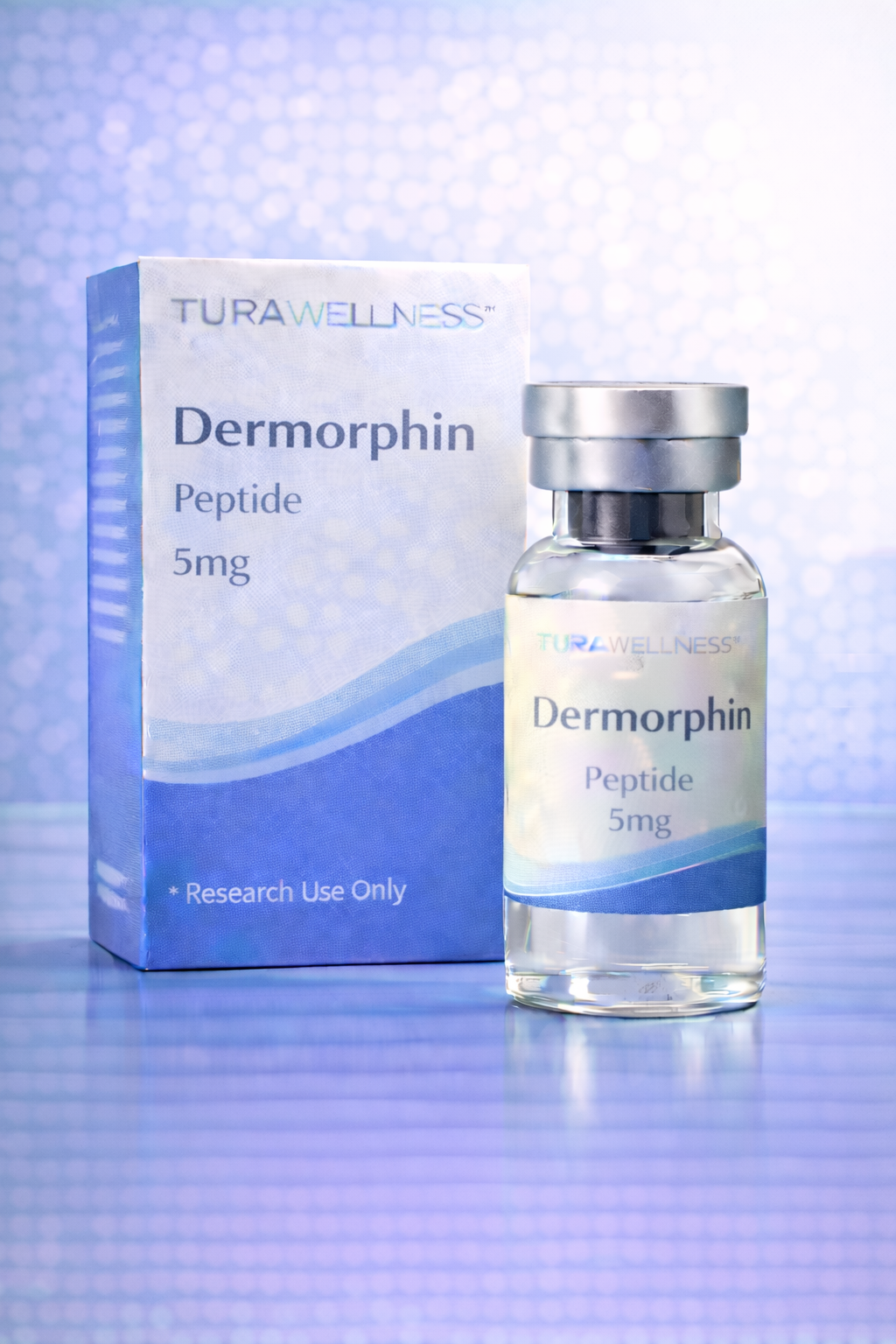
 Image 1 of 1
What It Is
Dermorphin is a natural heptapeptide originally isolated from the skin of South American frogs in the genus Phyllomedusa. It is a potent, natural opioid that acts as a highly selective agonist for -opioid receptors.
Key Characteristics
• Extreme Potency: Dermorphin is approximately 30 to 40 times more potent than morphine when administered systemically, and can be up to 280 times more potent when injected directly into the brain (intracerebroventricularly).
• Unique Structure: Its amino acid sequence is H-Tyr-D-Ala-Phe-Gly-Tyr-Pro-Ser-NH₂. A distinguishing feature is the presence of D-alanine, a D-amino acid that is rare in animals and contributes to its high resistance to enzymatic degradation and its long-lasting effects.
• Origin: It is not found in humans or other mammals; it is produced through an unusual post-translational modification in certain amphibians, bacteria, and mollusks.
How It Works
Dermorphin works as a highly selective agonist for the opioid receptor (MOR), a G-protein-coupled receptor primarily found in the central nervous system and the gastrointestinal tract.
Its mechanism involves three key levels of action:
1. Molecular Interaction
• High Affinity & Selectivity: Dermorphin binds to the
opioid receptor with an affinity up to 100 times greater than morphine.
• Structural Advantage: Its unique sequence contains D-alanine, which makes it highly resistant to enzymatic breakdown and allows for prolonged activity.
• Subtype Specificity: Some research suggests it binds preferentially to the
receptor subtype (linked to analgesia) at low doses, while it may affect
receptors (linked to respiratory depression) at higher concentrations.
2. Cellular Mechanism
Once dermorphin binds to the receptor, it triggers a cascade of inhibitory signals in the neuron:
• Inhibition of Calcium Channels: It blocks voltage-sensitive calcium channels, preventing the influx of calcium required for neurotransmitter release.
• Potassium Channel Activation: It induces hyperpolarization by increasing potassium efflux, making the neuron less likely to fire electrical impulses.
• Adenylate Cyclase Suppression: It inhibits the enzyme adenylate cyclase, leading to a decrease in cyclic AMP (cAMP) levels, further dampening cellular excitability.
• Receptor Internalization: Unlike morphine, which has limited effect on receptor movement, dermorphin causes rapid internalization of the -opioid receptor into the cell. This process is believed to be essential for its potent pain-relieving effects and may influence how the cell resensitizes.
3. Physiological Effects
• Pain Modulation: By acting at both the spinal and supraspinal (brain) levels, it inhibits the transmission of pain signals through C-fiber neurons.
• Endocrine Stimulation: It acts on the pituitary gland to stimulate the release of prolactin, growth hormone, and thyrotropin.
• Reduced Side Effects: Interestingly, despite its potency, dermorphin and its analogs often show a lower propensity for causing respiratory depression, constipation, and physical dependence compared to morphine in animal models.
Benefits
While dermorphin has not been approved for standard medical use, research indicates several significant biological benefits—primarily its extreme potency and a potentially safer profile compared to traditional opioids like morphine.
Superior Pain Relief
• Extreme Potency: Dermorphin is approximately 30 to 40 times more potent than morphine when given systemically and can be hundreds of times more potent if administered directly into the spinal fluid (intrathecally).
• Long-Lasting Effects: Due to the presence of D-alanine, it is highly resistant to enzymatic breakdown in the body, leading to a much longer duration of action than other natural opioid peptides.
• Effective for Severe Pain: Clinical studies from the 1980s showed that 80% of patients receiving a single intrathecal injection could control postoperative pain without needing further analgesics.
Improved Safety Profile (vs. Morphine)
Research suggests that dermorphin and its analogs may avoid some of the most dangerous side effects of common opioids:
• Lower Tolerance & Dependence: In animal models, dermorphin was found to cause a significantly slower development of drug tolerance and less intense withdrawal symptoms compared to morphine.
• Reduced Respiratory Issues: Some studies indicate that certain dermorphin analogs can stimulate pulmonary ventilation rather than suppressing it, potentially reducing the risk of fatal overdose.
• Fewer Physical Complications: High doses of morphine in the spine can cause inflammation (granulomas) or changes in fluid pH; research suggests dermorphin may not cause these specific issues.
Therapeutic Potential for Specific Conditions
• Neuropathic & Chronic Pain: Modern research into dermorphin analogs like DALDA shows potential for treating nerve injury pain with minimal central nervous system side effects.
• Endocrine Support: It has been shown to stimulate the release of essential hormones, including growth hormone (GH), prolactin, and thyrotropin (TSH), in humans.
• Shorter Hospital Stays: In one clinical trial, patients treated with dermorphin had significantly shorter postoperative hospital stays compared to those given a placebo or morphine.
What the Science Shows
Scientific research confirms that dermorphin is a highly selective and potent -opioid receptor agonist. While its medical development stalled in the mid-1980s, recent reviews categorize it as a "forgotten" drug with clinical results superior to morphine.
Key Scientific Findings
• Extreme Analgesic Potency: In animal models, dermorphin is 30 to 40 times more potent than morphine when administered systemically and 200 to 280 times more potent when injected directly into the brain. One clinical study found a single spinal injection could control postoperative pain in 80% of patients without needing additional medication.
• Improved Side Effect Profile: Research indicates that dermorphin and its analogs may produce less tolerance, physical dependence, and respiratory depression than morphine. Unlike morphine, it does not appear to cause spinal fluid pH changes or catheter-tip granulomas.
• Unique Structural Stability: The presence of D-alanine (a rare D-amino acid) provides natural resistance to enzymatic degradation, allowing it to have long-lasting effects.
• Endocrine Effects: In humans, it significantly increases plasma levels of prolactin, growth hormone, and thyrotropin (TSH) while decreasing cortisol levels.
Clinical Research Status
Despite its promising profile, dermorphin's clinical trajectory essentially stopped after 1985.
• Milestone Study (1985): A randomized, placebo-controlled trial found that intrathecal (spinal) dermorphin was significantly more effective than morphine for postoperative pain and led to shorter hospital stays (5.6 days vs. 6.3 for morphine).
• Current Research Focus: Contemporary science focuses on synthetic analogs (like DALDA or TAPS) designed to better cross the blood-brain barrier or to be administered via non-invasive routes like intranasal or oral sprays, which have shown high antinociceptive activity in recent rat and mouse studies.
Reported Side Effects in Trials
While often more benign than morphine, research still notes potential side effects:
• Urinary retention (observed in 26% of trial subjects).
• Nausea and vomiting (observed in 22% of trial subjects).
• Motor effects: At high doses, it can cause catalepsy (muscular rigidity) or a stupor-like state in animal models.
Reconstitution
Supplies:
• Dermorphin vial (e.g., 5 mg or 10 mg)
• Bacteriostatic water (BWFI) preferred
(0.9% sterile saline acceptable if using immediately)
• 1 mL insulin syringes (29–31G)
• Alcohol pads
• Refrigerator (2–8 °C / 36–46 °F)
Step-by-Step Reconstitution
1) Prep
• Wash hands
• Wipe vial stoppers with alcohol
• Use sterile technique
2) Draw diluent
• Pull desired volume of bacteriostatic water into syringe
3) Inject slowly
• Aim liquid against the glass wall, not directly onto powder
• Slow injection prevents peptide denaturation/foaming
4) Dissolve
• Gently roll or swirl
• Do not shake
• Should dissolve within 30–60 seconds
5) Label
• Write concentration + date mixed
Common Mixing Ratios (easy math)
If vial contains 5 mg (5000 mcg)
Add BWFI
Final concentration
Each 0.10 mL (10 units insulin syringe)
1 mL
5000 mcg/mL
500 mcg
2 mL
2500 mcg/mL
250 mcg
5 mL
1000 mcg/mL
100 mcg
If vial contains 10 mg (10,000 mcg)
Add BWFI
Final concentration
Each 0.10 mL
2 mL
5000 mcg/mL
500 mcg
5 mL
2000 mcg/mL
200 mcg
10 mL
1000 mcg/mL
100 mcg
Dosing Protocol
1. Potency and Measurement
Dermorphin is 30–40× more potent than morphine as a μopioid agonist. Because of this, research handling is done in micrograms (µg), not milligrams.
Typical research dilution ranges (from peptidevendor educational material) include:
• 100–500 µg per injection
• Derived from a 10 mg vial diluted to allow microgramlevel measurement
Again, this is not a clinical dose — it is simply what appears in researchchemical vendor descriptions.
2. Frequency in Research Settings
Vendorreported “protocols” emphasize infrequent administration:
• Once or twice weekly
• Not daily
This reflects dermorphin’s longlasting opioid activity.
3. Routes of Administration (Research Context)
Reported routes in nonclinical research:
• Subcutaneous (SubQ)
• Intramuscular (IM)
Precautions
Dermorphin is a highly potent opioid peptide that is not approved for medical use in humans. Because it is significantly more powerful than morphine, its use carries extreme risks, including fatal overdose.
Critical Safety Precautions
• No Human Use: Dermorphin is strictly for research use only and should never be ingested or injected by humans or used in veterinary procedures.
• Overdose Risk: It is approximately 30 to 40 times more potent than morphine systemically and up to 4,000 times more potent if administered directly into the spinal fluid or brain in animal models. Even small amounts can lead to severe respiratory depression, coma, and death.
• Toxic Reactions: Clinical trials in the 1980s were restricted due to toxic reactions observed in participants.
• Rapid Addiction: Despite some animal studies suggesting lower dependence, scientific reviews indicate that dermorphin can lead to rapid development of addiction and severe withdrawal symptoms.
Laboratory Handling (MSDS Guidelines)
If handling dermorphin in a professional laboratory setting, the following safety protocols are required:
• Personal Protective Equipment (PPE): Wear safety goggles, nitrile gloves, and a lab coat at all times to prevent skin and eye contact.
• Inhalation Prevention: Use a chemical fume hood to avoid breathing in dust, aerosols, or vapors. In case of high exposure, a full-face respirator is recommended.
• Storage: Store in a cool, dry place (ideally -20°C for long-term stability) in tightly closed, light-resistant containers.
• Emergency Response:
o Skin/Eye Contact: Flush immediately with water for at least 15 minutes and seek medical attention.
o Inhalation: Move the victim to fresh air. If breathing is difficult, provide oxygen and consult a doctor immediately.
Observed Side Effects (Historical Clinical Trials)
In past human research, reported adverse effects included:
• Urinary retention (26% of subjects).
• Nausea and vomiting (22% of subjects).
• Endocrine disruption, including significantly increased levels of prolactin and growth hormone.
How to be Successful
In a laboratory and research context, achieving successful results with dermorphin requires rigorous attention to its unique chemical stability and extreme biological potency.
1. Maximize Peptide Stability
• Optimal Storage: For long-term preservation of biological activity, store lyophilized (powder) dermorphin at -80°C. At -20°C, it typically remains stable for only one month.
• Prevent Hydrolysis: Peptides are highly sensitive to moisture. Use a desiccator to allow the vial to reach room temperature before opening to prevent condensation from forming on the cold powder.
• Aliquoting: Divide the reconstituted peptide into single-use aliquots to avoid repeated freeze-thaw cycles, which rapidly degrade the molecule.
• Light Protection: Dermorphin contains tyrosine and other sensitive residues; store in amber vials or dark conditions to prevent photodegradation.
2. Experimental Accuracy Tips
• Minimize Adsorption: Peptides can stick to the walls of plastic or glass containers. Using high-quality polypropylene vials or adding a blocking agent (like 0.1% HSA or BSA) can prevent significant loss of the peptide during high-dilution assays.
• Binding Affinity: Note that the D-alanine in the second position is crucial for receptor binding. Avoid any analogs that substitute this with L-alanine, as they are roughly 5,000 times less potent.
• Agitation Protocol: For incubation assays, maintain gentle agitation at 30°C for approximately one hour for optimal receptor binding.
3. Safety & Handling Precautions
• Extremely Potent: Dermorphin is 30–40 times more potent than morphine systemically. All weighing and handling should occur in a closed glove box or fume hood to prevent accidental inhalation.
• Research Only: These protocols are intended strictly for laboratory settings; dermorphin is not approved for human or clinical use.
FAQs
Potency & Comparison
• Is dermorphin stronger than morphine?
Yes, significantly. Scientific studies show it is 30 to 40 times more potent than morphine when administered systemically. When injected directly into the brain (ICV), it can be up to 280 times more potent.
• Does it have the same side effects as morphine?
Dermorphin produces typical opioid effects like analgesia, but research indicates it may cause less respiratory depression, constipation, and physical dependence than morphine. In clinical trials, the most common side effects were urinary retention (26%) and nausea/vomiting (22%).
• Why is it longer-lasting than other peptides?
It contains a rare D-alanine amino acid. This unique structure makes it highly resistant to enzymatic degradation in the body, leading to prolonged activity compared to standard opioid peptides.
Clinical & Medical Status
• Is dermorphin approved for human use?
No. It has never been approved by the FDA or equivalent agencies for medical use in humans or animals.
• Why was clinical research stopped?
After promising results in the 1980s, research largely stalled. While the exact reason is debated, some sources cite "toxic reactions" in early trials, while others suggest the lack of commercial profitability compared to mass-produced traditional opioids.
• Does it cross the blood-brain barrier?
Natural dermorphin has low permeability through the blood-brain barrier. Researchers are currently developing synthetic analogs, such as glycosylated versions, specifically designed to cross into the central nervous system more effectively.
Research & Sourcing
• How should it be stored?
Suppliers typically recommend storing the lyophilized powder at -20°C in a tightly closed container. For long-term stability of reconstituted solutions, -80°C is preferred.
• What is it used for in sports?
It is a notorious doping agent in horse racing. Because it masks pain and increases focus, it allows horses to run through injuries, which is illegal and a major animal welfare concern.
Availability
Research grade Dermorphin is available at www.turawellness.com