

 Image 1 of 1
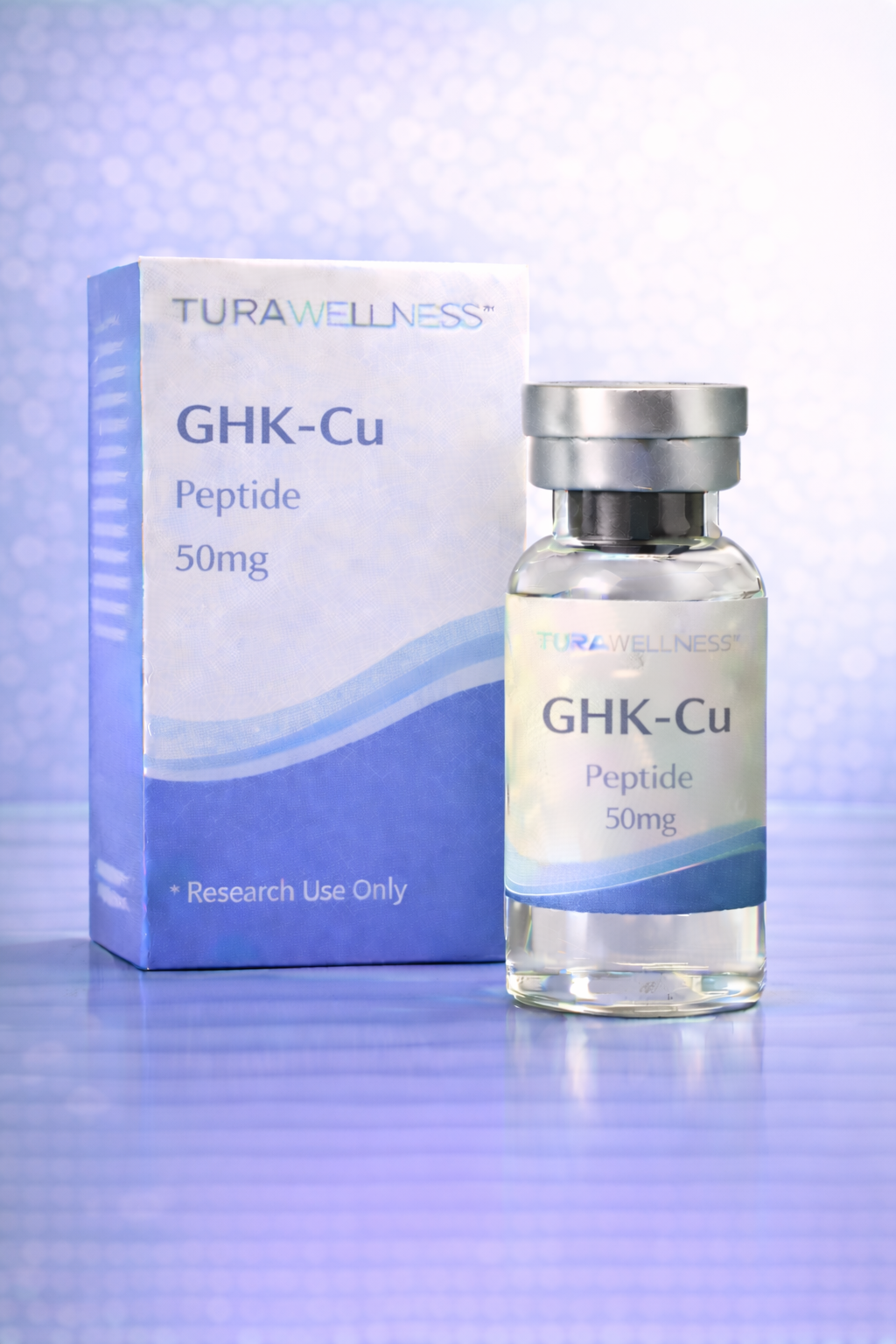
GHK-Cu is a naturally occurring copper peptide complex found in human plasma, saliva, and urine. The name stands for glycyl-L-histidyl-L-lysine bound to copper. It consists of three amino acids (glycine, histidine, and lysine) with a strong affinity for copper ions, forming a stable tripeptide-copper complex.
Your body produces GHK-Cu naturally, with highest concentrations in platelets, white blood cells, plasma, and wound fluid. At age 20, plasma levels are approximately 200 ng/mL. By age 60, that number drops to around 80 ng/mL. This decline coincides with the noticeable decrease in regenerative capacity that occurs with aging.
GHK was first isolated from human plasma albumin in 1973 by Loren Pickart. Researchers noticed that liver tissue from older patients had increased fibrinogen levels, but when those older liver cells were incubated in blood from younger patients, they began functioning more like younger cells. The active factor responsible for this effect was identified as GHK.
Since then, GHK-Cu has been extensively studied for its roles in wound healing, collagen synthesis, anti-inflammatory effects, and gene expression modulation. It is widely used in cosmetic products (listed as Copper Tripeptide-1 on ingredient labels) and has been studied in clinical settings for skin rejuvenation and tissue repair.
GHK-Cu is unique among peptides because it works through gene expression modulation, essentially helping to reset aging cells toward a more youthful pattern of gene activity. Research from the Broad Institute's Connectivity Map project has shown that GHK can influence the expression of numerous genes involved in tissue repair and regeneration.
How It Works
GHK-Cu works through multiple interconnected mechanisms that support tissue repair and regeneration.
Copper Delivery and Enzyme Activation
The copper component of GHK-Cu serves as an essential cofactor for several critical enzymes. Lysyl oxidase requires copper to cross-link collagen and elastin fibers, creating strong, durable networks. Without adequate copper, newly synthesized collagen remains weak and prone to degradation. GHK-Cu delivers bioavailable copper directly to tissues where it is needed for these enzymatic processes.
Collagen and Extracellular Matrix Synthesis
GHK-Cu stimulates fibroblasts to produce more collagen (particularly Types I and III), elastin, and glycosaminoglycans. Research shows it can increase collagen production by up to 70% in laboratory studies. It also promotes synthesis of decorin, a small proteoglycan that helps organize collagen fibers and maintain skin structure. This dual action of stimulating new collagen while helping organize it properly is key to its skin-firming effects.
Gene Expression Modulation
This is perhaps the most sophisticated mechanism. GHK-Cu activates genes responsible for extracellular matrix synthesis while simultaneously suppressing genes involved in matrix degradation. Research has shown it can affect the expression of over 4,000 genes, generally shifting expression patterns toward a healthier, more youthful state. It influences genes involved in antioxidant defense, anti-inflammatory pathways, DNA repair, and tissue remodeling.
Metalloproteinase Regulation
GHK-Cu regulates metalloproteinases (MMPs), the enzymes that break down collagen. Rather than simply blocking these enzymes, it promotes the synthesis of tissue inhibitors of metalloproteinases (TIMPs). This creates a balanced environment where old, damaged collagen is removed while new, healthy collagen is produced.
Anti-inflammatory Effects
GHK-Cu reduces the production of pro-inflammatory cytokines including TNF-alpha and IL-6. Research shows that copper peptide complexes can reduce TNF-alpha induced secretion of IL-6 in human dermal fibroblasts. This makes it potentially useful for inflammatory skin conditions.
Angiogenesis
GHK-Cu promotes the formation of new blood vessels by stimulating release of VEGF (vascular endothelial growth factor). This improved blood supply delivers oxygen and nutrients needed for tissue repair.
Cell Migration and Wound Healing
GHK-Cu attracts immune and repair cells to injury sites, including macrophages, mast cells, and fibroblasts. It promotes cell migration into damaged areas and supports the entire wound healing cascade from initial inflammation through tissue remodeling.
Benefits
GHK-Cu has been studied extensively in both laboratory and clinical settings. Benefits fall into several categories.
Skin Rejuvenation and Anti-Aging
Clinical trials have demonstrated measurable improvements in multiple aspects of skin health:
• Increased skin density and thickness
• Improved hydration
• Enhanced collagen synthesis
• Increased elasticity
• Reduced appearance of fine lines and wrinkles
• Improved skin firmness
In one trial, 71 women with mild to advanced photoaging applied GHK-Cu facial cream daily for three months. Results showed increased skin density and thickness, reduced sagging, and reduced appearance of fine lines. Another trial found GHK-Cu eye cream outperformed vitamin K cream and placebo for reducing wrinkles and improving skin density around the eyes.
A study comparing GHK-Cu to vitamin C and retinoic acid found GHK-Cu performed better at increasing collagen in photoaged skin.
Wound Healing
Multiple animal and human studies show GHK-Cu accelerates wound healing:
• 40 to 50% acceleration of wound closure compared to controls
• Improved wound contraction
• Faster development of granulation tissue
• Enhanced epithelialization
• Increased collagen deposition at wound sites
• Reduced scar formation
Studies show systemic injection of GHK-Cu can improve healing even at distant body sites. Injection into one area (such as thigh muscles) improved healing at other locations (such as ears) in animal models.
Hair Growth
GHK-Cu has shown benefits for hair health:
• Stimulates hair follicle growth
• Promotes collagen production in the scalp
• Strengthens existing hair
• Improves outcomes of hair transplantation surgery
A commercial product containing GHK-Cu (GraftCyte) was clinically evaluated and shown to improve hair transplant outcomes and healing.
Tissue Repair Beyond Skin
Research suggests GHK-Cu supports repair in multiple tissue types:
• Skin and dermal tissue
• Lung connective tissue
• Bone tissue
• Liver tissue
• Stomach and intestinal lining
• Ligaments and tendons
• Nerve tissue
Antioxidant and Anti-inflammatory Effects
GHK-Cu provides protective effects against oxidative damage and inflammation, which contribute to aging and tissue degradation.
What the Science Shows
Pickart and Margolina (2018)
Published in International Journal of Molecular Sciences. This comprehensive review examined GHK-Cu's effects on gene expression and tissue repair.
Key findings:
• GHK-Cu affects expression of over 4,000 human genes
• Gene expression shifts toward healthier patterns
• Multiple pathways affected including antioxidant defense, anti-inflammatory response, and DNA repair
• Effects observed at very low concentrations (picomolar to nanomolar range)
Pickart et al. (2015)
Published in BioMed Research International. This review examined GHK as a modulator of multiple cellular pathways in skin regeneration.
Key findings:
• GHK-Cu activates both TGF-beta and integrin pathways during tissue regeneration
• Reduces TNF-alpha induced IL-6 secretion
• Restores viability of irradiated fibroblasts
• Effects on wound healing demonstrated across multiple studies
Abdulghani et al. (1998)
Published in Archives of Facial Plastic Surgery. Clinical study on photoaged skin.
Key findings:
• GHK-Cu cream outperformed vitamin C and retinoic acid
• Greater increase in collagen production
• Improved skin thickness and density
Finkley et al. (2005)
Published study on facial aging.
Key findings:
• 12 week trial with 71 women
• Significant improvement in skin density, thickness
• Reduced appearance of fine lines and sagging
• Well tolerated with no adverse events
Maquart et al. (1993)
Published in Journal of Clinical Investigation. Study on wound healing in rats.
Key findings:
• GHK-Cu increased collagen synthesis 9-fold in treated wounds
• Accelerated wound contraction
• Enhanced epithelialization
• Activated fibroblasts and mast cells
Sources:
• Pickart L, Margolina A. Regenerative and Protective Actions of the GHK-Cu Peptide in the Light of the New Gene Data. Int J Mol Sci. 2018. https://pubmed.ncbi.nlm.nih.gov/30002323/
• Pickart L, et al. GHK Peptide as a Natural Modulator of Multiple Cellular Pathways in Skin Regeneration. Biomed Res Int. 2015. https://pubmed.ncbi.nlm.nih.gov/26236730/
• Maquart FX, et al. In vivo stimulation of connective tissue accumulation by the tripeptide-copper complex glycyl-L-histidyl-L-lysine-Cu2+ in rat experimental wounds. J Clin Invest. 1993. https://pubmed.ncbi.nlm.nih.gov/8227361/
Dosing Protocol
GHK-Cu is available in both injectable and topical forms. Administration route depends on your goals.
Injectable Protocol (Subcutaneous)
Standard Protocol:
• Dose: 1 to 2 mg per day
• Frequency: Daily or 3 to 5 times per week
• Cycle length: 4 to 8 weeks
• Break: 4 to 6 weeks between cycles
Conservative Protocol:
• Dose: 0.5 to 1 mg per day
• Frequency: 3 to 4 times per week
• Duration: Start here to assess tolerance, can increase
Moderate Protocol:
• Dose: 1 to 2 mg per day
• Frequency: 5 days per week
• Duration: 8 to 12 weeks (can extend to 16 weeks)
The peptide has a short half-life (under one hour in serum), which is why more frequent, lower-dose protocols are often preferred over less frequent, higher-dose approaches.
Topical Protocol
For skin care applications, GHK-Cu is typically used in 2 to 4% concentrations for facial products and 2% for eye area products. Apply once or twice daily as part of your skin care routine. Topical use does not require cycling.
Administration Route Selection
• Subcutaneous injection: For systemic effects including wound healing, tissue regeneration, and general anti-aging benefits
• Topical application: For localized skin benefits including anti-wrinkle effects, skin firmness, and complexion improvement
Draw Volumes by Vial Size
50 mg Vial with 3 mL Bacteriostatic Water (16.67 mg/mL concentration)
Dose Volume Units on Syringe
───────────────────────────────────────────────
1.0 mg 0.06 mL 6 units
1.5 mg 0.09 mL 9 units
2.0 mg 0.12 mL 12 units
Vial duration at 1 mg daily (5 days/week): approximately 10 weeks
50 mg Vial with 2.5 mL Bacteriostatic Water (20 mg/mL concentration)
Dose Volume Units on Syringe
───────────────────────────────────────────────
1.0 mg 0.05 mL 5 units
1.5 mg 0.075 mL 7.5 units
2.0 mg 0.10 mL 10 units
The 50 mg vial size provides excellent value for extended protocols.
Reconstitution
Materials Needed:
• GHK-Cu vial (lyophilized powder)
• Bacteriostatic water
• Sterile syringe for reconstitution
• Alcohol swabs
Instructions:
1. Wipe the GHK-Cu vial stopper and bacteriostatic water vial with alcohol swabs
2. Draw 2.5 to 3 mL of bacteriostatic water (depending on desired concentration)
3. Insert needle through rubber stopper at an angle
4. Let water trickle slowly down the inside wall of the vial
5. Do not inject directly onto the powder or shake vigorously
6. Gently swirl until fully dissolved
7. The solution will have a distinctive blue color due to the copper content
8. If solution is not blue or contains particles, do not use
The blue color is normal and indicates the copper is properly bound to the peptide complex.
Side Effects
GHK-Cu has an excellent safety profile with decades of use in cosmetic products and clinical settings.
Common (with injectable use):
• Injection site reactions including redness, swelling, or itching
• Mild histamine response at injection site (resembles hives, may include a small bump under the skin)
• These reactions are usually temporary and resolve within hours to days
The injection site reactions occur because free copper can temporarily separate from GHK at the injection site, generating mild oxidative activity and histamine release. This is normal and not dangerous.
Strategies to Minimize Injection Site Reactions:
• Rotate injection sites (never use the same spot twice in a row)
• Dilute the dose with additional bacteriostatic water (add 30 to 90 units of water to your drawn dose)
• Consider using GHK-Cu blended with BPC-157 (such as in the GLOW or KLOW blends), which reduces local irritation
Rare:
• Headache
• Fatigue
• Mild nausea
Copper Toxicity (theoretical at normal doses):
Copper toxicity is a theoretical concern but would require extremely high doses. The lethal dose of GHK-Cu is estimated at approximately 21,000 mg for a 70 kg human (about 330 mg/kg). At normal therapeutic doses of 1 to 2 mg daily, copper toxicity is not a practical concern.
Signs of copper toxicity (relevant only at extreme overdoses) include headache, nausea, vomiting, diarrhea, and in severe cases, liver or kidney damage.
Contraindications and Precautions
Do Not Use If You Have:
• Active cancer or tumors (theoretical concern about growth effects)
• Known hypersensitivity to copper or GHK-Cu
• Wilson's disease (genetic copper accumulation disorder)
Use Caution With:
• Pregnancy or breastfeeding (no safety data)
• Autoimmune disorders
• Liver or kidney impairment
• Immunosuppressant medications
• Blood thinners (assess carefully)
Drug Interactions:
Limited data available. GHK-Cu may interact with medications affecting copper metabolism. Consult healthcare provider if taking medications for copper-related conditions.
Regulatory Status:
GHK-Cu is widely used in cosmetic products and available as a research peptide. Injectable forms face restrictions similar toother peptides. The FDA classified many compounding peptides as Category 2 bulk drug substances in 2023, which affects legal availability through compounding pharmacies.
Consult a qualified healthcare provider before use.
Comparison Table
Peptide Primary Use Administration Typical Dose
──────────────────────────────────────────────────────────────────────────
GHK-Cu Skin/collagen SubQ, Topical 1 to 2 mg daily
Anti-aging
BPC-157 Tissue healing SubQ, IM, Oral 250 to 500 mcg daily
Gut repair
TB-500 Systemic healing SubQ, IM 2 to 2.5 mg 2x/week
Tissue repair
GLOW Blend Combined healing SubQ Per blend dosing
(TB+BPC+GHK)
GHK-Cu vs Other Healing Peptides:
GHK-Cu is unique in that it works primarily through gene expression modulation rather than direct signaling pathways. It excels at:
• Skin rejuvenation and anti-aging
• Collagen synthesis support
• Long-term tissue remodeling
BPC-157 and TB-500 excel at:
• Acute injury healing
• Inflammation reduction
• Rapid tissue repair
For comprehensive healing support, GHK-Cu is often combined with BPC-157 and TB-500 in blend products like GLOW.
Success Tips
Expect Gradual Results
GHK-Cu works through gene expression modulation, which takes time. Typical timeline:
• First 2 weeks: Better skin hydration, reduced redness or irritation, smoother texture
• 4 to 8 weeks: Fine lines begin to fade, skin texture and elasticity improve
• 8 to 16 weeks: Continued improvement in firmness, reduced appearance of scars and hyperpigmentation
Choose the Right Administration Route
• For anti-aging and skin benefits throughout your body: Injectable
• For localized facial skin care: Topical products are effective and easier
• For wound healing or systemic tissue repair: Injectable
Dilute to Reduce Injection Site Reactions
If you experience histamine responses at injection sites, add extra bacteriostatic water to your drawn dose before injecting. This dilutes the GHK-Cu and reduces local irritation.
Consider Combination Protocols
GHK-Cu stacks well with other healing and anti-aging compounds:
With BPC-157 and TB-500 (GLOW Blend):
• Comprehensive tissue healing
• Addresses both acute and chronic tissue repair
With NAD+ precursors:
• Both support cellular energy metabolism
• Combined effects on aging processes
Topical Use Tips
• Apply to clean, dry skin
• Use in the evening when skin repair is most active
• Layer under moisturizer
• Be consistent with daily application