

 Image 1 of 1
What It Is
Oxytocin is a nine amino acid peptide hormone produced naturally in the hypothalamus and released by the pituitary gland. Often called the "bonding hormone" or "love hormone," oxytocin plays a fundamental role in social connection, trust, attachment, and emotional regulation.
Your body releases oxytocin during physical touch, intimate connection, childbirth, breastfeeding, and positive social interactions. It is one of the most ancient and conserved neuropeptides, present across virtually all mammals, and is deeply tied to the biological foundations of social behavior and pair bonding.
Oxytocin is FDA approved for medical use in labor induction and postpartum hemorrhage control, where it is administered intravenously under hospital supervision. For research and wellness applications, oxytocin is typically used intranasally (nasal spray) or subcutaneously.
Interest in supplemental oxytocin has grown because of research suggesting it may enhance social connection, reduce anxiety, improve mood, support emotional well-being, and potentially help with conditions characterized by social difficulties such as autism spectrum disorder and social anxiety.
Oxytocin represents a fundamentally different approach to emotional and relational health. Rather than targeting neurotransmitters like serotonin or dopamine directly, it works through the biological systems that evolved specifically for social bonding and trust.
How It Works
Oxytocin exerts its effects by binding to oxytocin receptors (OXTR) distributed throughout the brain and body. These receptors are concentrated in areas associated with social behavior, emotional regulation, and stress response.
Central Nervous System Effects
When oxytocin binds to receptors in the brain:
• The amygdala (fear and anxiety center) shows reduced activity
• Regions associated with trust and social reward become more active
• The stress response is dampened through effects on the hypothalamic-pituitary-adrenal (HPA) axis
• Dopamine pathways involved in reward and motivation are modulated
Routes of Administration Matter
Oxytocin does not cross the blood-brain barrier efficiently when given intravenously or subcutaneously. This is why intranasal administration is preferred for central effects:
• Intranasal delivery allows oxytocin to reach the brain via a direct nose-to-brain route
• The olfactory and trigeminal nerve pathways provide access to central nervous system structures
• This bypasses the blood-brain barrier limitation
Recent research has also identified that peripheral oxytocin can cross the blood-brain barrier by binding to RAGE receptors (receptor for advanced glycation end products), though the amounts reaching the brain this way may be limited.
Peripheral Effects
Oxytocin also has important effects outside the brain:
• Smooth muscle contraction (uterus during labor, milk ejection during nursing)
• Anti-inflammatory effects
• Pain modulation through effects on sensory nerves
• Cardiovascular effects including blood pressure regulation
• Metabolic effects on appetite and energy balance
Receptor Considerations
Chronic or high-dose oxytocin administration can lead to receptor desensitization and downregulation. Research suggests that less frequent administration (every other day rather than daily) may maintain effectiveness better than continuous dosing.
Benefits
Social Connection and Bonding
Oxytocin is fundamentally associated with social attachment. Research shows it:
• Increases trust between individuals
• Enhances emotional recognition and empathy
• Promotes positive communication between partners
• Supports attachment and pair bonding
Anxiety Reduction
Multiple studies demonstrate anxiolytic effects:
• Reduces amygdala reactivity to threatening stimuli
• Decreases cortisol levels during stress
• Lessens social anxiety symptoms
• Promotes feelings of calm and safety
Mood Enhancement
Oxytocin is associated with:
• Reduced negative mood states
• Increased feelings of well-being
• Enhanced positive affect
• Potential antidepressant effects
Sexual Function and Intimacy
Research in both men and women suggests:
• Increased intensity of orgasm
• Greater contentment after sexual activity
• Improved ability to share sexual desires
• Enhanced emotional connection during intimacy
Pain Modulation
Studies show oxytocin:
• Enhances endogenous pain inhibition
• Provides analgesic effects, particularly in social contexts
• May reduce dyspareunia (painful intercourse) related to anxiety
Stress Resilience
Through effects on the HPA axis, oxytocin:
• Buffers the stress response
• Reduces cortisol release
• Promotes parasympathetic nervous system activation
• Supports recovery from stressful events
What the Science Shows
Oxytocin has been studied extensively, though results in clinical populations have been mixed.
Social Cognition Studies
Numerous studies demonstrate that intranasal oxytocin:
• Improves recognition of emotional expressions
• Increases eye contact and social attention
• Enhances memory for positive social information
• Increases trust in economic games
A study by Kosfeld et al. (2005) found that oxytocin increased trust in a trust game paradigm, with participants more willing to invest money with strangers.
Anxiety and Depression
A systematic review examined randomized controlled trials of intranasal oxytocin in anxiety and depression:
• Effects on core symptomatology were mixed
• Improvements in emotional recognition were more consistent
• Neuroimaging showed reduced amygdala reactivity in some studies
• Long-term trials are lacking
Sexual Function
Behnia et al. (2014) evaluated 24 IU intranasal oxytocin in 29 couples:
• Increased intensity of orgasm
• Greater contentment after intercourse
• Women reported feeling more relaxed
• Better ability to share sexual desires
Muin et al. found that 32 IU intranasal oxytocin in women with sexual dysfunction improved:
• Female Sexual Function Index scores by 26%
• Sexual Quality of Life scores by 144%
• Sexual Interest and Desire scores by 29%
Autism Spectrum Disorder
Multiple trials have examined oxytocin in autism:
• A 4-week trial (12 IU twice daily) in children showed improvements in both oxytocin and placebo groups
• Results overall have been inconsistent
• Effects may depend on baseline oxytocin levels and genetic factors
Pain Studies
Goodin et al. demonstrated that 40 IU intranasal oxytocin:
• Enhanced conditioned pain modulation
• Reduced negative mood states
• Decreased anxiety compared to placebo
Safety Data
Reviews of intranasal oxytocin safety show:
• No reliable side effects at doses of 18 to 40 IU
• Even higher daily exposures (96 IU) did not differ from placebo in adverse events
• Long-term safety data is limited
Dosing Protocol
Oxytocin dosing varies based on the route of administration and intended effects.
Understanding the Dose Context
Intranasal oxytocin is measured in International Units (IU). Most research uses 24 IU as a standard single dose. The intranasal route is preferred for central (brain) effects because it bypasses the blood-brain barrier.
Subcutaneous injection provides peripheral effects but limited central effects due to poor blood-brain barrier penetration.
Intranasal Protocol
Application Dose Frequency Duration
Acute social 24 IU Single dose As needed
Acute intimacy 24-32 IU Single dose 45-60 min before
Chronic research 24 IU Twice daily 4-8 weeks
Conservative 12 IU Twice daily 4 weeks
Standard delivery: 3 sprays per nostril at 4 IU per spray = 24 IU total
Subcutaneous Protocol
Application Dose Frequency Duration
Peripheral effects 10-40 mcg Once daily 4-8 weeks
Pain/stress 20-40 mcg Once or twice daily As needed
Note: Subcutaneous administration primarily affects peripheral oxytocin receptors with limited central effects.
Frequency Considerations
Research suggests that dosing every other day may maintain effectiveness better than daily dosing due to receptor dynamics. Continuous high-frequency dosing can lead to receptor desensitization.
Timing for Social or Intimate Contexts
For acute effects on social interaction or intimacy, administer 45 to 60 minutes before the anticipated activity. Effects typically last several hours.
Draw Volumes by Vial Size
For subcutaneous administration:
10 mg Vial (2 mL reconstitution = 5 mg/mL = 5000 mcg/mL)
Dose Volume Units on Syringe
────────────────────────────────────────────
10 mcg 0.002 mL 0.2 units (difficult to measure)
20 mcg 0.004 mL 0.4 units
40 mcg 0.008 mL 0.8 units
100 mcg 0.02 mL 2 units
Given the very small volumes for typical subcutaneous doses, many practitioners use a more dilute reconstitution:
10 mg Vial (10 mL reconstitution = 1 mg/mL = 1000 mcg/mL)
Dose Volume Units on Syringe
────────────────────────────────────────────
10 mcg 0.01 mL 1 unit
20 mcg 0.02 mL 2 units
40 mcg 0.04 mL 4 units
100 mcg 0.10 mL 10 units
For intranasal use, oxytocin is typically obtained in pre-made nasal spray form from compounding pharmacies at a concentration delivering a specific number of IU per spray (commonly 4 IU per spray).
Reconstitution Instructions
For subcutaneous use:
1. Remove the plastic cap from the vial and wipe the rubber stopper with an alcohol swab
2. Draw 10 mL of bacteriostatic water into a sterile syringe for easier dose measurement
3. Insert the needle through the rubber stopper at an angle
4. Direct the stream of water down the inside wall of the vial
5. Allow the peptide to dissolve without aggressive shaking
6. Gently swirl if needed until solution is clear
7. Label the vial with date and concentration (1 mg/mL or 1000 mcg/mL)
For intranasal use:
Intranasal oxytocin is typically obtained as a compounded nasal spray ready for use. If preparing from lyophilized powder for research purposes, the solution would need to be transferred to a nasal spray bottle designed for metered dosing.
Side Effects and Cautions
Common Side Effects (Intranasal)
• Nasal irritation or congestion
• Mild headache
• Drowsiness or fatigue
• Dizziness
Less Common Effects
• Nausea
• Flushing
• Increased heart rate
• Mood changes (anxiety in some contexts)
Context-Dependent Effects
Oxytocin's effects depend heavily on context:
• In safe, positive contexts, oxytocin enhances bonding and trust
• In uncertain or threatening contexts, it may increase vigilance or anxiety
• Effects may differ between in-group and out-group social situations
Serious Concerns (IV/IM Medical Use)
When used for labor induction (not typical research use):
• Uterine hyperstimulation
• Hyponatremia (low sodium) with high doses
• Blood pressure changes
• Cardiovascular effects
These risks are managed through hospital monitoring and are not typical concerns with intranasal or subcutaneous research doses.
Tolerance and Receptor Downregulation
Chronic daily use may lead to reduced effectiveness as receptors downregulate. Intermittent dosing (every other day or less frequent) may maintain sensitivity.
Who Should Avoid or Use With Care
Should Avoid:
• Pregnant women (unless under medical supervision for labor)
• Individuals with certain heart conditions (uncontrolled hypertension, arrhythmias)
• Those with a history of hyponatremia
• Anyone with known hypersensitivity to oxytocin
Use With Care:
• Individuals with kidney disease (oxytocin affects fluid balance)
• Those with cardiovascular concerns
• People with certain psychiatric conditions where social dynamics are complex
• Anyone taking medications that affect fluid balance or blood pressure
Success Tips
Context Matters
Oxytocin amplifies existing social and emotional contexts. Use it in positive, safe environments for best results. A warm, trusting setting will produce different effects than a stressful, uncertain one.
Pair with Positive Social Interaction
For relationship enhancement, combine oxytocin with intentional quality time, physical affection, eye contact, and meaningful conversation. The peptide amplifies these natural bonding behaviors.
Consider Intermittent Dosing
Research suggests every-other-day dosing may be more effective long-term than daily dosing. This allows receptors time to resensitize between doses.
Timing for Intimacy
For sexual enhancement or relationship connection, administer intranasal oxytocin 45 to 60 minutes before intimate time. The effects develop over this window and can last several hours.
Manage Expectations
Oxytocin is subtle compared to many other compounds. It enhances natural social tendencies rather than producing dramatic, obvious effects. Think of it as removing barriers to connection rather than forcing connection.
Foundation Matters
Oxytocin works best when basic relationship foundations are healthy. It is not a substitute for addressing fundamental relationship issues, communication problems, or trust violations.
Injection Technique
For subcutaneous administration:
1. Wash hands thoroughly with soap and water
2. Gather supplies: reconstituted vial, alcohol swabs, insulin syringe, sharps container
3. Clean the vial stopper with an alcohol swab and allow to air dry
4. Draw the calculated dose into a sterile insulin syringe
5. Clean the injection site with an alcohol swab and allow to air dry
6. Pinch a fold of skin at the injection site (abdomen, thigh, or upper arm)
7. Insert the needle at a 45 to 90 degree angle into subcutaneous tissue
8. Do not aspirate for subcutaneous injections
9. Inject slowly
10. Withdraw the needle and apply light pressure
11. Dispose of the syringe immediately in a sharps container
For intranasal administration:
1. Gently blow nose to clear nasal passages
2. Prime the spray if using for the first time
3. Tilt head slightly forward
4. Insert spray tip into nostril
5. Close opposite nostril
6. Spray while inhaling gently
7. Repeat on other side for remaining sprays
8. Avoid tilting head back immediately
Storage and Handling
Lyophilized Powder:
• Store in freezer at minus 20 degrees Celsius
• Protect from light
• Stable for extended periods when frozen
After Reconstitution:
• Refrigerate at 2 to 8 degrees Celsius
• Use within 28 days
• Do not freeze after reconstitution
• Discard if solution becomes cloudy
Nasal Spray:
• Store according to compounding pharmacy instructions (typically refrigerated)
• Use within the expiration period provided
• Keep spray tip clean
Comparison to Similar Compounds
Compound Mechanism Primary Use Route
────────────────────────────────────────────────────────────────────────
Oxytocin OXTR agonist Bonding, anxiety Intranasal/SC
PT-141 MC3R/MC4R agonist Sexual desire Subcutaneous
Selank GABA modulation Anxiety, cognition Intranasal
Semax BDNF/NGF Cognition, mood Intranasal
Kisspeptin GnRH stimulation Hormone release Subcutaneous
Oxytocin is unique in targeting the social bonding system directly. While PT-141 enhances sexual desire through melanocortin pathways, oxytocin works through the attachment and trust pathways. They can be complementary when both desire (PT-141) and emotional connection (oxytocin) are desired.
Legal Status
United States: Oxytocin is FDA approved for labor induction and postpartum hemorrhage (IV/IM use in hospitals). Intranasal oxytocin is available through compounding pharmacies with a prescription. It is not FDA approved for anxiety, autism, or social enhancement, though research continues in these areas. Also available for research purposes.
International: Generally available for research or through compounding with prescription.
Frequently Asked Questions
How is intranasal different from injection?
Intranasal administration allows oxytocin to reach the brain directly through the nose-to-brain pathway, bypassing the blood-brain barrier. Subcutaneous injection primarily affects peripheral oxytocin receptors with limited central effects. For social and emotional effects, intranasal is preferred.
Will oxytocin make me trust strangers?
Oxytocin can increase trust and social openness, but effects are context-dependent. It tends to increase trust toward in-group members more than out-group members. It enhances existing social tendencies rather than eliminating normal social judgment.
Can couples use oxytocin together?
Yes, this is a common application. Both partners using intranasal oxytocin before quality time orintimacy may enhance the experience of connection. Effects are typically subtle, enhancing natural bonding rather than creating artificial feelings.
How quickly does oxytocin work?
Effects begin within 30 to 60 minutes after intranasal administration. Peak effects occur within 1 to 2 hours. The duration of effect varies but typically lasts several hours.
Can I use oxytocin daily?
Daily use is possible but may lead to receptor downregulation and reduced effectiveness over time. Research suggests intermittent dosing (every other day or less frequent) may maintain sensitivity better than daily use.
Is oxytocin the same as Pitocin?
Pitocin is the brand name for synthetic oxytocin used in hospitals for labor induction and is administered intravenously. The molecule is the same, but the route and context of administration are very different from intranasal research use.
Product Source
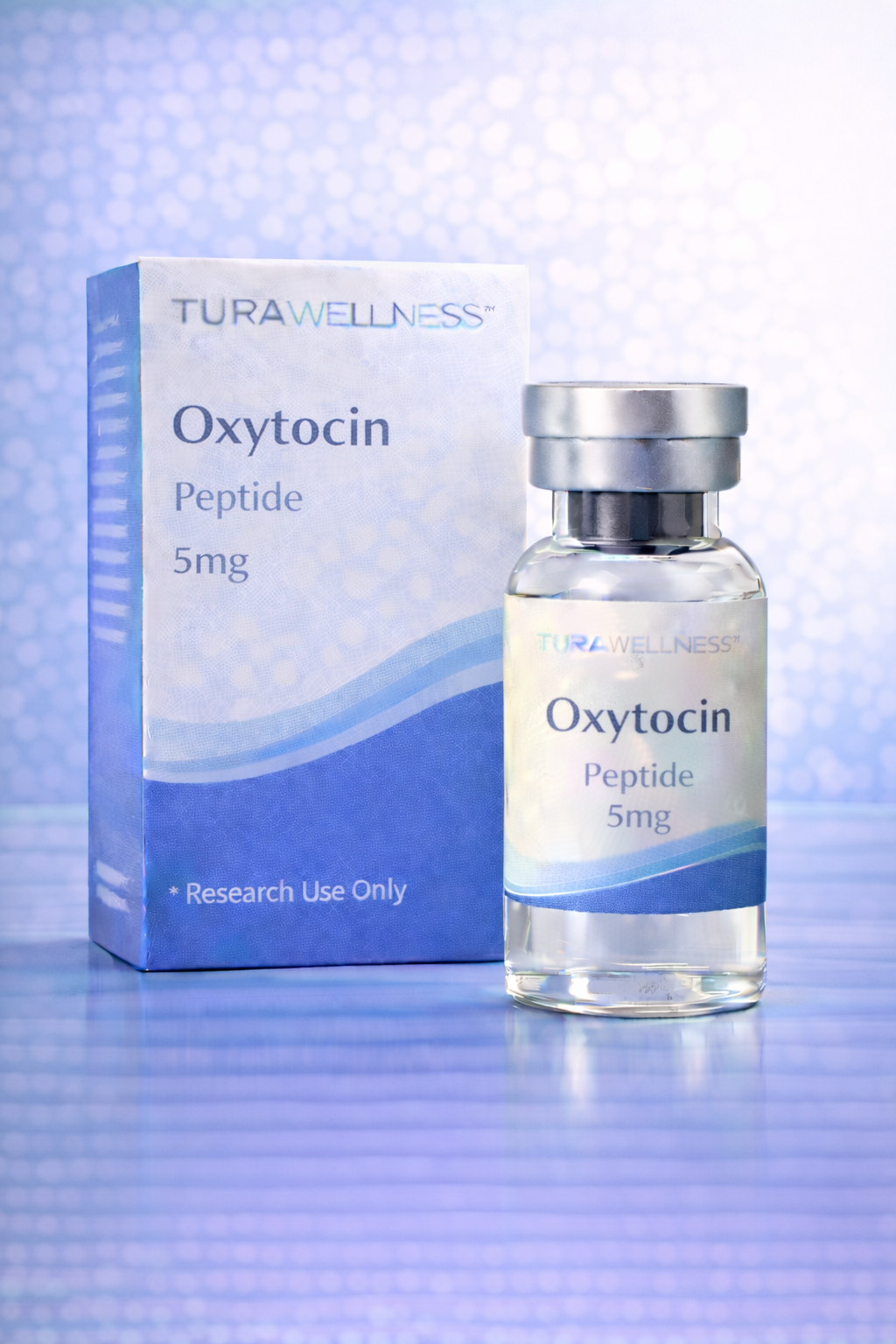
Research Grade Oxytocin available at TuraWellness.com
Disclaimer
This guide provides educational information about oxytocin based on published scientific literature. This is for educational purposes only and does not constitute medical advice, diagnosis, or treatment. Intranasal oxytocin is not FDA approved for anxiety, autism, or social enhancement. Always consult qualified healthcare professionals before using any compound or medication.
References
1. Kosfeld M, Heinrichs M, Zak PJ, Fischbacher U, Fehr E. Oxytocin increases trust in humans. Nature. 2005;435(7042):673-676.
2. Guastella AJ, Mitchell PB, Dadds MR. Oxytocin increases gaze to the eye region of human faces. Biological Psychiatry. 2008;63(1):3-5.
3. Ditzen B, Schaer M, Gabriel B, Bodenmann G, Ehlert U, Heinrichs M. Intranasal oxytocin increases positive communication and reduces cortisol levels during couple conflict. Biological Psychiatry. 2009;65(9):728-731.
4. Behnia B, Heinrichs M, Bergmann W, et al. Differential effects of intranasal oxytocin on sexual experiences and partner interactions in couples. Hormones and Behavior. 2014;65(3):308-318.
5. Goodin BR, Anderson AJB, Freeman EL, et al. Intranasal oxytocin administration is associated with enhanced endogenous pain inhibition and reduced negative mood states. Clinical Journal of Pain. 2015;31(9):757-767.
6. Quintana DS, Lischke A, Grace S, et al. Advances in the field of intranasal oxytocin research: lessons learned and future directions. Molecular Psychiatry. 2021;26(1):80-91