

 Image 1 of 1
What It Is
Semax is a synthetic peptide derived from a fragment of adrenocorticotropic hormone (ACTH). Developed in Russia in the 1980s, it has been used as a prescription medication there for decades to treat stroke, traumatic brain injury, cognitive decline, and optic nerve disorders. Unlike many nootropics that work through stimulation, Semax enhances cognition by increasing brain-derived neurotrophic factor (BDNF) and supporting neuroplasticity.
The name "Semax" comes from "seven amino acids" in Russian (СЕМь АминоКислот). It is a heptapeptide with the sequence Met-Glu-His-Phe-Pro-Gly-Pro. This structure is based on ACTH(4-10), the portion of the hormone associated with cognitive effects, modified for improved stability and brain penetration.
What makes Semax interesting is its dual role: it works as both a nootropic (cognitive enhancer) and a neuroprotectant. In healthy people, it sharpens focus, improves memory, and enhances mental clarity. In people recovering from stroke or brain injury, it accelerates healing and preserves brain function. This combination of acute performance benefits and long-term brain protection sets it apart from stimulant-based cognitive enhancers.
Semax is administered intranasally in Russian clinical practice, allowing direct delivery to the brain. In the research community, subcutaneous injection is also used. It remains a research compound without FDA approval in the United States.
How It Works
To understand why Semax works, you need to understand BDNF (brain-derived neurotrophic factor). BDNF is one of the most important proteins for brain health. It promotes the survival of existing neurons, encourages the growth of new neurons, and strengthens synaptic connections. Higher BDNF levels correlate with better learning, improved memory consolidation, and enhanced cognitive flexibility.
Semax increases BDNF expression in the hippocampus and cortex. Research shows that a single dose can increase BDNF protein levels by approximately 1.4-fold and BDNF mRNA expression by up to 3-fold. It also increases the phosphorylation of the TrkB receptor, which is how BDNF signals its effects inside neurons.
Beyond BDNF, Semax works through several other pathways:
• Increases serotonin metabolites by approximately 25% in the striatum
• Modulates dopamine release, particularly when combined with stimulants
• Provides neuroprotection under conditions of oxidative stress and hypoxia
• Affects the expression of genes related to immune response and vascular function
• May interact with melanocortin receptors (MC4 and MC5)
In stroke studies, genome-wide analysis showed that Semax affects 96 different genes at three hours post-dose, with over half related to immune response and vascular function. This broad gene-expression profile helps explain its neuroprotective effects during brain injury.
The practical result is enhanced focus, improved memory, better stress resilience, and protection against neurological damage. Unlike stimulants, which deplete neurotransmitters and lead to crashes, Semax builds up your brain's capacity through neurotrophic support.
Benefits
Cognitive Enhancement
The primary benefit for healthy users is improved mental performance. Research shows enhanced learning, better memory formation, and sharper attention. Users commonly report heightened alertness, improved verbal fluency, and better working memory. These effects come from BDNF upregulation and neurotransmitter modulation rather than stimulation.
Neuroprotection
Semax protects neurons from damage caused by oxidative stress, hypoxia, and inflammation. In stroke models, it limits cell death and preserves brain function. This makes it valuable both for recovery from neurological injury and for long-term brain health maintenance.
Stroke Recovery
The strongest clinical evidence for Semax comes from stroke rehabilitation. Russian studies show that Semax treatment increases BDNF plasma levels, accelerates functional recovery, and improves motor performance in stroke patients. The effects are enhanced when combined with early rehabilitation.
Mood and Stress Resilience
Through its effects on serotonin and dopamine, Semax provides mood-stabilizing benefits. Users report improved emotional stability and better resilience under stress. This is not the same as anxiolysis (Selank is better for anxiety); it is more about maintaining cognitive performance when stressed.
Optic Nerve Support
In Russian clinical practice, Semax is used for optic nerve disorders. Studies show visual field expansion in 80% of treated eyes, with improvements in color vision and reduction of blind spots. The mechanism involves BDNF-mediated neuroprotection of the optic nerve.
What the Science Shows
Semax has decades of clinical use in Russia and a substantial body of research, though most studies are from Russian journals.
Dolotov et al. (2006), Brain Research
This foundational study demonstrated that a single intranasal dose of Semax (50 mcg/kg) increased BDNF protein levels by 1.4-fold and BDNF mRNA by 3-fold in the rat hippocampus. TrkB receptor phosphorylation increased 1.6-fold. Semax-treated animals showed a distinct increase in conditioned avoidance reactions, supporting the cognitive enhancement mechanism.
Gusev et al. (2018), Zhurnal Nevrologii i Psikhiatrii
A clinical study of 110 stroke patients examined the effects of Semax on BDNF levels and functional recovery. Standard protocol: 6000 mcg/day for 10 days, repeated after a 20-day interval. Results showed that Semax administration increased BDNF plasma levels regardless of rehabilitation timing. High BDNF levels correlated with better Barthel scores (functional independence) and improved motor performance.
Medvedeva et al. (2014), BMC Genomics
Genome-wide analysis of Semax effects in rat brain focal ischemia (stroke model). The study found that Semax affected 96 genes at 3 hours post-administration, with over half related to immune response and vascular function. This helps explain the neuroprotective mechanism beyond simple BDNF upregulation.
Eremin et al. (2005), Neurochemical Research
This study showed that Semax activates both dopaminergic and serotonergic brain systems in rodents. Serotonin metabolites increased approximately 25% in the striatum. When combined with amphetamine, Semax potentiated dopamine release, suggesting synergy with stimulant pathways.
Optic Nerve Studies
Clinical studies in patients with glaucomatous optic neuropathy showed visual field expansion averaging 57.5 degrees in 80% of treated eyes after 30 days of Semax treatment. Patients also reported improved color perception and smaller blind spots.
Dosing Protocol
Semax is primarily administered intranasally, though subcutaneous injection is also effective. In Russia, it is available in 0.1% and 1% solutions, with the higher concentration reserved for clinical conditions.
Understanding the Dosing Context
Clinical stroke protocols use much higher doses (6000 mcg/day) than typical nootropic use (300 to 600 mcg/day). This reflects the difference between treating acute neurological damage and enhancing baseline cognition. For most people seeking cognitive enhancement, lower doses in cycles are appropriate.
Cognitive Enhancement Protocol
For general nootropic use:
• Dose: 300 to 600 mcg daily
• Frequency: Once or twice daily (morning and early afternoon)
• Route: Intranasal or subcutaneous
• Timing: Morning preferred, avoid late evening
• Cycle: 10 to 14 days on, at least 7 days off
• Rationale: This aligns with Russian clinical practice for cognitive support and prevents overstimulation of BDNF pathways
Advanced Cognitive Protocol
For periods of high cognitive demand:
• Dose: 600 to 900 mcg daily
• Frequency: Divided into 2 to 3 doses
• Duration: 5 to 10 days
• Rationale: Higher doses for short-term intensive use during demanding projects or learning periods
Neuroprotection and Recovery
For recovery from neurological stress or injury (consult medical supervision):
• Dose: Up to 6000 mcg daily (1% solution protocols)
• Frequency: Divided into multiple daily doses
• Duration: 10 days on, 20 days off, repeat
• Rationale: Based on Russian clinical stroke protocols
Stacking with Selank
Semax and Selank complement each other well. Semax provides the stimulating, focus-enhancing effects while Selank provides calming, anxiolytic effects. Together they produce calm focus.
• Semax: 300 to 400 mcg morning
• Selank: 200 to 300 mcg morning
• Rationale: Different mechanisms (BDNF/dopamine vs GABA) that work synergistically
Why Cycling Matters
Continuous BDNF stimulation can lead to receptor downregulation and diminished effects. Cycling allows the neurotrophin system to reset. Most Russian protocols use 10 to 14 day cycles with breaks of at least one week. Some users do monthly cycles; others use Semax only during demanding periods.
Draw Volumes by Vial Size
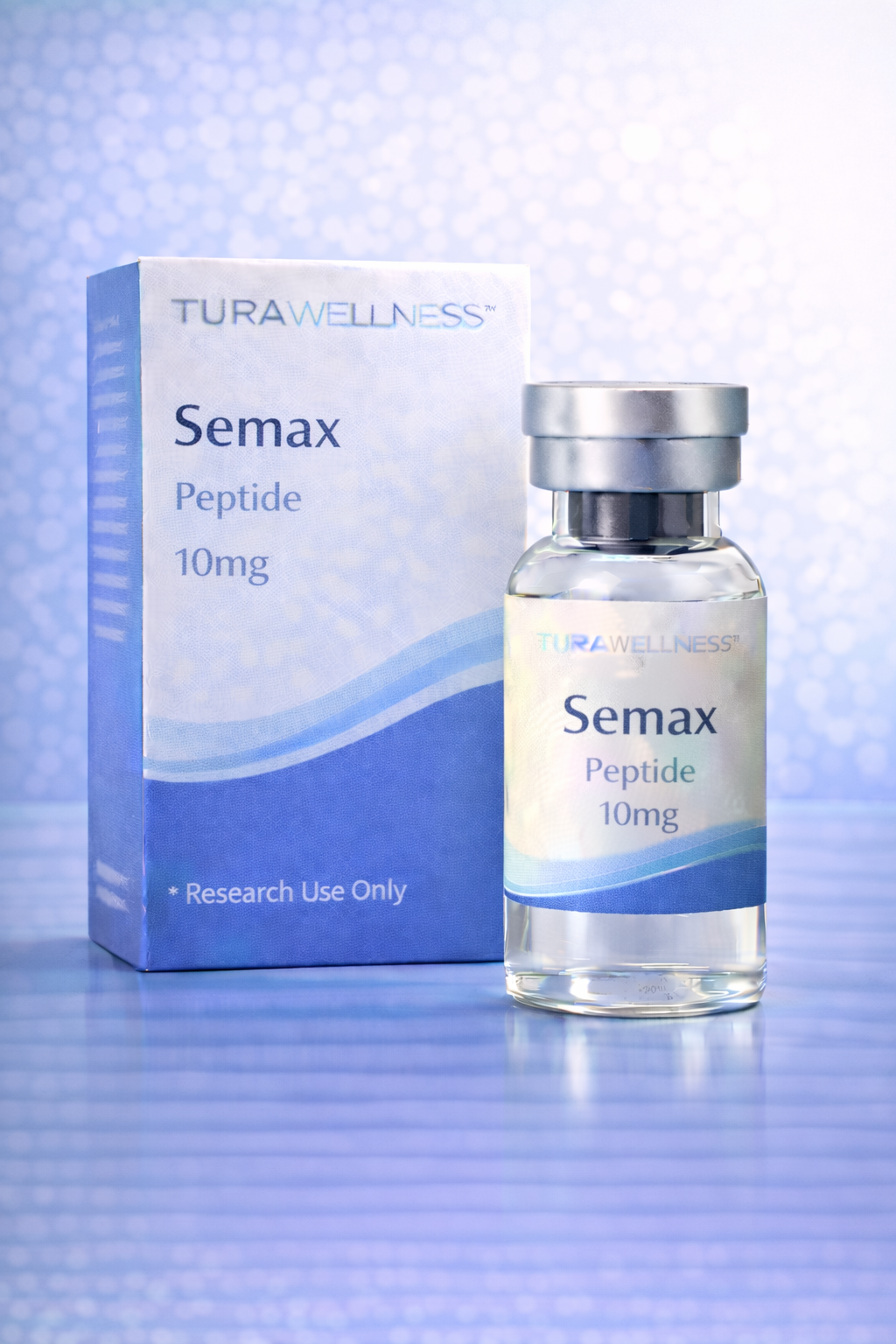
Zesty Rat Research offers Semax in 10 mg vials.
10 mg Vial (2 mL reconstitution = 5 mg/mL)
Dose Volume Units on Syringe
──────────────────────────────────────────
200 mcg 0.04 mL 4 units
300 mcg 0.06 mL 6 units
400 mcg 0.08 mL 8 units
600 mcg 0.12 mL 12 units
Vial duration at 300 mcg daily: 33 days
Vial duration at 600 mcg daily: 16 days
10 mg Vial (3 mL reconstitution = 3.33 mg/mL)
Dose Volume Units on Syringe
──────────────────────────────────────────
200 mcg 0.06 mL 6 units
300 mcg 0.09 mL 9 units
400 mcg 0.12 mL 12 units
600 mcg 0.18 mL 18 units
Vial duration at 300 mcg daily: 33 days
Vial duration at 600 mcg daily: 16 days
The 3 mL reconstitution provides slightly easier measurements for precise dosing.
Reconstitution Instructions
1. Remove the flip-off cap from the vial and wipe the rubber stopper with an alcohol swab
2. Draw your chosen volume of bacteriostatic water into a sterile syringe (2 mL or 3 mL)
3. Insert the needle through the rubber stopper at an angle
4. Inject the water slowly down the inside wall of the vial to avoid foaming
5. Gently swirl or roll the vial until the powder is fully dissolved (do not shake vigorously)
6. The solution should be clear and colorless
7. Label the vial with the reconstitution date and concentration
8. Store in the refrigerator at 36 to 46 degrees Fahrenheit (2 to 8 degrees Celsius)
9. Use within 30 days for optimal potency
Side Effects and Cautions
Semax has an excellent safety profile based on decades of clinical use in Russia. Side effects are generally mild.
Common Effects:
• Nasal irritation with intranasal use (most common)
• Nasal mucosa discoloration (yellowish tinge, temporary)
• Headache (occasional, usually mild)
• Dizziness (uncommon)
Less Common:
• Glucose elevation in diabetics (monitor blood sugar)
• Sleep disturbance if taken too late in the day
• Overstimulation at high doses
What Semax Does NOT Cause:
• Significant cardiovascular effects
• Appetite suppression or metabolic disruption
• Physical dependence or withdrawal
• Cognitive impairment or memory problems
Important Considerations:
• Diabetics should monitor blood glucose as Semax may affect glucose levels
• Avoid use late in the day to prevent sleep interference
• Effects on pregnancy and breastfeeding are unknown
• Long-term continuous use is not recommended; cycle the compound
Who Should Avoid or Use With Care
Avoid if:
• Pregnant or breastfeeding (not studied, unknown risks)
• Active cancer (BDNF can theoretically support tumor growth)
• History of seizures (neurotrophin modulation may affect seizure threshold)
Use with caution if:
• Diabetic (monitor blood glucose)
• Taking medications that affect BDNF or neuroplasticity
• Using other stimulants or nootropics (start with lower doses)
• History of mania or bipolar disorder (BDNF affects mood pathways)
Not a replacement for:
• Medical treatment for stroke or traumatic brain injury
• Professional evaluation of cognitive decline
• Proper sleep, nutrition, and mental stimulation
Success Tips
Start with Lower Doses
Begin with 200 to 300 mcg daily to assess your response. Semax affects multiple neurotransmitter systems, and individual responses vary. You can increase to 400 to 600 mcg once you know how you respond.
Morning and Early Afternoon Dosing
Take Semax in the morning or split between morning and early afternoon. Avoid late-day dosing as it may interfere with sleep in some individuals. The cognitive enhancement effects align well with work or study periods.
Use Cycles, Not Continuous Dosing
Stick to 10 to 14 day cycles followed by at least a week off. This maintains sensitivity and prevents the neurotrophin system from downregulating. Some people use Semax only during demanding periods rather than routinely.
Consider the Selank Stack
If you need both focus enhancement and stress management, combine Semax with Selank. Semax provides the cognitive sharpening while Selank provides the calm baseline. This is a well-established combination in the nootropic community.
Support Your Brain's Needs
Semax increases your brain's capacity for plasticity and learning, but you still need to use that capacity. Combine it with learning activities, challenging work, or skill development to maximize benefits. Sleep is also critical for consolidating the neuroplastic changes Semax supports.
Track Cognitive Metrics
Consider tracking working memory, reaction time, or other cognitive metrics during your cycle. The effects of Semax can be subtle, and tracking helps you identify whether it is working for you.
Need Support for Training and Performance?
Cognitive function is part of overall performance. If you want more information on training and nutrition, please contact us at turawellness.com
Injection Technique
For subcutaneous administration:
1. Wash hands thoroughly with soap and water
2. Gather supplies: reconstituted vial, alcohol swabs, insulin syringe, sharps container
3. Clean the vial stopper with an alcohol swab and allow to air dry
4. Draw the calculated dose into a sterile insulin syringe
5. Clean the injection site with an alcohol swab and allow to air dry
6. Pinch a fold of skin at the injection site
7. Insert the needle at a 45 to 90 degree angle into subcutaneous tissue
8. Do not aspirate for subcutaneous injections
9. Inject slowly and steadily
10. Withdraw the needle and apply light pressure if needed
11. Dispose of the syringe immediately in a sharps container
12. Rotate injection sites with each dose
For intranasal administration:
1. Reconstitute the vial as above
2. Draw the dose into a syringe
3. Remove the needle
4. Tilt head back slightly
5. Slowly drip the solution into one nostril
6. Sniff gently to draw the solution into the nasal passages
7. Repeat for the other nostril if splitting the dose
8. Avoid blowing your nose for 10 to 15 minutes
Storage and Handling
Before Reconstitution:
• Store lyophilized (powder) vials in the freezer at minus 4 degrees Fahrenheit (minus 20 degrees Celsius)
• Can also be stored in the refrigerator at 36 to 46 degrees Fahrenheit for shorter periods
• Protect from light and moisture
• Do not use past expiration date
After Reconstitution:
• Refrigerate at 36 to 46 degrees Fahrenheit (2 to 8 degrees Celsius)
• Use within 30 days for optimal potency
• Do not freeze after reconstitution
• Keep the stopper clean between uses
• If solution becomes cloudy or contains particles, discard and use a new vial
Comparison to Similar Compounds
Compound Primary Effect Mechanism Stimulating Anxiolytic
─────────────────────────────────────────────────────────────────────────────────────────
Semax Nootropic/Focus BDNF/Dopamine/Serotonin Moderate Mild
Selank Anxiolytic/Nootropic GABA modulation None Strong
Noopept Nootropic Glutamate/BDNF Mild Mild
Cerebrolysin Neuroprotection Multiple neurotrophins None None
Modafinil Wakefulness Dopamine/Histamine Strong None
Semax occupies a middle ground: more stimulating than Selank but gentler than pharmaceutical stimulants. Its BDNF mechanism provides sustainable cognitive enhancement rather than borrowed energy that leads to crashes. For most people seeking nootropic effects, Semax and Selank together provide the best balance of focus and calm.
Legal Status
Russia and CIS Countries: Approved prescription medication for stroke, cognitive decline, and optic nerve disorders. Listed on Russia's List of Vital and Essential Drugs.
United States: Not FDA approved. Available as a research compound. Not scheduled as a controlled substance.
Europe: Not approved. Available through research chemical suppliers.
WADA Status: Not currently on the prohibited list, but athletes should verify current regulations before use.
Frequently Asked Questions
How quickly does Semax work?
Many users notice effects within the first few doses. The cognitive enhancement builds over the first week of a cycle. Unlike Selank, which can take several days to reach full effect, Semax tends to work more quickly.
Is Semax a stimulant?
Not in the traditional sense. It does not work like caffeine or amphetamines. It enhances cognition through BDNF upregulation and neurotransmitter modulation. Users describe the effect as "clean" focus rather than stimulation.
Can I use Semax daily?
Not continuously. Cycle it for 10 to 14 days on, then take at least a week off. Continuous use may lead to diminished effects as BDNF receptors downregulate.
Semax or Selank: which should I use?
It depends on your goals. Semax is better for focus, learning, and cognitive performance. Selankis better for anxiety reduction and calm. Many people use both together for balanced effects.
Can I take Semax with coffee or other stimulants?
Yes, and the combination often works well. Semax can enhance and extend the focus benefits of caffeine without amplifying the jitteriness. Start with lower doses of both when combining.
Does Semax build tolerance?
Yes, which is why cycling is important. Continuous use can lead to reduced effects. Taking regular breaks maintains sensitivity.
Product Source
Research Grade Semax at turawellness.com
Disclaimer
This guide provides educational information about Semax based on published scientific literature and clinical data from Russian studies. This is for educational purposes only and does not constitute medical advice, diagnosis, or treatment. Semax is not FDA approved in the United States. Always consult qualified healthcare professionals before using any compound or medication, especially for neurological conditions.
References
1. Dolotov OV, Karpenko EA, Inozemtseva LS, et al. Semax, an analog of ACTH(4-10) with cognitive effects, regulates BDNF and trkB expression in the rat hippocampus. Brain Research. 2006;1117(1):54-60.
2. Gusev EI, Martynov MYu, Kostenko EV, et al. The efficacy of semax in the treatment of patients at different stages of ischemic stroke. Zh Nevrol Psikhiatr Im S S Korsakova. 2018;118(1):61-68.
3. Medvedeva EV, Dmitrieva VG, Povarova OV, et al. The peptide semax affects the expression of genes related to the immune and vascular systems in rat brain focal ischemia: genome-wide transcriptional analysis. BMC Genomics. 2014;15:228.
4. Eremin KO, Kudrin VS, Saransaari P, et al. Semax, an ACTH(4-10) analogue with nootropic properties, activates dopaminergic and serotoninergic brain systems in rodents. Neurochemical Research. 2005;30(12):1493-1500.
5. Koroleva SV, Myasoedov NF. Semax as a universal drug for therapy and research. Biology Bulletin. 2018;45(6):589-600.
6. Ashmarin IP, Nezavibatko VN, Myasoedov NF, et al. A nootropic adrenocorticotropin analog 4-10-semax (15 years experience in its design and study). Zh Vyssh Nerv Deiat ImI P Pavlova. 1997;47(2):420-430.