

 Image 1 of 1
What It Is
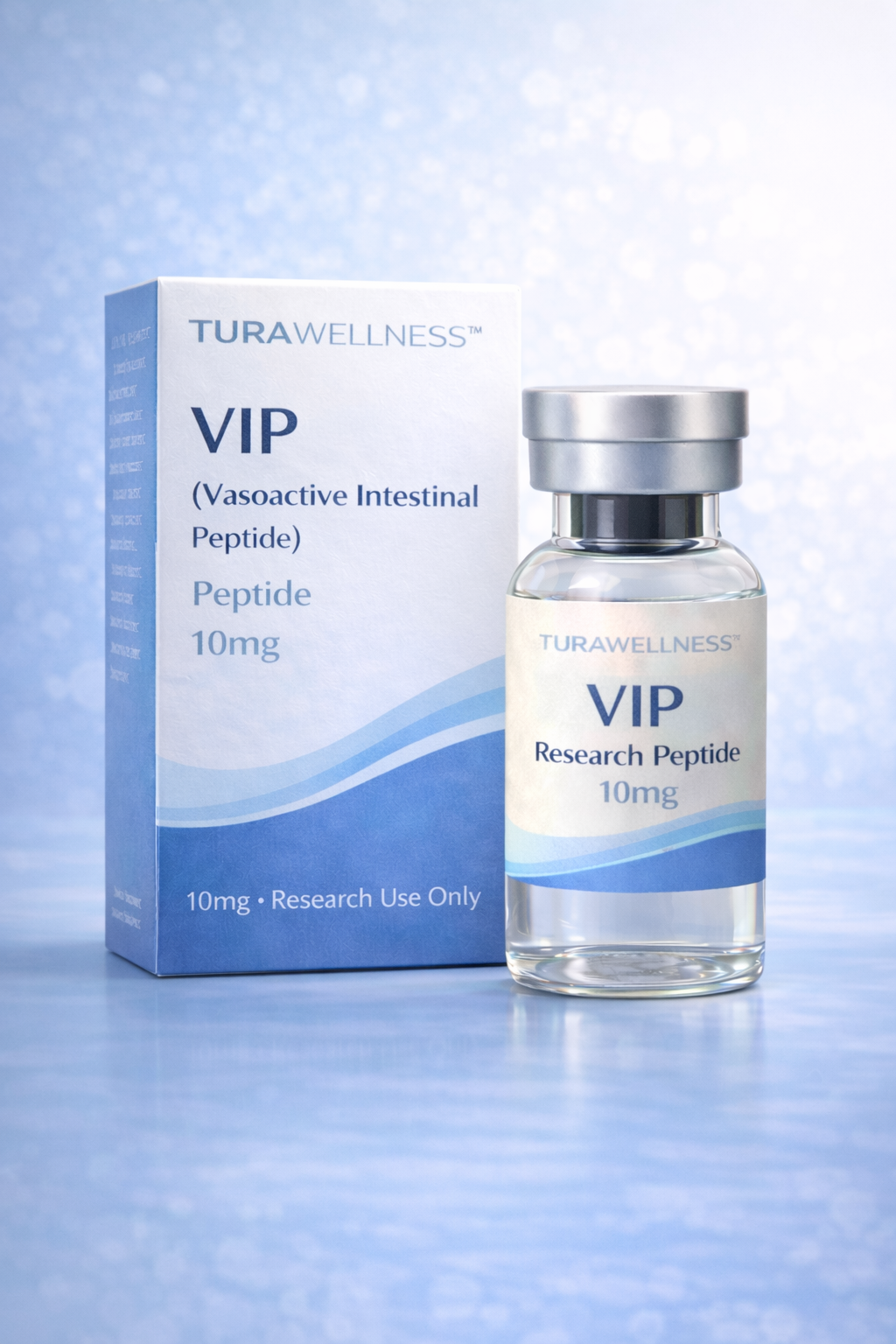
Vasoactive Intestinal Peptide (VIP) is a 28 amino acid peptide hormone produced throughout your body, particularly in the gut, pancreas, and central nervous system. Despite its name suggesting it only affects the intestines, VIP has widespread effects on blood vessels, the immune system, circadian rhythms, and multiple organ systems.
Your body naturally produces VIP, and it plays a crucial role in regulating inflammation, blood vessel dilation, smooth muscle relaxation, and communication between your nervous and immune systems. VIP is part of what scientists call the third branch of your autonomic nervous system, distinct from both the fight-or-flight and rest-and-digest systems.
VIP has gained significant attention in functional medicine for its role in treating Chronic Inflammatory Response Syndrome (CIRS), a complex multi-system illness often triggered by exposure to water-damaged buildings and mold. Dr. Ritchie Shoemaker pioneered the use of VIP nasal spray as the final step in his CIRS treatment protocol, documenting its effects in over 10,000 patients.
The peptide works through two main receptors (VPAC1 and VPAC2) found throughout the body. When VIP binds to these receptors, it triggers cellular cascades that reduce inflammation, promote tissue repair, and help restore normal function to systems disrupted by chronic inflammation.
VIP is typically administered as a nasal spray, allowing direct delivery to the brain and systemic circulation. This is a compounded medication requiring a prescription in the United States.
How It Works
VIP acts through G protein-coupled receptors (VPAC1 and VPAC2) to trigger intracellular signaling cascades. When VIP binds to these receptors, it activates adenylate cyclase, which increases cyclic AMP (cAMP) inside cells. This leads to activation of protein kinase A and CREB (cAMP Response Element-Binding protein), which influence gene expression and cellular behavior.
The downstream effects include:
Anti-Inflammatory Actions
• Reduces production of pro-inflammatory cytokines (TNF-alpha, IL-6, IL-12)
• Increases production of anti-inflammatory cytokines (IL-10)
• Downregulates Th17 immune responses associated with autoimmunity
• Promotes development of regulatory T cells (T regs) that help control inflammation
Vascular Effects
• Causes vasodilation by relaxing smooth muscle in blood vessel walls
• Reduces pulmonary artery pressure
• Improves blood flow to tissues
• Stimulates VEGF (vascular endothelial growth factor) for new blood vessel formation
Neuroendocrine Effects
• Regulates circadian rhythms through actions in the suprachiasmatic nucleus
• Influences hormone release from the pituitary including growth hormone, prolactin, and luteinizing hormone
• Regulates insulin and glucagon release from the pancreas
• Acts as a neurotransmitter in the brain affecting cognition and mood
Gut Effects
• Promotes intestinal epithelial cell health
• Regulates stomach acid secretion
• Controls water and ion absorption in the colon
• Supports gut barrier integrity
• Has antimicrobial properties against certain pathogens
In CIRS, VIP levels are often low while inflammatory markers are elevated. Restoring VIP levels helps rebalance the immune system and reduces the chronic inflammatory state.
Benefits
CIRS and Mold Illness
VIP is the cornerstone treatment for the final stage of CIRS protocols. Published research shows VIP nasal spray corrects multiple abnormalities in CIRS patients including:
• Reduction in inflammatory markers (C4a, TGF-beta 1, MMP9)
• Normalization of hormone levels (testosterone, estradiol)
• Improvement in pulmonary artery pressure
• Correction of gray matter nuclear atrophy in the brain
• Reduction in symptoms (fatigue, cognitive dysfunction, pain)
Inflammatory and Autoimmune Conditions
Research demonstrates VIP's potential in various inflammatory conditions:
• Rheumatoid arthritis (reduced joint inflammation and destruction in animal models)
• Pulmonary arterial hypertension (inhaled VIP reduced pulmonary artery pressure)
• Inflammatory bowel disease (maintained intestinal barrier function)
• Sarcoidosis (improved symptoms with inhaled VIP)
Brain Health and Cognition
VIP has neuroprotective properties:
• Restores gray matter volume in brain regions affected by CIRS
• Supports neuroplasticity
• May protect against neurodegeneration
• Regulates circadian rhythms affecting sleep quality and cognitive function
Multiple Chemical Sensitivity
Low VIP correlates with chemical sensitivity. Restoring VIP levels has been associated with marked decreases in reactions to environmental chemicals in CIRS patients.
Hormone Regulation
VIP helps normalize hormone levels disrupted by chronic inflammation:
• Supports testosterone and estrogen production
• Regulates growth hormone release
• Influences insulin sensitivity
What the Science Shows
VIP has been studied extensively in laboratory and clinical settings, though large-scale randomized controlled trials are limited.
Shoemaker et al. (2013), Health Journal
This published study examined VIP nasal spray in CIRS patients:
• 20 patients with CIRS from water-damaged building exposure
• Received 50 mcg VIP nasal spray four times daily
• Significant reduction in symptoms and inflammatory markers
• Improvement in pulmonary function and exercise tolerance
• No significant adverse events
Ryan and Shoemaker (2016), Medical Research Archives
RNA sequencing study on VIP-treated CIRS patients:
• Documented changes in gene expression following VIP treatment
• Showed shift away from inflammatory gene profiles
• Demonstrated improvement in metabolic pathways
• Confirmed molecular basis for clinical improvements
Shoemaker et al. (2017), Internal Medicine Review
MRI study of brain effects:
• Documented restoration of gray matter nuclear volume
• Patients served as their own controls (before and after VIP)
• Multiple brain regions showed improvement
• Correlated with clinical symptom improvement
Pulmonary Arterial Hypertension Studies
Multiple studies have examined inhaled VIP for pulmonary hypertension:
• Demonstrated reduction in pulmonary artery pressure
• Improved exercise capacity
• Generally well tolerated
Limitations in Evidence
• Most CIRS studies come from a single research group
• No large randomized placebo-controlled trials
• The CIRS diagnosis itself remains controversial in mainstream medicine
• The FDA has questioned whether sufficient safety data exists for chronic use
Dosing Protocol
VIP is typically administered as a nasal spray. Dosing protocols are based primarily on clinical experience with CIRS patients.
Understanding the Dose Context
Dr. Shoemaker's protocol, developed through treating over 10,000 patients, uses 50 mcg per spray delivered intranasally. The nasal route provides rapid absorption and direct access to the brain through the olfactory pathway.
Standard CIRS Protocol
Phase Dose Frequency Duration
Initial 50 mcg 4 times daily 1 month
Maintenance 100 mcg 4 times daily Ongoing as needed
Spray into alternating nostrils throughout the day.
Prerequisites (Shoemaker Protocol)
VIP should not be started until:
• Patient is in a mold-safe environment (ERMI less than 2 or HERTSMI-2 less than 11)
• Visual Contrast Sensitivity test is passing
• MARCoNS (deep nasal staph) has been treated
• Other protocol steps have been completed
This sequencing is important because using VIP while still being exposed to biotoxins or harboring nasal colonization can be counterproductive.
Alternative Protocols
Some practitioners use:
• Lower starting doses (25 mcg) for sensitive patients
• Twice daily dosing for maintenance
• Courses of 1 to 6 months depending on response
Why Nasal Spray
The nasal route offers advantages:
• Bypasses first-pass liver metabolism
• Direct delivery to brain via olfactory pathway
• Rapid systemic absorption
• Mimics natural VIP production patterns
Draw Volumes by Vial Size
VIP for nasal use is typically supplied as a compounded nasal spray at a known concentration (usually 50 mcg per spray). If reconstituting from lyophilized powder for research purposes:
10 mg Vial (10 mL reconstitution = 1 mg/mL = 1000 mcg/mL)
Dose Volume
────────────────────────
50 mcg 0.05 mL
100 mcg 0.10 mL
200 mcg 0.20 mL
500 mcg 0.50 mL
Note: Nasal spray delivery is standard for VIP. Subcutaneous injection protocols are not well established for this compound.
Reconstitution Instructions
VIP is typically obtained as a compounded nasal spray ready for use. If reconstituting lyophilized powder for research:
1. Remove the plastic cap from the vial and wipe the rubber stopper with an alcohol swab
2. Draw the appropriate volume of sterile water or bacteriostatic water into a syringe
3. Insert the needle through the rubber stopper at an angle
4. Direct the stream of water down the inside wall of the vial
5. Allow the peptide to dissolve gently without aggressive agitation
6. Once dissolved, transfer to a nasal spray bottle if using intranasally
7. Label with date and concentration
VIP is relatively stable but should be stored properly to maintain potency.
Side Effects and Cautions
Common Side Effects
VIP is generally well tolerated. Reported side effects include:
• Nasal irritation or congestion
• Mild headache
• Nausea (uncommon)
• Flushing due to vasodilation (uncommon)
Serious Concerns
Rare but potentially serious effects:
• Diarrhea at high doses (VIP increases intestinal motility)
• Hypotension (low blood pressure) due to vasodilation
• Theoretical risk of pancreatitis (VIP affects pancreatic function)
FDA Concerns
The FDA has questioned whether sufficient safety data exists for chronic VIP use and has considered removing it from the list of compounds that can be compounded by pharmacies. This remains an evolving regulatory situation.
Contraindications for CIRS Protocol
VIP should not be used if:
• Patient is still exposed to water-damaged building environment
• MARCoNS (multiply antibiotic-resistant coagulase negative staph) is present in deep nasal culture
• Other protocol steps have not been completed
Using VIP prematurely in the CIRS protocol may be ineffective or counterproductive.
Who Should Avoid or Use With Care
Should Avoid:
• Individuals with active MARCoNS nasal colonization (treat first)
• Those still living or working in water-damaged buildings
• People with known hypersensitivity to VIP
• Pregnant or breastfeeding women (insufficient safety data)
• Those with active pancreatitis or history of severe pancreatic disease
Use With Care:
• Individuals with low blood pressure (VIP causes vasodilation)
• Those on blood pressure medications (monitor for hypotension)
• People with inflammatory bowel disease (VIP affects gut motility)
• Anyone with a history of pancreatic issues
Success Tips
Complete the Protocol First
If using VIP for CIRS, complete the earlier steps in the Shoemaker protocol. This includes removing yourself from mold exposure, using cholestyramine or Welchol to bind biotoxins, correcting MARCoNS, normalizing other inflammatory markers, and ensuring your environment tests safe. VIP is the finishing step, not the starting point.
Test Your Environment
Before starting VIP, confirm your home and workplace are safe using ERMI or HERTSMI-2 testing. Using VIP while being continuously re-exposed is ineffective and wastes money.
Be Patient
VIP effects develop over weeks to months. Hormone normalization, inflammatory marker reduction, and symptom improvement are gradual. Do not expect immediate dramatic changes.
Monitor Key Markers
Track inflammatory markers (C4a, TGF-beta 1, MMP9) and hormones during VIP treatment to document response. This helps guide dosing and duration.
Support Natural Production
Glycine supplementation may increase natural VIP production. Bone broth contains glycine. Maintaining healthy circadian rhythms through consistent sleep-wake cycles also supports natural VIP regulation.
Foundation Matters
VIP is powerful but cannot overcome ongoing biotoxin exposure, poor sleep, chronic stress, or nutritional deficiencies. Address these fundamentals alongside peptide therapy.
Injection Technique
VIP is primarily administered as a nasal spray, not by injection. For nasal administration:
1. Gently blow your nose to clear nasal passages
2. Prime the spray bottle if using for the first time (pump until mist appears)
3. Tilt your head slightly forward
4. Insert the spray tip into one nostril
5. Close the opposite nostril with a finger
6. Spray while inhaling gently through the nose
7. Avoid tilting head back immediately (allows absorption through nasal mucosa)
8. Alternate nostrils with each dose throughout the day
9. Store spray bottle in refrigerator between uses
If subcutaneous administration is being used for research purposes, follow standard subcutaneous injection technique with site rotation.
Storage and Handling
Compounded Nasal Spray:
• Refrigerate at 2 to 8 degrees Celsius
• Use within the timeframe specified by the compounding pharmacy (typically 30 to 90 days)
• Do not freeze
• Keep spray tip clean
Lyophilized Powder:
• Store in freezer at minus 20 degrees Celsius or colder
• Protect from light and moisture
• After reconstitution, refrigerate and use within 28 days
• Do not refreeze after reconstitution
VIP is relatively stable but proper storage ensures potency throughout use.
Comparison to Similar Compounds
Compound Primary Use Route Mechanism
────────────────────────────────────────────────────────────────────────
VIP CIRS/Inflammation Nasal spray VPAC receptors
KPV Gut/skin inflammation Subcutaneous MSH pathway
Thymosin α1 Immune modulation Subcutaneous T cell function
BPC-157 Gut/tissue healing Oral/SC Multiple pathways
LL-37 Antimicrobial/immune Subcutaneous Membrane disruption
VIP is unique in its broad regulatory effects on inflammation, vascular function, and neuroendocrine systems. For CIRS specifically, VIP is the established treatment based on published protocols.
For general gut inflammation without CIRS, KPV or BPC-157 may be more accessible options. VIP requires a prescription and is best used under medical supervision within an established protocol.
Legal Status
United States: VIP is available as a compounded medication with a prescription. The FDA has raised questions about compounded VIP and is reviewing its status. As of now, compounding pharmacies can still prepare VIP nasal spray with a valid prescription.
Research Status: VIP has been used clinically in CIRS treatment since 2008. Published studies document efficacy and safety in this population. The peptide received Emergency Use Authorization consideration during COVID-19.
International: Availability varies by country. Generally requires prescription or is available for research purposes.
Frequently Asked Questions
What is CIRS and how do I know if I have it?
Chronic Inflammatory Response Syndrome is a multi-system illness triggered by exposure to biotoxins, most commonly from water-damaged buildings. Symptoms include fatigue, cognitive dysfunction, pain, respiratory issues, and sensitivity to chemicals. Diagnosis involves specific lab markers (C4a, TGF-beta 1, MSH, VIP, MMP9, and others) combined with symptom patterns and exposure history. A qualified practitioner familiar with the Shoemaker protocol can evaluate you.
Can I use VIP without completing the full CIRS protocol?
This is not recommended. VIP works best after earlier protocol steps have addressed biotoxin exposure, binding, and nasal colonization. Using VIP prematurely may be ineffective and could mask ongoing problems. The protocol exists because systematic research showed this sequence produces the best outcomes.
How long does VIP treatment take?
Most patients use VIP for several months. Some require ongoing maintenance therapy. Duration depends on response, documented by symptom improvement and normalization of lab markers. Some patients can eventually discontinue VIP while maintaining improvements.
Is VIP safe for long-term use?
Dr. Shoemaker's data on over 10,000 patients suggests VIP is well tolerated with few adverse effects. However, the FDA has questioned whether sufficient long-term safety data exists. This remains an area of ongoing regulatory discussion.
Can VIP help conditions other than CIRS?
Research suggests VIP has potential in various inflammatory and autoimmune conditions including rheumatoid arthritis, pulmonary hypertension, inflammatory bowel disease, and sarcoidosis. However, established protocols exist primarily for CIRS. Other applications remain investigational.
Why is VIP given as a nasal spray instead of injection?
Nasal administration provides direct delivery to the brain through the olfactory pathway, rapid systemic absorption, and avoids first-pass liver metabolism. This route mimics natural VIP production patterns and has been used successfully in all published CIRS protocols.
Product Source
Research Grade VIP available at TuraWellness.com.
Disclaimer
This guide provides educational information about Vasoactive Intestinal Peptide based on published scientific literature and clinical protocols. This is for educational purposes only and does not constitute medical advice, diagnosis, or treatment. VIP for CIRS treatment requires proper diagnosis and medical supervision. The regulatory status of compounded VIP may change. Always consult qualified healthcare professionals before using any compound or medication.
References
1. Shoemaker RC, House D, Ryan J. Vasoactive intestinal polypeptide (VIP) corrects chronic inflammatory response syndrome (CIRS) acquired following exposure to water-damaged buildings. Health. 2013;5(3):396-401.
2. Ryan J, Shoemaker R. RNA-Seq on patients with chronic inflammatory response syndrome (CIRS) treated with vasoactive intestinal polypeptide (VIP) shows a shift in metabolic state and innate immune functions that coincide with healing. Medical Research Archives. 2016;4(7):1-11.
3. Shoemaker R, Katz D, McMahon S, Ryan J. Intranasal VIP safely restores volume to multiple grey matter nuclei in patients with CIRS. Internal Medicine Review. 2017;3(4):1-14.
4. Delgado M, Pozo D, Ganea D. The significance of vasoactive intestinal peptide in immunomodulation. Pharmacological Reviews. 2004;56(2):249-290.
5. Gonzalez-Rey E, Delgado M. Role of vasoactive intestinal peptide in inflammation and autoimmunity. Current Opinion in Investigational Drugs. 2005;6:1116-1123.
6. Petkov V, Mosgoeller W, Ziesche R, et al. Vasoactive intestinal peptide as a new drug for treatment of primary pulmonary hypertension. Journal of Clinical Investigation. 2003;111(9):1339-1346.