

 Image 1 of 1
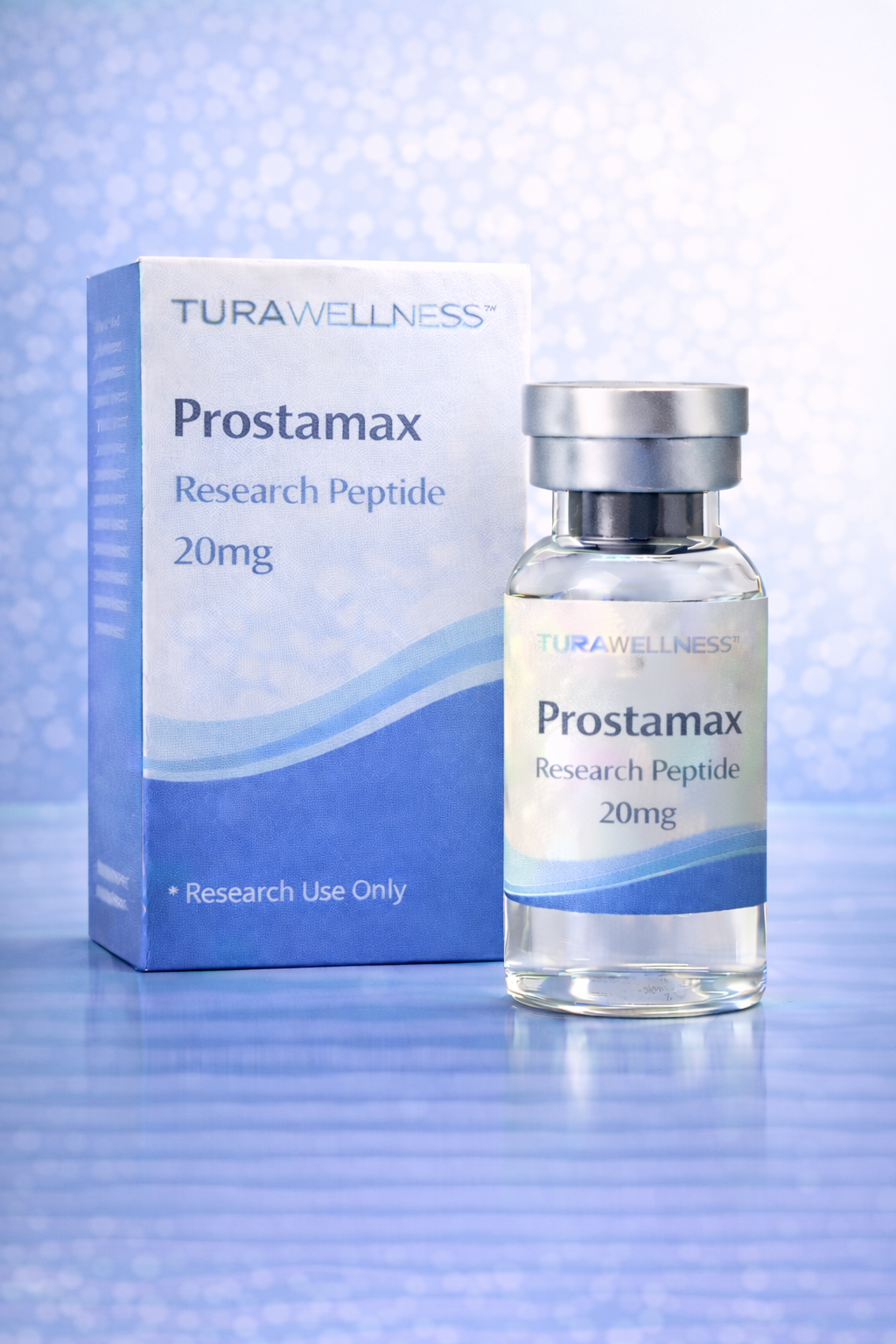
Prostamax (KEDP) research-use protocol
Disclaimer: This is an educational, research-only protocol based on publicly available information. It is not medical advice and not for human use.
Overview
• Name: Prostamax
• Sequence: Lys–Glu–Asp–Pro (KEDP)
• Class: Synthetic Khavinson tetrapeptide bioregulator, prostate-tissue–specific
• Proposed mechanism: Epigenetic modulation via chromatin structure changes (deheterochromatinization, altered DNA condensation, gene expression effects)
Reconstitution protocol (20 mg vial examples)
Option A – 2.0 mL dilution (10 mg/mL)
• Step 1: Add 2.0 mL bacteriostatic water to a 20 mg lyophilized vial.
• Step 2: Gently swirl until fully dissolved—avoid vigorous shaking.
• Step 3: Label vial with concentration (10 mg/mL) and date/time of reconstitution.
At 10 mg/mL:
• 1 unit on U100 insulin syringe (0.01 mL) ≈ 0.1 mg = 100 mcg
Option B – 3.0 mL dilution (~6.67 mg/mL)
• Step 1: Add 3.0 mL bacteriostatic water to a 20 mg vial.
• Step 2: Gently swirl to dissolve.
• Step 3: Label vial with concentration (~6.67 mg/mL) and date/time.
At ~6.67 mg/mL:
• 1 unit (0.01 mL) ≈ 66.7 mcg
Example experimental dosing ranges (research context only)
From peptide research references and dosage guides (not clinical dosing):
• Typical daily range (educational):
o 500–1000 mcg once daily
o Broader titration ranges up to 500–3000 mcg once daily are described in research-use protocols
• Route (preclinical models):
o Subcutaneous (abdomen, thigh, upper arm) once daily
o Some protocols describe intramuscular once-daily approaches
• Cycle length:
o 10–20 days per experimental cycle is commonly referenced
Design of any invitro, exvivo, or invivo model should be aligned with institutional ethics, species-specific limits, and local regulations.
Storage and stability
• Lyophilized powder:
o Short-term: refrigerate at 4 °C
o Long-term: −20 °C, protected from light
• After reconstitution:
o Store at 2–8 °C (refrigerated)
o Use within typical lab stability windows; some guides suggest within ~2 weeks
• General handling:
o Avoid repeated freeze–thaw cycles.
o Keep protected from light to minimize degradation
Research applications (conceptual)
• Prostate tissue models: inflammation, remodeling, aging-related changes
• Epigenetic and chromatin studies: DNA condensation, heterochromatin/ euchromatin balance, NORs, sister chromatid exchanges
• Comparative bioregulator work: alongside other Khavinson peptides for tissue-specific effects
Available at TuraWellness.com