

 Image 1 of 1
What It Is
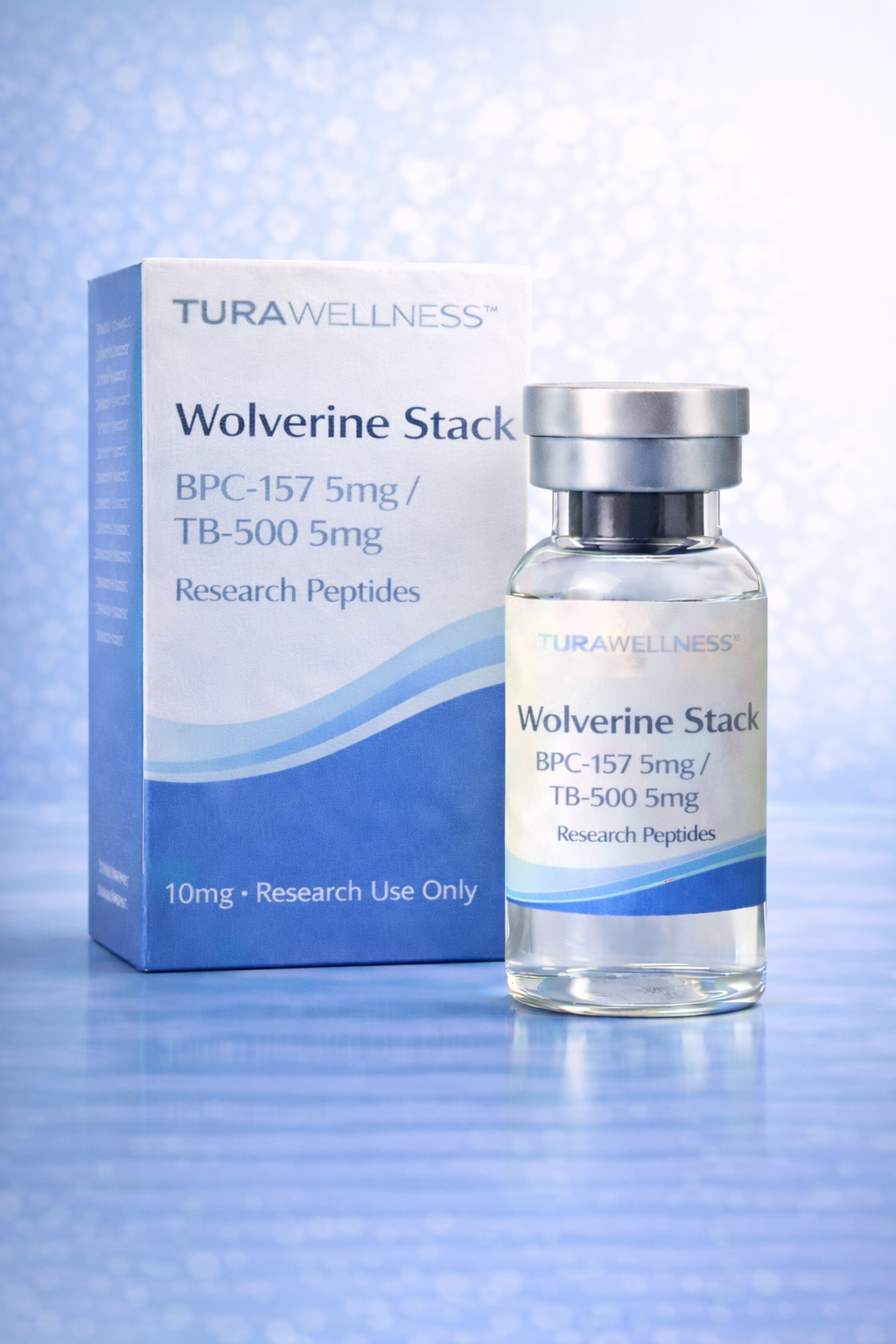
The Wolverine Stack is a combination of two healing peptides: BPC-157 (Body Protection Compound 157) and TB-500 (a synthetic version of Thymosin Beta-4). The name comes from the Marvel character Wolverine, known for his superhuman ability to heal from virtually any injury. While this peptide combination will not give you mutant regeneration powers, the concept is similar: two compounds working together to enhance your body's natural repair processes through different but complementary mechanisms.
BPC-157 is a synthetic pentadecapeptide (15 amino acids) derived from a protective protein found in human gastric juice. It works primarily through growth factor signaling and nitric oxide modulation, focusing on localized tissue repair.
TB-500 is a 43 amino acid synthetic version of Thymosin Beta-4, a naturally occurring protein found throughout the body that plays key roles in cell migration, blood vessel formation, and tissue regeneration.
When these two peptides are combined in a single vial, you get a pre-blended product that simplifies the recovery protocol. Instead of managing two separate vials with different dosing schedules and reconstitution processes, you have one solution that delivers both peptides at therapeutic ratios.
This product contains 5 mg of BPC-157 and 5 mg of TB-500 in a single vial (10 mg total).
The Wolverine Stack is not FDA approved for human use. Both BPC-157 and TB-500 are banned by the World Anti-Doping Agency (WADA). The FDA classified both as Category 2 bulk drug substances in 2023, restricting their use in compounded medications.
How It Works
The power of the Wolverine Stack lies in the synergy between its two components. BPC-157 and TB-500 target different biological pathways to achieve the same ultimate goal: healing. Together, they address multiple stages of the repair cascade.
BPC-157 Mechanisms:
BPC-157 acts as the initiator and protector in the healing process:
• Upregulates VEGF (vascular endothelial growth factor) to promote angiogenesis (new blood vessel formation)
• Modulates nitric oxide synthesis to improve blood flow to injured areas
• Activates FAK-paxillin pathways to promote cell migration and attachment
• Increases growth hormone receptor expression in damaged tissues
• Protects tissues from oxidative damage and inflammation
• Demonstrates gastric stability, allowing oral administration for gut-related issues
TB-500 Mechanisms:
TB-500 acts as the executor and artisan, carrying out physical reconstruction:
• Regulates actin, a protein that makes up 10% of cellular content and controls cell structure and movement
• Sequesters actin monomers, maintaining a ready reserve for rapid mobilization when cells need to migrate
• Promotes cell migration over long distances due to its low molecular weight and lack of extracellular matrix binding
• Stimulates angiogenesis through direct effects on endothelial cells
• Releases anti-inflammatory peptide fragment Ac-SDKP during metabolism
• Works systemically regardless of injection site
Synergy Between BPC-157 and TB-500:
Think of a major reconstruction project after damage:
BPC-157 is the general contractor. It arrives first, secures the site, calls in the growth factors, ensures blood supply reaches the damaged area, and creates the conditions necessary for repair.
TB-500 is the construction crew. It mobilizes repair cells, directs them to the injury site, and manages the physical rebuilding at the cellular level through actin regulation.
One peptide sets up the infrastructure for healing. The other executes the repair work. Together they create an environment where damaged tissue can actually regenerate rather than simply scar over.
The complementary mechanisms include:
• Angiogenesis support from both peptides (through different pathways)
• Fibroblast activation for collagen synthesis
• Cell migration enhancement
• Inflammation modulation
• Myofiber regeneration support
Benefits
The Wolverine Stack combines the benefits of both BPC-157 and TB-500, creating a comprehensive approach to tissue healing and recovery.
Tendon and Ligament Healing
Both peptides have demonstrated effects on connective tissue repair in animal studies. BPC-157 promotes tendon fibroblast activity and outgrowth, while TB-500 prevents adhesion and fibrous band formation. The combination supports:
• Faster healing of tendon injuries (Achilles, rotator cuff, patellar)
• Ligament repair (ACL, MCL, other sprains)
• Reduced scar tissue formation
• Improved tissue quality after healing
Muscle Recovery
The stack supports muscle repair through multiple pathways:
• Enhanced fibroblast migration into damaged muscle
• Myofiber regeneration support
• Reduced inflammation in injured muscle tissue
• Improved recovery from strains and tears
Joint Support
For joint issues including:
• Chronic joint inflammation
• Cartilage support
• Post-surgical joint recovery
• Degenerative wear and tear
Wound Healing
Both peptides accelerate wound healing through:
• Increased angiogenesis (new blood vessel formation)
• Enhanced epithelialization (new skin coverage)
• Faster wound contraction
• Improved collagen deposition
• Better tissue remodeling
Post-Surgical Recovery
The Wolverine Stack is commonly used to support recovery after:
• ACL reconstruction
• Rotator cuff repair
• Meniscus surgery
• Tendon reattachment procedures
• General soft tissue surgeries
Gut Health (BPC-157 Component)
The BPC-157 component provides gut-specific benefits:
• Support for stomach lining repair
• Protection against NSAID-induced gut damage
• Potential benefits for inflammatory bowel conditions
• Leaky gut support
Systemic Healing Support
TB-500's systemic distribution means the stack can support healing throughout the body, not just at the injection site. This makes it useful for:
• Multiple simultaneous injuries
• Chronic inflammatory conditions
• General recovery optimization
What the Science Shows
Research on the individual components of the Wolverine Stack is extensive in animal models, though human clinical trials remain limited. No studies have specifically examined the combined BPC-157 + TB-500 blend, but research on each peptide supports the rationale for combination.
BPC-157 Research:
Gwyer et al. (2019) reviewed BPC-157 for musculoskeletal soft tissue healing and concluded it shows promise for healing hypovascular tissues like tendons and ligaments with few reported adverse reactions.
Chang et al. (2011) demonstrated BPC-157 accelerates tendon healing through enhanced tendon outgrowth, cell survival under stress, and increased cell migration via FAK-paxillin pathway activation.
TB-500 Research:
Malinda et al. (1999) showed thymosin beta-4 increased re-epithelialization by 42% at day 4 and up to 61% at day 7 in rat wound models, with improved wound contraction and increased collagen deposition.
Bock-Marquette et al. (2004) demonstrated thymosin beta-4 activates integrin-linked kinase and promotes cardiac cell migration, survival, and repair in Nature.
Rationale for Combination:
Research suggests BPC-157 and TB-500 operate through complementary pathways:
• Both promote angiogenesis (through different mechanisms)
• Both enhance cell migration (BPC-157 through FAK-paxillin, TB-500 through actin regulation)
• Both reduce inflammation (BPC-157 through cytokine modulation, TB-500 through Ac-SDKP release)
• BPC-157 excels at localized tissue repair
• TB-500 excels at systemic distribution and cell mobilization
The theoretical synergy is supported by the distinct mechanisms, though direct comparative studies are needed.
Sources:
• Gwyer D, et al. Gastric pentadecapeptide body protection compound BPC 157 and its role in accelerating musculoskeletal soft tissue healing. Cell Tissue Res. 2019. https://pubmed.ncbi.nlm.nih.gov/30915550/
• Chang CH, et al. The promoting effect of pentadecapeptide BPC 157 on tendon healing. J Appl Physiol. 2011. https://pubmed.ncbi.nlm.nih.gov/21030672/
• Malinda KM, et al. Thymosin beta4 accelerates wound healing. J Invest Dermatol. 1999. https://pubmed.ncbi.nlm.nih.gov/10469335/
• Bock-Marquette I, et al. Thymosin beta-4 activates integrin-linked kinase and promotes cardiac cell migration, survival, and cardiac repair. Nature. 2004. https://pubmed.ncbi.nlm.nih.gov/15565145/
Dosing Protocol
The Wolverine Stack simplifies dosing by combining both peptides in therapeutic ratios. Each vial contains 5 mg BPC-157 + 5 mg TB-500.
Standard Protocol
Loading Phase (first 4 to 6 weeks):
• Frequency: Subcutaneous injection once daily or every other day
• Duration: 4 to 6 weeks for acute injuries
Maintenance Phase (if needed):
• Frequency: 2 to 3 times per week
• Duration: As needed for ongoing support
Dose Calculation
With the 5 mg + 5 mg blend (10 mg total), common dosing approaches include:
Daily injection approach:
• 0.5 mL daily delivers approximately 250 mcg BPC-157 + 250 mcg TB-500
Every other day approach:
• 0.5 mL every other day delivers approximately 250 mcg BPC-157 + 250 mcg TB-500
The blend ratio (1:1 by weight) delivers both peptides at commonly used therapeutic doses when injected at standard volumes.
By Application
Acute injury (strain, sprain, tear):
• Daily injection for 4 to 6 weeks
• Inject near injury site or subcutaneously in abdomen
Post-surgical recovery:
• Daily injection starting post-surgery (with surgeon approval)
• Continue 4 to 8 weeks depending on procedure
Chronic injury or joint support:
• Every other day injection for 6 to 8 weeks
• May extend with maintenance dosing
Administration
Unlike standalone BPC-157 (which benefits from local injection near the injury), the Wolverine Stack can be injected anywhere because TB-500 distributes systemically. Many users simply inject subcutaneously into the abdomen for convenience.
However, some still prefer to inject near the injury site to maximize BPC-157's localized effects while still receiving TB-500's systemic benefits.
Draw Volumes by Vial Size
5 mg + 5 mg Vial (10 mg total) with 2 mL Bacteriostatic Water
Concentration: 2.5 mg BPC-157 per mL + 2.5 mg TB-500 per mL (5 mg total per mL)
Volume BPC-157 Dose TB-500 Dose Units on Syringe
──────────────────────────────────────────────────────────────────────
0.10 mL 250 mcg 250 mcg 10 units
0.15 mL 375 mcg 375 mcg 15 units
0.20 mL 500 mcg 500 mcg 20 units
0.25 mL 625 mcg 625 mcg 25 units
At 0.20 mL (500 mcg + 500 mcg) daily, one vial lasts 10 days. At 0.10 mL (250 mcg + 250 mcg) daily, one vial lasts 20 days.
Reconstitution
Materials Needed:
• Wolverine Stack vial (lyophilized powder)
• Bacteriostatic water
• Sterile syringe for reconstitution
• Alcohol swabs
Instructions:
1. Wipe the vial stopper and bacteriostatic water vial with alcohol swabs
2. Draw 2 mL of bacteriostatic water into a sterile syringe
3. Insert needle through rubber stopper at an angle
4. Let water trickle slowly down the inside wall of the vial
5. Do not inject directly onto the powder or shake vigorously
6. Gently swirl until fully dissolved
7. Solution should be clear. If cloudy or contains particles, do not use
Both peptides in the blend reconstitute well together. The solution should be clear and colorless.
Side Effects
The Wolverine Stack combines two peptides with favorable safety profiles in animal studies and limited human observations.
Common:
• Injection site reactions including redness, swelling, or mild irritation
• Mild fatigue or lethargy
• Nausea (uncommon)
• Headache (uncommon)
Less Common (reported by users):
• Lightheadedness
• Flu-like symptoms
• Digestive discomfort
Theoretical Concerns:
Both BPC-157 and TB-500 promote angiogenesis (new blood vessel formation). This raises theoretical concerns about use in individuals with existing cancers or tumors, as new blood vessel growth could theoretically support tumor development. This has not been demonstrated in research but remains a precautionary consideration.
Safety Profile:
Animal studies on both peptides show high safety thresholds with no significant adverse effects even at elevated doses. However, human safety data remains limited. A 2025 pilot study showed IV BPC-157 infusions up to 20 mg were well tolerated in two healthy adults with no adverse events.
The combined use of both peptides does not appear to increase side effect risk based on available evidence.
Contraindications and Precautions
Do Not Use If You Have:
• Active cancer or tumors (theoretical concern about angiogenesis)
• History of malignancy
• Known hypersensitivity to BPC-157, TB-500, or thymosin peptides
Use Caution With:
• Pregnancy or breastfeeding (no safety data)
• Severe cardiovascular conditions
• Autoimmune conditions
• Immunosuppressant medications
Drug Interactions:
Limited data available. Some sources suggest NSAIDs may interfere with BPC-157's regenerative mechanisms, though BPC-157 has also shown protective effects against NSAID-induced gut damage. Consult healthcare provider if taking regular medications.
Regulatory Status:
• FDA Category 2 bulk drug substance (both peptides)
• WADA prohibited (both peptides)
• Available as research chemical
Consult a qualified healthcare provider before use.
Comparison Table
Product Contents Best For Price
──────────────────────────────────────────────────────────────────────────────
Wolverine Stack BPC-157 5mg + Injury recovery $49.99
TB-500 5mg Post-surgical healing
Tendon/ligament repair
GLOW Blend TB-500 10mg + Comprehensive healing $99.99
BPC-157 10mg + Plus skin/collagen
GHK-Cu 50mg Anti-aging support
KLOW Blend TB-500 + BPC-157 + Maximum healing $119.99
GHK-Cu + KPV Plus gut inflammation
Plus anti-aging
BPC-157 Alone 5mg Localized healing $34.99
Gut issues
TB-500 Alone 5mg Systemic healing $35.99
Multiple injuries
When to Choose Wolverine Stack vs Individual Peptides:
Choose Wolverine Stack if:
• Your main goal is injury recovery, tendon/ligament healing, or post-surgical support
• You want a simpler protocol with one vial instead of two
• You prefer the convenience of pre-combined peptides at therapeutic ratios
Choose individual peptides if:
• You need to adjust the ratio of BPC-157 to TB-500 for specific purposes
• You want to use BPC-157 orally for gut issues (blend is intended for injection)
• You only need one of the two peptides
Success Tips
Be Consistent
The Wolverine Stack works best with consistent daily or every-other-day administration. Missing occasional doses will not ruin your progress, but steady levels produce better results than sporadic use.
Combine With Rehabilitation
Peptides accelerate healing. They do not replace the fundamentals. For best results, combine the Wolverine Stack with:
• Appropriate rest and activity modification
• Physical therapy or rehabilitation exercises
• Proper nutrition (adequate protein, anti-inflammatory foods)
• Quality sleep (recovery happens during sleep)
The stack creates an environment for tissue regeneration, but you still need to support the healing process through lifestyle factors.
Inject Consistently
You can inject the Wolverine Stack anywhere subcutaneously because TB-500 distributes systemically. However, if you prefer to maximize BPC-157's localized effects, inject near the injury site.
Set Realistic Expectations
Most users report noticeable improvements within 1 to 2 weeks, with significant progress by weeks 2 to 4. Full healing of serious injuries still takes time. An injury that would normally take 12 weeks to heal might heal in 8 weeks with peptide support, but it still requires patience.
Stack If Needed
The Wolverine Stack can be combined with:
Growth hormone support (MK-677):
• Increases systemic GH and IGF-1
• Supports collagen production
• Enhances overall tissue repair
Collagen and nutrition support:
• Collagen peptides (dietary)
• Vitamin C (essential for collagen synthesis)
• Quality protein intake
Need Help With Training or Nutrition?
Peptides support recovery, but they work best alongside proper training and nutrition. If you want more information on these, checkout out our website at: turawellness.com
Injection Technique
The Wolverine Stack is administered via subcutaneous injection.
Subcutaneous Injection:
1. Wash hands thoroughly with soap and water
2. Clean the vial stopper with an alcohol swab and allow to air dry
3. Draw the appropriate dose into a sterile insulin syringe (29 to 31 gauge)
4. Clean the injection site with an alcohol swab
5. Pinch a fold of skin
6. Insert needle at 45 to 90 degree angle
7. Inject slowly and steadily
8. Release skin fold and withdraw needle
9. Apply light pressure with gauze if needed
10. Dispose of syringe immediately in a sharps container
Site Selection:
Common injection sites:
• Abdomen (stay 2 inches from navel)
• Outer thigh
• Near the injury site (if targeting specific area)
Because TB-500 works systemically, the Wolverine Stack can be injected anywhere convenient. However, some users prefer injecting near the injury to maximize BPC-157's localized benefits while still receiving TB-500's systemic effects.
Rotate injection sites to avoid tissue irritation.
Storage and Handling
Before Reconstitution:
• Store lyophilized (powder) vials in the refrigerator at 36 to 46 degrees Fahrenheit (2 to 8 degrees Celsius)
• Can be stored in freezer for longer-term storage
• Protect from light
• Do not use past expiration date
After Reconstitution:
• Refrigerate at 36 to 46 degrees Fahrenheit
• Use within 4 weeks when reconstituted with bacteriostatic water
• Do not freeze after reconstitution
• Keep the stopper clean
• If solution becomes cloudy or contains particles, discard
Legal Status
United States:
Neither BPC-157 nor TB-500 is FDA approved for human use. Both were classified as Category 2 bulk drug substances in 2023, restricting their use in compounded medications. The Wolverine Stack is available as a research chemical from peptide suppliers, typically labeled "not for human consumption" or "for research purposes only."
WADA Status:
Both BPC-157 and TB-500 are prohibited under the S0 Unapproved Substances category. Athletes subject to drug testing should not use this combination.
Competitive Athletes:
If you compete in any sport with anti-doping regulations, the Wolverine Stack will result in a positive test and sanctions.
Frequently Asked Questions
Why combine BPC-157 and TB-500 instead of using them separately?
The two peptides work through complementary mechanisms. BPC-157 excels at localized tissue repair through growth factor signaling. TB-500 excels at systemic healing through actin regulation and cell mobilization. Together they address multiple stages of the repair cascade. The pre-combined blend also simplifies the protocol from two separate vials and dosing schedules to one.
How quickly does the Wolverine Stack work?
Most users notice improvements within 1 to 2 weeks, including reduced pain and improved mobility. More significant healing becomes apparent by weeks 2 to 4. Full tissue healing varies by injury severity.
Do I need to inject near the injury site?
No. Because TB-500 distributes systemically regardless of injection location, you can inject the Wolverine Stack anywhere convenient (usually the abdomen). However, some users prefer injecting near the injury to maximize BPC-157's localized effects while still receiving TB-500's systemic benefits.
Can I use the Wolverine Stack for gut issues?
The blend is designed for injection. If your primary goal is gut health, standalone BPC-157 (which can be taken orally) may be more appropriate. The BPC-157 component in the Wolverine Stack will provide some systemic gut support when injected, but oral administration targets gut tissue more directly.
Is the Wolverine Stack safe?
Both peptides show favorable safety profiles in animal studies. A 2025 human pilot study showed BPC-157 was well tolerated at high IV doses. However, long-term human safety data is limited. The main theoretical concern is angiogenesis promotion in individuals with existing cancers.
How long should I run the Wolverine Stack?
Most protocols run 4 to 6 weeks for acute injuries, which can be extended to 8 to 12 weeks for chronic issues or post-surgical recovery. Take 2 to 4 weeks off between cycles if needed.
Product Source
Research Grade Wolverine Stack available at turawellness.com
Disclaimer
This guide provides educational information about the BPC-157 + TB-500 Blend (Wolverine Stack) based on published scientific literature and practical community experience. This is for educational purposes only and does not constitute medical advice, diagnosis, or treatment. Both BPC-157 and TB-500 are research compounds not approved by the FDA for human use. Always consult qualified healthcare professionals before using any peptide or medication.
References
1. Gwyer D, Wragg NM, Wilson SL. Gastric pentadecapeptide body protection compound BPC 157 and its role in accelerating musculoskeletal soft tissue healing. Cell Tissue Res. 2019;377(2):153-159. https://pubmed.ncbi.nlm.nih.gov/30915550/
2. Chang CH, Tsai WC, Lin MS, Hsu YH, Pang JH. The promoting effect of pentadecapeptide BPC 157 on tendon healing involves tendon outgrowth, cell survival, and cell migration. J Appl Physiol. 2011;110(3):774-780. https://pubmed.ncbi.nlm.nih.gov/21030672/
3. Malinda KM, Sidhu GS, Mani H, et al. Thymosin beta4 accelerates wound healing. J Invest Dermatol. 1999;113(3):364-368. https://pubmed.ncbi.nlm.nih.gov/10469335/
4. Bock-Marquette I, Saxena A, White MD, et al. Thymosin beta-4 activates integrin-linked kinase and promotes cardiac cell migration, survival, and cardiac repair. Nature. 2004;432(7016):466-472. https://pubmed.ncbi.nlm.nih.gov/15565145/
5. Sikiric P, et al. Novel cytoprotective mediator, stable gastric pentadecapeptide BPC 157. Vascular recruitment and gastrointestinal tract healing. Curr Pharm Des. 2018;24(18):1990-2001. https://pubmed.ncbi.nlm.nih.gov/29756566/