

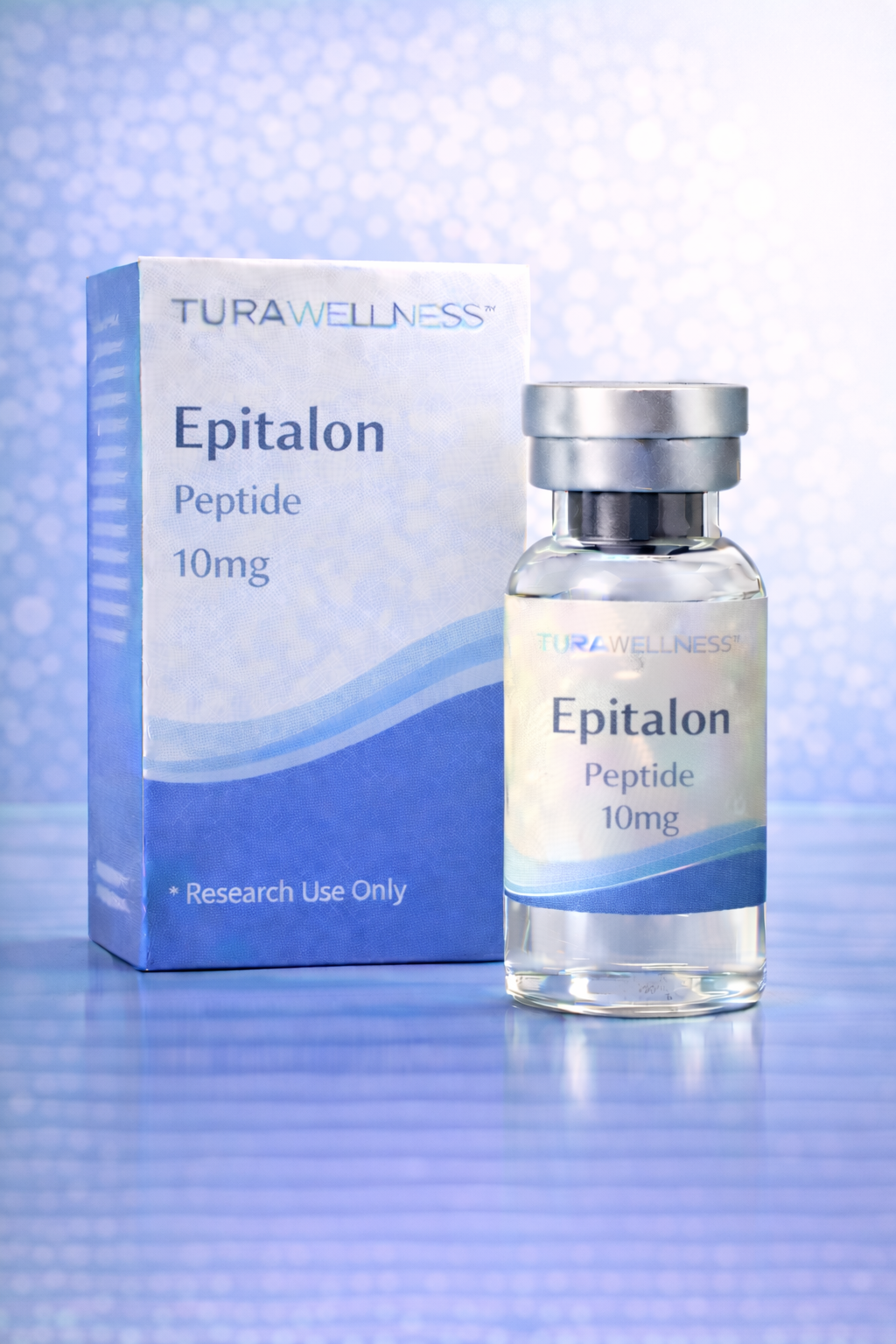
 Image 1 of 1
What It Is
Epithalon (also spelled Epitalon) is a synthetic tetrapeptide consisting of four amino acids: alanine, glutamic acid, aspartic acid, and glycine (Ala-Glu-Asp-Gly). It was developed by Professor Vladimir Khavinson at the St. Petersburg Institute of Bioregulation and Gerontology in Russia, where it has been studied for over 35 years as an anti-aging compound.
Epithalon is derived from Epithalamin, a natural peptide complex extracted from the pineal gland. The synthetic version was created to capture the active component responsible for the anti-aging effects observed with pineal extracts. Unlike most peptides that act on hormones or receptors, Epithalon works at a more fundamental level: it activates telomerase, the enzyme responsible for maintaining telomere length.
Telomeres are the protective caps at the ends of your chromosomes. Every time a cell divides, telomeres shorten slightly. When they become too short, the cell can no longer divide and enters senescence (cellular aging) or dies. This telomere shortening is one of the primary mechanisms of biological aging. By activating telomerase, Epithalon may help maintain telomere length and extend the replicative potential of cells.
Beyond telomeres, Epithalon also restores melatonin secretion from the pineal gland, which declines significantly with age. This affects sleep quality, circadian rhythm, and antioxidant defense. The combination of telomere maintenance and melatonin restoration makes Epithalonone of the most studied peptides in the longevity field.
How It Works
To understand why Epithalon matters, you need to understand the telomere problem.
The Telomere Problem
Every chromosome in your cells has telomeres at each end. Think of them like the plastic caps on shoelaces that prevent fraying. Each time a cell divides, the DNA replication machinery cannot fully copy the very ends of chromosomes, so telomeres get slightly shorter with each division. After enough divisions (typically 50 to 70 for human cells, known as the Hayflick limit), telomeres become critically short. At that point, the cell either stops dividing, becomes dysfunctional, or dies.
This is not just a theoretical problem. Short telomeres are associated with aging, cardiovascular disease, cancer, immune dysfunction, and reduced lifespan. Telomere length is now considered a biomarker of biological age.
Telomerase Activation
Telomerase is the enzyme that can add telomeric sequences back to chromosome ends, counteracting the shortening that occurs with each division. Most adult somatic cells have telomerase silenced, which is part of why we age. Cancer cells, stem cells, and germ cells express telomerase, which is part of why they can divide indefinitely.
Research shows that Epithalon activates telomerase in human somatic cells that normally have it silenced. In a foundational 2003 study, Epithalon treatment induced telomerase gene expression, increased telomerase enzyme activity, and elongated telomeres in human fetal fibroblasts. The cells treated with Epithalon exceeded the normal Hayflick limit and continued dividing with youthful morphology.
Melatonin Restoration
The pineal gland produces melatonin, which regulates sleep-wake cycles and serves as a powerful antioxidant. Melatonin production declines substantially with age, contributing to sleep problems, circadian disruption, and reduced antioxidant capacity.
Epithalon restores melatonin secretion in both aged animals and humans. Studies in aged monkeys showed that Epithalon normalized nighttime melatonin levels and stabilized cortisol rhythms. This effect on the pineal gland may be related to Epithalon's origin as a synthetic version of pineal peptides.
Gene Expression and Antioxidant Effects
Epithalon also affects gene expression related to stress response, DNA repair, and apoptosis. It increases the activity of antioxidant enzymes including superoxide dismutase, glutathione peroxidase, and glutathione-S-transferase. This broad effect on cellular resilience goes beyond just telomere maintenance.
Benefits
Telomere Maintenance
The primary benefit is supporting telomere length. In human clinical studies, both Epithalon and its parent compound Epithalamin significantly increased telomere length in blood cells of patients aged 60 to 80. This is not just a laboratory finding; it has been demonstrated in human subjects.
Improved Sleep and Circadian Rhythm
By restoring melatonin secretion, Epithalon can improve sleep quality and normalize circadian rhythms that become disrupted with age. Users commonly report deeper sleep and more consistent sleep-wake patterns. This effect is particularly valuable for older adults whose melatonin production has declined.
Antioxidant Support
Epithalon enhances the body's antioxidant defenses through increased enzyme activity. This helps protect cells from oxidative damage, which accumulates with age and contributes to many age-related diseases.
Immune Function
Animal studies show that Epithalon supports immune function through effects on the thymus and T-cell activity. In elderly patients, Epithalamin treatment improved immunological parameters. This may be related to the role of telomere length in immune cell function.
Potential Lifespan Extension
In multiple animal studies, Epithalon extended both mean and maximum lifespan. Mice and rats treated with Epithalon lived significantly longer than controls, with some studies showing lifespan increases of 10 to 25%. While this does not directly translate to humans, it suggests meaningful effects on the aging process.
Reduced Spontaneous Tumor Incidence
Interestingly, despite activating telomerase (which cancer cells also use), Epithalon reduced spontaneous tumor incidence and metastases in animal studies. This may be because healthy cells with maintained telomeres are less likely to become cancerous than cells with critically short, dysfunctional telomeres.
What the Science Shows
Epithalon has more research behind it than most peptides, primarily from Russian studies spanning several decades.
Khavinson et al. (2003), Bulletin of Experimental Biology and Medicine
This foundational study demonstrated that Epithalon induces telomerase activity and telomere elongation in human somatic cells. Adding Epithalon to telomerase-negative human fetal fibroblast cultures induced expression of the telomerase catalytic subunit (hTERT), increased telomerase enzyme activity, and elongated telomeres. The cells exceeded the normal Hayflick limit, demonstrating extended replicative potential.
Al-dulaimi et al. (2025), Research Square (Preprint)
A recent study examined Epithalon's effects on both normal and cancer cell lines. Results showed that Epithalon increases telomere length in normal cells through hTERT upregulation and telomerase activity. In cancer cells, telomere extension also occurred but through ALT (Alternative Lengthening of Telomeres) mechanisms. Normal cells showed 12-fold increases in hTERT expression at certain doses.
Khavinson et al. (2001), Neuroendocrinology Letters
In aged rhesus monkeys (20 to 26 years old), Epithalon restored evening melatonin levels and normalized the circadian rhythm of cortisol. This demonstrated the pineal-regulatory effects of Epithalon in primates, supporting its relevance to human aging.
Anisimov et al. (2003), Biogerontology
This study examined Epithalon's effects on lifespan and spontaneous tumors in female mice. Epithalon increased mean lifespan by approximately 13%, reduced spontaneous tumor incidence, and decreased metastases in mice that did develop tumors. The peptide showed both geroprotective (anti-aging) and oncostatic (anti-cancer) properties.
Human Clinical Studies
In human clinical studies referenced in Khavinson's work, Epithalon and Epithalaminsignificantly increased telomere length in blood cells of patients aged 60 to 80. Clinical trials in retinitis pigmentosa patients showed positive effects in 90% of cases. Long-term follow-up of elderly patients receiving annual Epithalamin courses showed lower all-cause and cardiovascular mortality at 12 years compared to controls.
Dosing Protocol
Epithalon is unique among peptides because it works like a "reset switch" rather than requiring continuous administration. Once it activates telomerase and restores melatonin secretion, the benefits persist beyond the treatment period. This is why clinical protocols use short cycles repeated periodically rather than continuous daily use.
Understanding the Dosing Logic
Clinical studies typically used 5 to 10 mg daily for 10 to 20 days, repeated once or twice per year. Higher doses do not appear to provide additional benefit because once the relevant genes and enzymes are activated, the peptide has done its job. This is fundamentally different from hormones or growth factors that require continuous presence.
Standard Anti-Aging Protocol
For general longevity support:
• Dose: 5 to 10 mg daily
• Frequency: Once daily, subcutaneous injection
• Cycle Length: 10 to 20 days
• Repeat: Once or twice per year (every 4 to 6 months)
• Timing: Evening administration may align with pineal function
• Rationale: Based on clinical protocols showing telomere elongation and melatonin restoration with this approach
Conservative Protocol
For those new to Epithalon or preferring minimal intervention:
• Dose: 5 mg daily
• Cycle Length: 10 days
• Repeat: Once yearly
• Rationale: Lower dose and frequency while still providing periodic cellular "reset"
Why Short Cycles Work
Epithalon is a regulatory peptide that triggers gene expression changes. Once telomerase is reactivated and melatonin secretion is restored, continuous administration is unnecessary. Think of it like flipping a switch rather than holding down a button. The effects of a single cycle can persist for months, which is why annual or semi-annual cycles are sufficient.
Age Considerations
Research suggests that older adults (over 60) experience the most pronounced benefits because they have the greatest decline in telomere length and melatonin production. Younger individuals may see less dramatic effects because their systems are still functioning well. Most clinical evidence comes from studies in elderly populations.
Draw Volumes by Vial Size
Zesty Rat Research offers Epithalon in 50 mg vials.
50 mg Vial (2 mL reconstitution = 25 mg/mL)
Dose Volume Units on Syringe
──────────────────────────────────────────
5 mg 0.20 mL 20 units
10 mg 0.40 mL 40 units
Vial duration at 5 mg daily: 10 days
Vial duration at 10 mg daily: 5 days
50 mg Vial (2.5 mL reconstitution = 20 mg/mL)
Dose Volume Units on Syringe
──────────────────────────────────────────
5 mg 0.25 mL 25 units
10 mg 0.50 mL 50 units
Vial duration at 5 mg daily: 10 days
Vial duration at 10 mg daily: 5 days
For a standard 10-day cycle at 5 mg daily, one 50 mg vial is sufficient. For a 20-day cycle at 10 mg daily, you would need 4 vials.
Reconstitution Instructions
1. Remove the flip-off cap from the vial and wipe the rubber stopper with an alcohol swab
2. Draw your chosen volume of bacteriostatic water into a sterile syringe (2 mL or 2.5 mL)
3. Insert the needle through the rubber stopper at an angle
4. Inject the water slowly down the inside wall of the vial to avoid foaming
5. Gently swirl or roll the vial until the powder is fully dissolved (do not shake vigorously)
6. The solution should be clear and colorless
7. Label the vial with the reconstitution date and concentration
8. Store in the refrigerator at 36 to 46 degrees Fahrenheit (2 to 8 degrees Celsius)
9. Use within 30 days for optimal potency
Side Effects and Cautions
Epithalon has been studied for decades and shows a favorable safety profile in both animal and human studies.
Reported Effects:
• Injection site irritation (redness, slight swelling, tenderness)
• Mild headache (occasional)
• Temporary fatigue during the cycle
• Mild nausea (rare)
What Epithalon Does NOT Cause:
• Significant hormonal disruption
• Endocrine suppression
• Known drug interactions
• Dependency or withdrawal
Theoretical Concerns:
Because Epithalon activates telomerase, there is theoretical concern about cancer risk. However, animal studies consistently show reduced tumor incidence with Epithalon treatment, not increased risk. The explanation may be that cells with healthy telomeres are more stable and less prone to malignant transformation than cells with critically short, dysfunctional telomeres.
Important Limitations:
• Most research comes from one research group in Russia
• Large-scale independent replication is limited
• Long-term human safety data beyond existing studies is unknown
• Effects in younger populations are not well studied
Who Should Avoid or Use With Care
Avoid if:
• Pregnant or breastfeeding (not studied)
• Active cancer or history of cancer (theoretical telomerase concerns, despite favorable animal data)
• Under medical treatment that could interact with cellular replication
Use with caution if:
• Under age 35 (limited evidence of benefit, systems likely still functioning well)
• Taking medications that affect melatonin or circadian rhythm
• History of autoimmune conditions (immune modulation effects)
Not a substitute for:
• Healthy lifestyle factors (sleep, nutrition, exercise, stress management)
• Medical evaluation of age-related conditions
• Evidence-based interventions with stronger human data
Success Tips
Time It Right
Consider evening administration to align with natural pineal gland activity and melatonin production. Some users report enhanced sleep quality during the cycle when dosing in the evening.
Keep Expectations Realistic
Epithalon is not a fountain of youth. The research suggests it may slow certain aspects of cellular aging, but it will not reverse decades of aging overnight. Think of it as one tool in a comprehensive longevity strategy.
Support the Foundation
Epithalon works best when your fundamentals are solid. Sleep, nutrition, exercise, and stress management all affect telomere length and cellular health. Do not expect Epithalon to compensate for poor lifestyle choices.
Track Relevant Biomarkers
If you want to assess Epithalon's effects objectively, consider baseline and follow-up testing of telomere length through commercial testing services. Sleep quality tracking can also help assess melatonin-related benefits.
Stick to the Protocol
The temptation with peptides is often to use more or use continuously. With Epithalon, the research supports short cycles repeated periodically. More is not better once the relevant systems are activated.
Need Support With Comprehensive Health Optimization?
Longevity is built on a foundation of training, nutrition, and lifestyle. If you want more information on these, please contact us at TuraWellness.com.
Injection Technique
1. Wash hands thoroughly with soap and water
2. Gather supplies: reconstituted vial, alcohol swabs, insulin syringe, sharps container
3. Clean the vial stopper with an alcohol swab and allow to air dry
4. Draw the calculated dose into a sterile insulin syringe
5. Clean the injection site with an alcohol swab and allow to air dry
6. Pinch a fold of skin at the injection site
7. Insert the needle at a 45 to 90 degree angle into subcutaneous tissue
8. Do not aspirate for subcutaneous injections
9. Inject slowly and steadily
10. Withdraw the needle and apply light pressure if needed
11. Dispose of the syringe immediately in a sharps container
12. Rotate injection sites with each dose (abdomen, thighs, upper arms)
Storage and Handling
Before Reconstitution:
• Store lyophilized (powder) vials in the freezer at minus 4 degrees Fahrenheit (minus 20 degrees Celsius)
• Can also be stored in the refrigerator at 36 to 46 degrees Fahrenheit for shorter periods
• Protect from light and moisture
• Do not use past expiration date
After Reconstitution:
• Refrigerate at 36 to 46 degrees Fahrenheit (2 to 8 degrees Celsius)
• Use within 30 days for optimal potency
• Do not freeze after reconstitution
• Keep the stopper clean between uses
• If solution becomes cloudy or contains particles, discard and use a new vial
Comparison to Other Longevity Compounds
Compound Primary Mechanism Dosing Pattern Human Data
─────────────────────────────────────────────────────────────────────────────
Epithalon Telomerase activation Cyclical (annual) Moderate
NAD+ Sirtuin/energy Continuous Limited
Rapamycin mTOR inhibition Cyclical Limited
Metformin AMPK/metabolic Continuous Extensive
Resveratrol Sirtuin activation Continuous Mixed
Epithalon is unique in directly targeting telomere length through telomerase activation. Most other longevity compounds work through metabolic pathways, autophagy, or inflammation. The cyclical dosing pattern is also distinctive. Epithalon may complement other approaches rather than replace them.
Legal Status
Russia: Developed and studied extensively. Used in clinical settings.
United States: Not FDA approved. Available as a research compound. Not scheduled as a controlled substance.
Europe: Not approved by EMA. Available through research suppliers.
WADA Status: Not currently on the prohibited list, but athletes should verify current regulations.
Frequently Asked Questions
How long until I notice effects?
Sleep improvements (from melatonin restoration) may be noticeable within days to weeks. Telomere-related effects are not perceptible day-to-day but would be measured through biomarker testing over longer periods.
Do I need to cycle Epithalon?
Yes. Unlike peptides that require continuous use, Epithalon works by triggering gene expression changes that persist after the cycle ends. Short cycles (10 to 20 days) repeated annually or semi-annually are the standard approach.
Is Epithalon safe given that cancer cells use telomerase?
This is a valid theoretical concern, but animal studies consistently show reduced tumor incidence with Epithalon. The current hypothesis is that maintaining healthy telomere length prevents the chromosomal instability that contributes to cancer development.
At what age should I start using Epithalon?
Most research has been conducted in elderly populations (over 60). Benefits may be less pronounced in younger individuals whose telomeres and melatonin production are still relatively intact. There is limited evidence to guide use in people under 40.
Can I combine Epithalon with other longevity interventions?
Theoretically yes, since Epithalon targets telomeres while most other interventions target metabolism or autophagy. However, the research on combinations is limited. A conservative approach would be to use Epithalon alone initially to assess response.
How do I know if Epithalon is working?
Subjectively, improved sleep quality is often the first noticeable effect. Objectively, telomere length testing before and after a course of treatment could provide measurable data, though changes may be subtle and testing is imperfect.
Product Source
Research Grade Epithalon available at TuraWellness.com
Disclaimer
This guide provides educational information about Epithalon based on published scientific literature. This is for educational purposes only and does not constitute medical advice, diagnosis, or treatment. Epithalon is not FDA approved and most research comes from a single research group. Always consult qualified healthcare professionals before using any compound, especially for anti-aging purposes.
References
1. Khavinson VK, Bondarev IE, Butyugov AA. Epithalon peptide induces telomerase activity and telomere elongation in human somatic cells. Bulletin of Experimental Biology and Medicine. 2003;135(6):590-592.
2. Al-dulaimi S, Thomas R, Matta S, Roberts T. Epitalon increases telomere length in human cell lines through telomerase upregulation or ALT activity. Research Square (Preprint). 2025.
3. Anisimov VN, Khavinson VK, Popovich IG, et al. Effect of Epitalon on biomarkers of aging, life span and spontaneous tumor incidence in female Swiss-derived SHR mice. Biogerontology. 2003;4(4):193-202.
4. Khavinson VK. Peptides and Ageing. Neuroendocrinology Letters. 2002;23 Suppl 3:11-144.
5. Khavinson VK, et al. Effect of Epithalon on melatonin and cortisol rhythms in aged monkeys. Neuroendocrinology Letters. 2001.
6. Korkushko OV, et al. Normalizing effect of pineal gland peptides on melatonin rhythm in old monkeys and elderly people. Advances in Gerontology. 2007;20:177-183.