

 Image 1 of 1
What It Is
NAD+ (nicotinamide adenine dinucleotide) is a molecule found in every cell of your body that plays a central role in energy production, DNA repair, and cellular health. Think of it as the currency your cells use to convert food into usable energy and to keep your cellular machinery running smoothly.
NAD+ is essential for hundreds of metabolic reactions. It helps your mitochondria produce ATP (the energy molecule that powers everything you do), activates sirtuins (proteins involved in longevity and stress resistance), and supports the enzymes that repair damaged DNA. Without adequate NAD+, your cells cannot function properly.
The problem is that NAD+ levels decline significantly with age. By the time you reach your 40s, your NAD+ levels may have dropped by 50% or more compared to when you were young. This decline is associated with reduced energy, impaired cellular repair, metabolic dysfunction, and many of the hallmarks of aging.
Researchers have become increasingly interested in whether restoring NAD+ levels can slow or reverse aspects of aging. Preclinical studies in animals have shown remarkable benefits from NAD+ supplementation, including extended lifespan, improved metabolic health, and better cognitive function. Human research is still catching up, but early results are promising.
NAD+ can be raised through precursor supplements (NMN, NR) or through subcutaneous injections. Each method has different absorption characteristics and practical considerations.
Injectable NAD+ is available as a compounded medication from specialty pharmacies. Oral precursors like NMN and NR are available as dietary supplements.
How It Works
NAD+ functions through several interconnected pathways that support cellular health and energy production.
Mitochondrial Energy Production
NAD+ is a critical cofactor in the electron transport chain, the process by which your mitochondria convert nutrients into ATP. Without NAD+, this process stalls and your cells cannot produce adequate energy. Declining NAD+ with age contributes to the fatigue and reduced stamina many people experience as they get older.
Sirtuin Activation
Sirtuins are a family of proteins (SIRT1 through SIRT7) that regulate cellular stress responses, metabolism, and longevity. They require NAD+ as a co-substrate to function. When NAD+ levels are low, sirtuin activity decreases, which impairs the body's ability to respond to stress, repair damage, and maintain metabolic health.
Sirtuins are involved in:
• DNA repair and genomic stability
• Inflammation control
• Mitochondrial biogenesis (making new mitochondria)
• Fat metabolism and insulin sensitivity
• Circadian rhythm regulation
DNA Repair
NAD+ is consumed by PARP enzymes (poly ADP-ribose polymerases) when they repair DNA damage. As DNA damage accumulates with age and NAD+ levels decline, the repair machinery becomes less effective. This creates a vicious cycle where damaged DNA goes unrepaired, contributing to cellular dysfunction and aging.
Circadian Rhythm Regulation
NAD+ levels naturally fluctuate throughout the day as part of your circadian rhythm. This fluctuation helps regulate metabolic processes and sleep patterns. Age-related NAD+ decline can disrupt these rhythms, contributing to sleep problems and metabolic dysfunction.
CD38 and NAD+ Consumption
CD38 is an enzyme that breaks down NAD+. CD38 levels increase with age and chronic inflammation, accelerating NAD+ depletion. This is one reason why inflammatory conditions are associated with faster biological aging.
Benefits
Increased Cellular Energy
By supporting mitochondrial function, NAD+ supplementation may improve energy levels and reduce fatigue. Many people report feeling more energetic and mentally sharp after raising their NAD+ levels.
Improved Metabolic Health
Preclinical and early human studies suggest NAD+ boosting can improve insulin sensitivity, support healthy lipid metabolism, and help maintain metabolic function. One study in overweight women with prediabetes showed improved insulin sensitivity after 10 weeks of NMN supplementation.
Enhanced Cognitive Function
NAD+ supports brain health through multiple mechanisms, including energy production, DNA repair, and sirtuin activation in neurons. Users of NAD+ therapy often report improved mental clarity and reduced brain fog.
DNA Repair and Cellular Maintenance
By providing fuel for DNA repair enzymes, adequate NAD+ helps maintain genomic integrity and supports healthy cellular function over time.
Potential Anti-Aging Effects
In animal studies, NAD+ supplementation extended lifespan and healthspan, improved physical function, and reversed some aspects of age-related decline. Whether these dramatic effects translate to humans is still being studied, but the biological rationale is strong.
Cardiovascular Support
NAD+ plays important roles in heart health. Preclinical research shows NAD+ replenishment can protect against cardiovascular disease and support healthy blood pressure.
Support During Detoxification
NAD+ therapy has been used in clinical settings to support recovery from substance dependence, helping reduce withdrawal symptoms and support brain health during detoxification.
What the Science Shows
NAD+ research is rapidly evolving. Here is what the current evidence shows:
NAD+ Precursors Increase NAD+ Levels (Human Studies)
Multiple human trials have confirmed that oral NMN and NR supplementation successfully raises blood NAD+ levels. Studies show increases of 40 to 90% with consistent supplementation, though the degree of increase in tissues (where it matters most) is less clear.
Metabolic Benefits (Human Trial)
A study of overweight or obese women with prediabetes found that 10 weeks of NMN supplementation (250 mg daily) improved insulin sensitivity in skeletal muscle. This suggests potential benefits for metabolic health, though more research is needed.
Physical Function (Human Studies)
Some trials have shown improvements in walking distance and physical function with NAD+ precursor supplementation, particularly at higher doses in older adults.
Safety (Human Studies)
Oral NAD+ precursors (NMN, NR) have been studied at doses up to 1000 to 2000 mg daily and appear safe in the short to medium term. Common mild side effects include flushing, nausea, and gastrointestinal discomfort.
Injectable NAD+ (Clinical Use)
Subcutaneous NAD+ has been used clinically for addiction recovery, anti-aging protocols, and cognitive enhancement. While clinical experience suggests benefits, rigorous controlled trials are limited. The direct administration of NAD+ bypasses absorption issues but may not increase intracellular NAD+ as effectively as some precursor compounds.
Limitations of Current Research
Most dramatic benefits seen in animal studies have not yet been confirmed in large human trials. The optimal form, dose, and duration of NAD+ supplementation for different goals remains unclear. More research is needed to establish which populations benefit most and what realistic outcomes to expect.
Dosage Guidelines
NAD+ dosing depends on your goals and preferred method of administration. Understanding the rationale behind different approaches will help you choose what fits your situation.
Understanding the Different Approaches
Unlike some peptides that only work when dysfunction is present, NAD+ decline affects everyone with age. By your 40s, NAD+ levels may have dropped 50% or more from youthful levels. This means most adults over 40 can potentially benefit from NAD+ support regardless of whether they have symptoms.
The main decisions are route of administration and intensity of protocol.
Injectable vs Oral: Different Tools for Different Goals
Injectable NAD+ (SubQ or IM) delivers the molecule directly into your system with high bioavailability. This is useful when you want rapid saturation of depleted cellular reserves. Many people notice effects within hours to days with injections.
Oral precursors (NMN, NR) must be converted to NAD+ by your body. This takes longer to build up levels but is more convenient for daily long-term use. Effects may take weeks to notice. Some researchers believe oral precursors may actually be more effective at raising intracellular NAD+ because they enter cells before conversion.
Many practitioners combine both: injectable loading to quickly restore depleted levels, then oral maintenance for convenience.
Loading Phase Rationale
If your NAD+ has been declining for years or decades, your cellular reserves are depleted. A loading phase of daily injections for 7 to 10 days helps saturate these depleted stores quickly. Once levels are restored, less frequent maintenance dosing can sustain them.
Think of it like filling an empty tank versus topping off a full one.
Subcutaneous Injection
Loading protocol:
• 100 to 200 mg daily for 7 to 10 consecutive days
Maintenance protocol:
• 50 to 100 mg, 1 to 3 times per week
Intramuscular Injection
• 50 to 100 mg, 1 to 3 times per week
• Similar dosing to subcutaneous but absorbed slightly faster
Oral Precursors (NMN or NR)
• Starting dose: 250 to 500 mg daily
• Standard dose: 500 to 1000 mg daily
• Some protocols use up to 2000 mg daily
Oral precursors are converted to NAD+ in the body. They have lower bioavailability than injections but are convenient for daily use.
Timing
Morning administration is generally preferred because NAD+ boosts cellular energy production. Taking it later in the day may interfere with sleep in some individuals.
Administration Notes
For subcutaneous injection, common sites include the abdomen, thigh, or back of the upper arm. Rotate injection sites to prevent irritation. Reconstituted NAD+ should be refrigerated and used within 30 days.
Who It's For
Best candidates for NAD+ therapy:
• Adults over 40 experiencing age-related energy decline
• People with metabolic concerns (insulin resistance, weight management challenges)
• Those seeking cognitive support and mental clarity
• Athletes and active individuals wanting enhanced recovery
• People recovering from substance dependence (under medical supervision)
• Anyone interested in proactive longevity support
May not be appropriate for:
• People with active cancer (effects on cancer cell metabolism are unclear)
• Those with severe liver or kidney disease (these organs metabolize NAD+)
• Pregnant or nursing women
• People taking medications that affect cellular metabolism (consult a doctor)
Side Effects and Safety
NAD+ therapy appears safe based on available research, though long-term data is limited.
Common side effects (usually mild):
• Flushing and warmth
• Nausea
• Headache
• Fatigue
• Stomach discomfort
• Injection site reactions (redness, tenderness)
Important notes:
• Side effects are often dose and rate dependent
• Starting with lower doses helps assess tolerance
• Most side effects resolve quickly
• No significant toxicity has been reported at standard doses
• Long-term safety data is still limited
Precautions:
• People with liver or kidney disease should use caution
• Those with bleeding disorders should avoid injections
Stacking Options
NAD+ + Epithalon
This combination targets multiple aspects of cellular aging. Epithalon supports telomere maintenance while NAD+ supports mitochondrial function and DNA repair. Together they provide comprehensive anti-aging support.
NAD+ + Glutathione
Glutathione is the body's master antioxidant. Combining it with NAD+ provides both energy support and antioxidant protection, which is valuable for detoxification and anti-aging protocols.
NAD+ + B Vitamins
NAD+ is derived from vitamin B3. Supporting the full B vitamin complex ensures adequate cofactors for NAD+ metabolism and broader cellular health.
NAD+ + Metformin (with medical supervision)
Some longevity protocols combine NAD+ with metformin, which also affects cellular metabolism. This should only be done under medical supervision due to potential interactions.
What to Expect
First week of therapy:
Increased energy is commonly reported. Some people notice improved sleep quality and mental sharpness. Effects can be subtle or pronounced depending on baseline NAD+ status.
Weeks 2 to 4:
Sustained energy improvements. Better exercise recovery is often noted. Cognitive benefits may become more noticeable.
Long term:
The cellular level benefits (DNA repair, mitochondrial support) accumulate over time but are not directly perceptible. Continued use maintains elevated NAD+ levels and their associated benefits.
After stopping:
NAD+ levels gradually return to baseline. There is no withdrawal or rebound effect, but benefits will diminish over weeks to months without continued supplementation.
Support Nutrients
Vitamin B3 (Niacin)
The basic building block of NAD+. Ensure adequate intake through diet or supplementation.
Trimethylglycine (TMG)
Some practitioners recommend TMG when using high dose NAD+ precursors to support methylation pathways.
Resveratrol
Activates sirtuins alongside NAD+. Some protocols combine resveratrol with NAD+ precursors for synergistic effects.
Quercetin
May inhibit CD38, the enzyme that breaks down NAD+, potentially helping maintain higher NAD+ levels.
Apigenin
Another CD38 inhibitor that may support NAD+ preservation.
Comparison Table
Form Administration Bioavailability Convenience Cost SubQ Injection Home or Clinic High Moderate Moderate IM Injection Home or Clinic High Moderate Moderate NMN (Oral) Daily pill/powder Moderate High Low to Moderate NR (Oral) Daily pill Moderate High Low to Moderate
FAQs
What is the difference between NAD+ and NMN/NR?
NAD+ is the active molecule your cells use. NMN and NR are precursors that your body converts into NAD+. Oral NAD+ itself is poorly absorbed, which is why precursors or injectable forms are used.
Are injections better than oral supplements?
Injections provide high bioavailability directly into the bloodstream. However, whether this translates to greater intracellular NAD+ than oral precursors is still debated. Some experts believe oral precursors may actually be more effective at raising NAD+ inside cells.
How quickly will I feel results?
Many people notice increased energy within hours to days of starting NAD+ therapy, especially with injection routes. Oral precursors may take weeks for noticeable effects.
Can I take NAD+ with other supplements?
Yes. NAD+ is commonly combined with other longevity compounds. However, consult a healthcare provider if you are on medications.
How long should I continue NAD+ therapy?
Most protocols involve ongoing use since NAD+ levels naturally decline with age. The approach depends on your goals and response to therapy.
Is NAD+ therapy FDA approved?
No. NAD+ injections are available through compounding pharmacies but are not FDA approved for specific medical conditions. Oral precursors are sold as dietary supplements.
Storage and Handling
Injectable NAD+:
Refrigerate at 2 to 8°C (36 to 46°F). Do not freeze. Use within 30 days of opening. Protect from light.
Lyophilized powder (if applicable):
Store at room temperature or refrigerated until reconstitution. Once reconstituted, refrigerate and use within 30 days.
Oral supplements:
Store in a cool, dry place. Follow manufacturer recommendations.
Success Tips
Start with loading: If using injections, consider a loading phase of daily dosing for 7 to 10 days before transitioning to maintenance.
Morning dosing: Take NAD+ in the morning to align with natural circadian rhythms and avoid potential sleep interference.
Combine approaches: Some practitioners recommend combining periodic injection therapy with daily oral precursors for optimal results.
Test your levels: Intracellular NAD+ testing is available and can help you track whether your protocol is working.
Support with lifestyle: Exercise, fasting, and quality sleep naturally support NAD+ levels. Supplementation works best alongside healthy habits.
Product Source
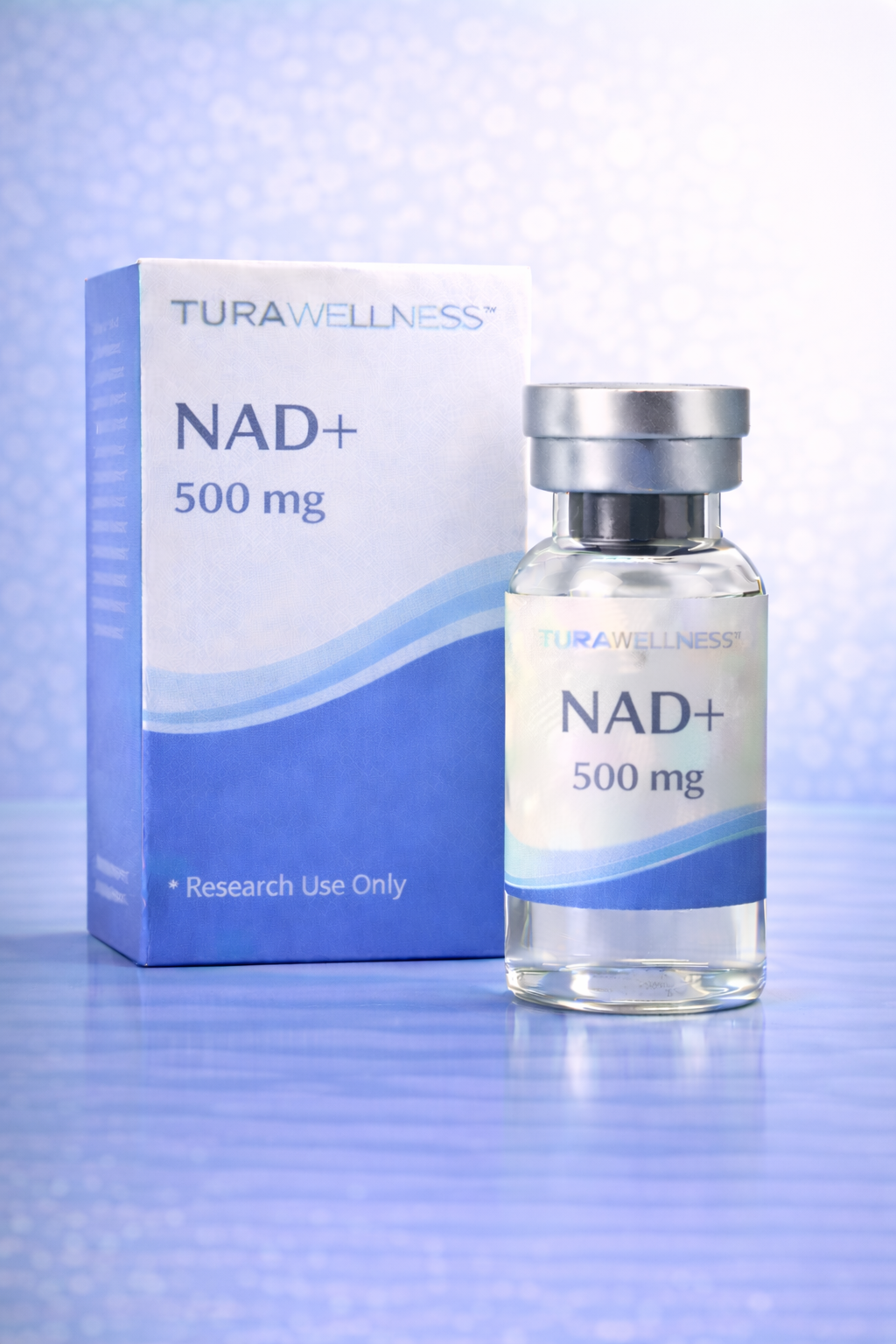
NAD+ is available as a research compound at Turawellness.com.
Related Peptides
Epithalon – Supports telomere maintenance and melatonin production. Complements NAD+ for comprehensive anti-aging support.
SS-31 – Mitochondrial peptide that protects and supports mitochondrial function. Pairs well with NAD+ for cellular energy optimization.
Glutathione – Master antioxidant that supports detoxification. Often combined with NAD+ in anti-aging and detox protocols.
References
1. Yoshino J, Baur JA, Imai SI. NAD+ Intermediates: The Biology and Therapeutic Potential of NMN and NR. Cell Metab. 2018;27(3):513-528.
2. Martens CR, Denman BA, Mazzo MR, et al. Chronic nicotinamide riboside supplementation is well-tolerated and elevates NAD+ in healthy middle-aged and older adults. Nat Commun. 2018;9(1):1286.
3. Yoshino M, Yoshino J, Kayser BD, et al. Nicotinamide mononucleotide increases muscle insulin sensitivity in prediabetic women. Science. 2021;372(6547):1224-1229.
4. Braidy N, Berg J, Clement J, et al. Role of Nicotinamide Adenine Dinucleotide and Related Precursors as Therapeutic Targets for Age-Related Degenerative Diseases. Antioxid Redox Signal. 2019;30(2):251-294.
5. Covarrubias AJ, Perrone R, Grozio A, Verdin E. NAD+ metabolism and its roles in cellular processes during ageing. Nat Rev Mol Cell Biol. 2021;22(2):119-141.
6. Shade C. The Science Behind NMN: A Stable, Reliable NAD+ Activator and Anti-Aging Molecule. Integr Med (Encinitas). 2020;19(1):12-14.
7. Okabe K, Yaku K, Tobe K, Nakagawa T. Implications of altered NAD metabolism in metabolic disorders. J Biomed Sci. 2019;26(1):34.
8. Elhassan YS, Kluckova K, Fletcher RS, et al. Nicotinamide Riboside Augments the Aged Human Skeletal Muscle NAD+ Metabolome and Induces Transcriptomic and Anti-inflammatory Signatures. Cell Rep. 2019;28(7):1717-1728.