

 Image 1 of 1
What It Is
SS-31 is a synthetic tetrapeptide that targets the inner mitochondrial membrane. Its technical name is elamipretide, and it was developed by Dr. Hazel Szeto at Weill Cornell Medical College. The peptide binds to cardiolipin, a phospholipid found almost exclusively in the inner mitochondrial membrane where it plays a critical role in energy production.
Think of cardiolipin as the structural glue that holds your electron transport chain together. When cardiolipin becomes damaged through oxidation, your mitochondria leak electrons and produce less ATP. SS-31 stabilizes cardiolipin and restores normal mitochondrial function.
In September 2025, the FDA approved elamipretide (brand name Forzinity) for treating Barth syndrome, a rare genetic condition affecting mitochondrial cardiolipin metabolism. This makes SS-31 the first mitochondria-targeted peptide to receive FDA approval for any indication.
For researchers and health optimization practitioners, SS-31 represents a fundamentally different approach to mitochondrial support. Instead of providing fuel (like NAD+) or activating pathways (like MOTS-c), SS-31 repairs the structural damage that prevents your mitochondria from working properly in the first place.
How It Works
Your mitochondria produce energy through the electron transport chain, a series of protein complexes embedded in the inner mitochondrial membrane. These complexes pass electrons along a chain, using the energy to pump protons and ultimately generate ATP.
Cardiolipin is essential for this process. It holds the protein complexes together in structures called supercomplexes, which allow electrons to flow efficiently from one complex to the next. When cardiolipin becomes oxidized or damaged, these supercomplexes fall apart. Electrons leak out, reactive oxygen species increase, and ATP production drops.
SS-31 works through several mechanisms:
• It binds directly to cardiolipin in the inner mitochondrial membrane
• It stabilizes the interaction between cardiolipin and cytochrome c, improving electron transfer
• It reduces electron leakage and reactive oxygen species production by 40 to 60%
• It preserves mitochondrial cristae structure (the folds in the inner membrane where ATP production occurs)
• It concentrates in mitochondria at levels 5000 times higher than in the surrounding cytoplasm
The peptide is water soluble and crosses cell membranes without requiring energy or transporters. It reaches peak plasma levels within 15 minutes of administration and has an elimination half life of approximately 2 hours in most species studied.
Unlike traditional antioxidants that circulate throughout the body, SS-31 accumulates specifically where oxidative damage originates: inside the mitochondria. This targeted approach allows it to work at concentrations that would be impossible to achieve with systemic antioxidants.
Benefits
Mitochondrial Repair
The primary benefit is restoration of damaged mitochondrial function. In aged mice, 8 weeks of SS-31 treatment improved mitochondrial morphology, restored cristae structure, and reduced markers of cellular senescence. This was demonstrated in kidney glomerular cells, cardiac tissue, and skeletal muscle.
Improved Energy Production
By stabilizing the electron transport chain and reducing electron leakage, SS-31 increases ATP output from existing mitochondria. Clinical trials in Barth syndrome patients showed significant improvements in the 6 Minute Walk Test after 36 weeks of treatment, indicating better exercise capacity and energy availability.
Reduced Oxidative Stress
SS-31 decreases mitochondrial reactive oxygen species production at the source. Studies show 40 to 60% reduction in ROS production when cardiolipin is stabilized. This is more effective than scavenging ROS after they form.
Organ Protection
Research demonstrates protective effects across multiple organ systems including heart, kidney, brain, and skeletal muscle. This makes sense because all these tissues depend heavily on mitochondrial function. The heart and kidneys have particularly high mitochondrial density and are especially vulnerable to mitochondrial dysfunction.
Anti-Aging Effects
By addressing one of the hallmarks of biological aging (mitochondrial dysfunction), SS-31 has shown promise in longevity research. Aged mice treated with SS-31 showed reduced cellular senescence markers and improved tissue function across multiple organ systems.
What the Science Shows
SS-31 has extensive preclinical data and has been tested in 18 human clinical trials across multiple conditions.
Barth Syndrome Trials (Phase 2/3)
The TAZPOWER trial tested 40 mg daily of elamipretide in 12 patients with Barth syndrome, a genetic condition causing defective cardiolipin metabolism. While the 12 week crossover phase did not meet primary endpoints, the 36 week open label extension showed significant improvements:
• 6 Minute Walk Test improved by 95.9 meters
• Barth Syndrome Symptom Assessment improved by 2.1 points
• Knee extensor strength improved significantly
• Cardiac parameters showed improvement
This led to FDA approval in September 2025.
Aging and Kidney Function (Preclinical)
In mice aged 24 to 26 months (equivalent to humans aged 70 to 90), 8 weeks of SS-31 treatment:
• Improved mitochondrial morphology in glomerular cells
• Reduced expression of senescence markers p16 and senescence associated beta galactosidase
• Increased parietal epithelial cell density
• Reduced glomerulosclerosis
• Preserved glomerular endothelial density
Heart Failure Studies
Clinical trials in heart failure with preserved ejection fraction showed mixed results. Some cardiac parameters improved, but primary endpoints were not consistently met. Research continues in this area.
Mitochondrial Myopathy
Trials in primary mitochondrial myopathy showed improvements in some secondary endpoints but did not meet primary efficacy endpoints. The compound was generally well tolerated.
Safety Profile
Across all clinical trials, the main adverse events were injection site reactions including erythema (57%), pruritus (47%), pain (20%), and urticaria (20%). Most were mild and did not require treatment discontinuation.
Dosing Protocol
SS-31 dosing varies significantly depending on whether you are treating a clinical condition or optimizing general mitochondrial health.
Understanding the Dose Context
Clinical trials for serious conditions like Barth syndrome used 40 mg daily for extended periods. Trials for heart failure used dose escalation protocols starting at lower amounts. For general health optimization, the community uses much lower doses based on the rationale that maintenance and prevention require less intervention than treating established disease.
Clinical Protocol (Disease States)
For individuals with diagnosed mitochondrial dysfunction, metabolic disease, or significant energy impairment:
Phase Dose Frequency Duration
Escalation 0.25 mg/kg Daily Days 1 to 3
Escalation 0.5 mg/kg Daily Days 4 to 7
Maintenance 1.0 to 2.0 mg/kg Daily 4 to 12 weeks
For an 80 kg person, the maintenance dose would be 80 to 160 mg daily. This is consistent with clinical trial protocols.
Health Optimization Protocol
For general mitochondrial support, energy enhancement, and longevity optimization:
Protocol Dose Frequency Duration
Conservative 1 to 2 mg Daily 4 to 8 weeks
Standard 2 to 5 mg Daily 4 to 8 weeks
Aggressive 5 to 10 mg Daily 4 to 8 weeks
The rationale for lower optimization doses: if your mitochondria are generally functional and you want to maintain or enhance them, you do not need the same intervention level as someone treating disease. Start conservative and assess response before increasing.
Why the Doses Differ
Someone with Barth syndrome has a genetic defect causing severe cardiolipin dysfunction. Their mitochondria are fundamentally broken. They need high doses sustained over long periods to compensate.
Someone in their 40s with declining energy but no diagnosed disease has accumulated damage but retains functional mitochondria. Lower doses can support repair without the intensity required for disease treatment.
Cycling Considerations
SS-31 does not appear to cause tolerance or dependency based on available data. However, most community protocols use cycles of 4 to 8 weeks on followed by 4 weeks off. This allows assessment of baseline function and prevents over-reliance on exogenous support.
Draw Volumes by Vial Size
10 mg Vial (2 mL reconstitution = 5 mg/mL)
Dose Volume Units on Syringe
────────────────────────────────────────────
1 mg 0.20 mL 20 units
2 mg 0.40 mL 40 units
5 mg 1.00 mL 100 units
10 mg 2.00 mL Full vial
10 mg Vial (1 mL reconstitution = 10 mg/mL)
Dose Volume Units on Syringe
────────────────────────────────────────────
1 mg 0.10 mL 10 units
2 mg 0.20 mL 20 units
5 mg 0.50 mL 50 units
10 mg 1.00 mL 100 units
At 2 mg daily with a 10 mg vial reconstituted in 2 mL, each vial provides 5 days of dosing.
Reconstitution Instructions
1. Remove the plastic cap from the vial and wipe the rubber stopper with an alcohol swab
2. Draw 1 to 2 mL of bacteriostatic water into a sterile syringe
3. Insert the needle through the rubber stopper at an angle
4. Direct the stream of water down the inside wall of the vial, not directly onto the powder
5. Allow the water to gently dissolve the peptide without shaking or swirling aggressively
6. If any powder remains undissolved after 2 to 3 minutes, gently roll the vial between your palms
7. The solution should be clear and colorless when fully reconstituted
8. Label the vial with the date and concentration
SS-31 is water soluble and dissolves readily. Avoid aggressive agitation as this can damage peptide structure.
Side Effects and Cautions
Common Side Effects
Injection site reactions are the most frequently reported adverse event across all clinical trials:
• Erythema (redness) at injection site: 57%
• Pruritus (itching): 47%
• Pain at injection site: 20%
• Urticaria (hives): 20%
• Irritation: 10%
Most injection site reactions are mild and resolve without intervention. Rotating injection sites helps reduce local reactions.
Less Common Effects
• Headache (reported in some trials)
• Fatigue (paradoxically, some users report initial fatigue before improvement)
• Gastrointestinal discomfort (rare)
Serious Adverse Events
No serious drug related adverse events have been consistently reported across clinical trials. The safety profile appears favorable based on available data.
Cautions
SS-31 is eliminated entirely by the kidneys. Individuals with significant renal impairment should use caution and consult with a healthcare provider before use.
Who Should Avoid or Use With Care
Should Avoid:
• Individuals with severe kidney disease (SS-31 is renally excreted)
• Pregnant or breastfeeding women (insufficient safety data)
• Children under 18 (unless under direct medical supervision for diagnosed conditions)
• Anyone with known hypersensitivity to the peptide components
Use With Care:
• Individuals on medications affecting mitochondrial function
• Those with autoimmune conditions (mitochondrial support may affect immune cell function)
• People with heart conditions (consult physician, as some trials showed variable cardiac effects)
Success Tips
Understand Where SS-31 Fits
Think of mitochondrial support as a system, not a single compound. Using the car engine analogy: SS-31 is the mechanic that repairs structural damage. NAD+ is the fuel. MOTS-c is the performance upgrade. Glutathione handles the exhaust. If your mitochondria have significant accumulated damage, repair them first with SS-31 before expecting optimization compounds like MOTS-c to work effectively.
Assess Your Starting Point
If you are over 40 with declining energy, slow recovery, and metabolic issues, you likely have accumulated mitochondrial damage. The repair first approach (SS-31 for 4 to 8 weeks before adding other compounds) often makes more sense.
If you are younger and healthier with good energy, the prevention approach (MOTS-c for optimization with SS-31 only if needed) may be more appropriate.
Stack Strategically
SS-31 pairs well with NAD+ supplementation. While SS-31 repairs the structural components of your mitochondria, NAD+ provides the fuel for energy production. Some protocols alternate weeks of SS-31 with ongoing NAD+ support.
Foundation First
Peptides enhance the basics. They do not replace them. If you are not sleeping well, eating adequate protein, managing stress, and exercising regularly, no peptide protocol will overcome those deficits. Fix the foundation before optimizing with compounds.
Injection Technique
1. Wash hands thoroughly with soap and water
2. Gather supplies: reconstituted vial, alcohol swabs, insulin syringe, sharps container
3. Clean the vial stopper with an alcohol swab and allow to air dry
4. Draw the calculated dose into a sterile insulin syringe
5. Clean the injection site with an alcohol swab and allow to air dry
6. Pinch a fold of skin at the injection site
7. Insert the needle at a 45 to 90 degree angle into subcutaneous tissue
8. Do not aspirate for subcutaneous injections
9. Inject slowly and steadily over 2 to 3 seconds
10. Withdraw the needle and apply light pressure with gauze if needed
11. Dispose of the syringe immediately in a sharps container (never recap needles)
12. Rotate injection sites with each dose (abdomen, thighs, upper arms) at least 1 inch apart
Given the high rate of injection site reactions with SS-31, site rotation is particularly important.
Storage and Handling
Before Reconstitution:
• Store lyophilized (powder) vials in the freezer at minus 4 degrees Fahrenheit (minus 20 degrees Celsius)
• Can also be stored in the refrigerator at 36 to 46 degrees Fahrenheit
• Protect from light
• Do not use past expiration date
After Reconstitution:
• Refrigerate at 36 to 46 degrees Fahrenheit (2 to 8 degrees Celsius)
• Use within 2 to 4 weeks for optimal potency
• Do not freeze after reconstitution
• Keep the stopper clean between uses
• If solution becomes cloudy or contains particles, discard and use a new vial
SS-31 is stable in solution but should be protected from light and temperature fluctuations.
Comparison to Similar Compounds
Compound Mechanism Target Route Human Trials
──────────────────────────────────────────────────────────────────────────────────────
SS-31 Cardiolipin binding Mito membrane Subcutaneous Extensive
MOTS-c AMPK activation Metabolic Subcutaneous Limited
NAD+ Cofactor replenishment Sirtuins/PARP Subcutaneous Moderate
MitoQ Ubiquinone antioxidant Mito matrix Oral Moderate
CoQ10 ETC support Complex I/II Oral Extensive
SS-31 is unique in targeting the inner mitochondrial membrane directly. It works at a structural level rather than as a metabolic enhancer or antioxidant. This makes it potentially complementary to other mitochondrial support compounds.
If MOTS-c is the performance upgrade and NAD+ is the fuel, SS-31 is the mechanic fixing the engine. Using fuel and upgrades on a damaged engine gives limited results. Fix the damage first.
Legal Status
United States: Elamipretide (brand name Forzinity) was FDA approved in September 2025 for treatment of Barth syndrome. As a research peptide, SS-31 remains available through research chemical suppliers for laboratory use.
International: Not approved for general clinical use in most countries. Available for research purposes.
WADA Status: Not currently listed as prohibited (check current status if competing in tested sports).
Frequently Asked Questions
How is SS-31 different from taking CoQ10 or other mitochondrial supplements?
CoQ10 and similar supplements provide components that support mitochondrial function. SS-31 works at a structural level by stabilizing cardiolipin in the inner membrane. If your mitochondria have accumulated damage to their membrane structure, simply adding more CoQ10 will not fix the underlying problem. SS-31 repairs the structure that CoQ10 needs to function properly.
Can I take SS-31 with NAD+ or MOTS-c?
Yes. These compounds work through different mechanisms and may be complementary. SS-31 repairs structural damage, NAD+ provides fuel for energy production, and MOTS-c activates metabolic optimization pathways. The repair first protocol suggests using SS-31 to address accumulated damage before expecting full benefit from optimization compounds.
How do I know if I need the repair or prevention protocol?
If you are over 40 with declining energy, slow recovery, and metabolic issues (weight gain, poor glucose control), you likely have accumulated mitochondrial damage and would benefit from the repair first approach. If you are younger, healthier, and want preventative optimization, the MOTS-c first approach may be more appropriate.
Will I feel the effects immediately?
Some users report improved energy within the first week. More significant changes typically develop over 4 to 8 weeks as mitochondrial structure is restored. Body composition and exercise capacity changes take longer to manifest.
Why are the clinical doses so much higher than optimization doses?
Clinical trials treat diagnosed disease with documented mitochondrial dysfunction. Those patients have severe impairment requiring aggressive intervention. For health optimization in people with functional (but declining) mitochondria, lower doses can support gradual repair without the intensity needed for disease treatment.
Can SS-31 be taken orally?
No. SS-31 requires injection. While the peptide crosses cell membranes easily, oral administration would expose it to digestive enzymes before absorption.
Product Source
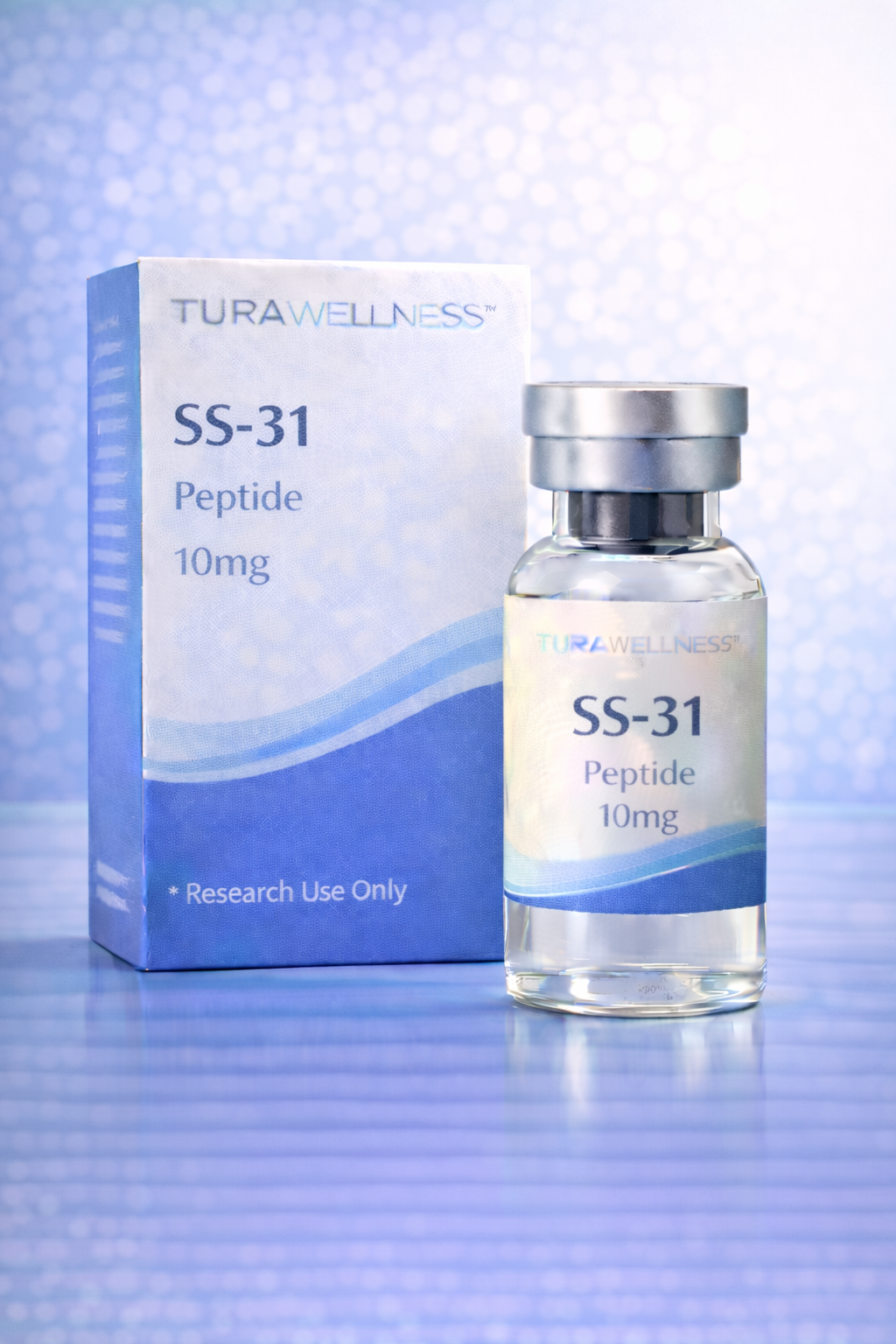
Research Grade SS-31 at Turawellness.com.
Disclaimer
This guide provides educational information about SS-31 based on published scientific literature and clinical trial data. This is for educational purposes only and does not constitute medical advice, diagnosis, or treatment. SS-31 is a research compound. Elamipretide (the pharmaceutical version) is FDA approved only for Barth syndrome. Always consult qualified healthcare professionals before using any compound or medication.
References
1. Szeto HH. First-in-class cardiolipin-protective compound as a therapeutic agent to restore mitochondrial bioenergetics. British Journal of Pharmacology. 2014;171:2029-2050.
2. Thompson WR, et al. A phase 2/3 randomized clinical trial followed by an open-label extension to evaluate the effectiveness of elamipretide in Barth syndrome. Genetics in Medicine. 2021;23:471-478.
3. Chavez JD, et al. Mitochondrial protein interaction landscape of SS-31. Proceedings of the National Academy of Sciences. 2020;117(26):15363-15373.
4. Birk AV, et al. The mitochondria-targeted compound SS-31 re-energizes ischemic mitochondria by interacting with cardiolipin. Journal of the American Society of Nephrology. 2013;24:1250-1261.
5. Sweetwyne MT, et al. The mitochondrial-targeted peptide, SS-31, improves glomerular architecture in mice of advanced age. Kidney International. 2017;91:1126-1145.
6. Machiraju P, et al. SS-31 treatment ameliorates cardiac mitochondrial morphology and defective mitophagy in a murine model of Barth syndrome. Scientific Reports. 2024;14:13551.
7. Wikipedia. Elamipretide. Accessed December 2024.