

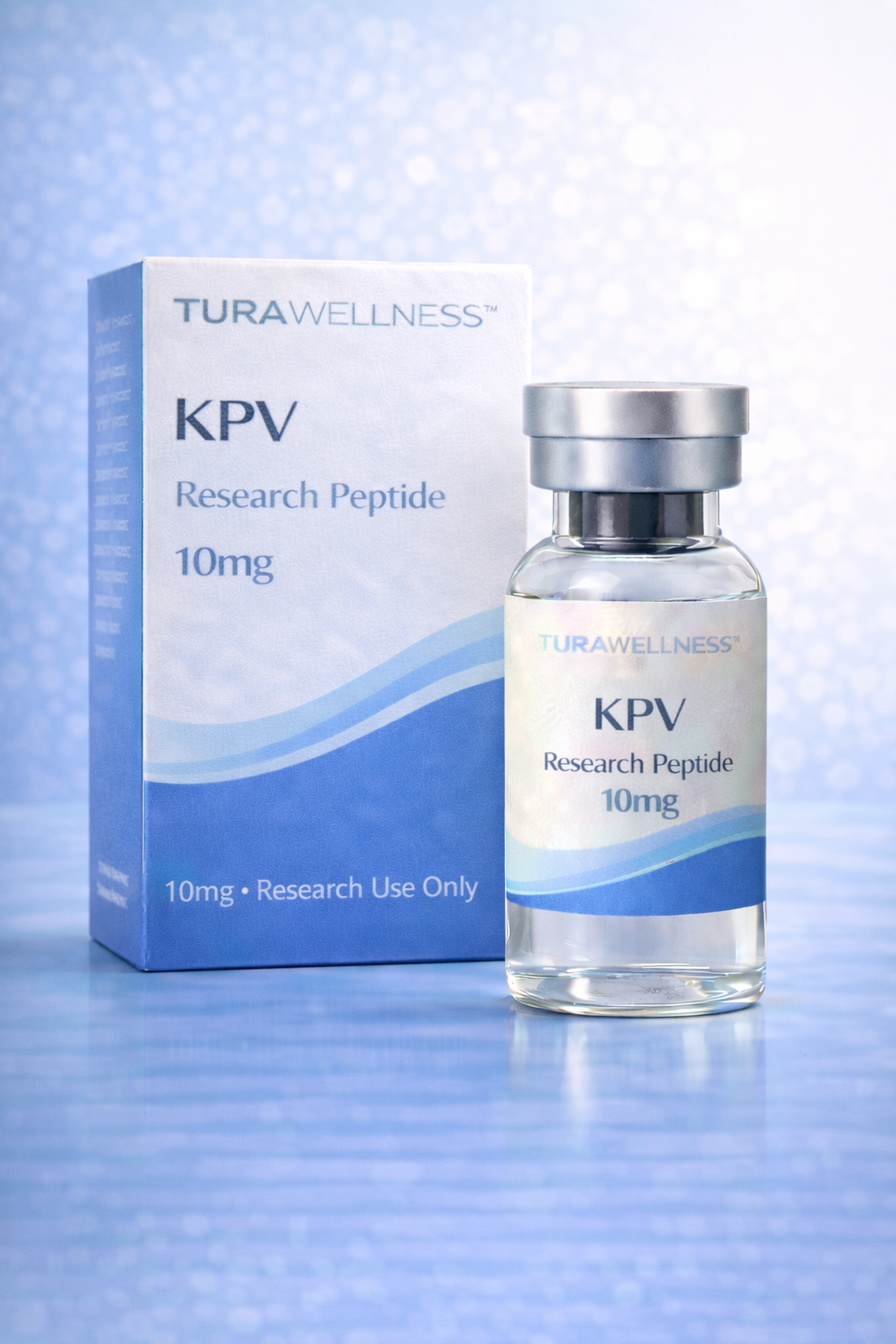
 Image 1 of 1
What It Is
KPV is a tripeptide composed of three amino acids: Lysine, Proline, and Valine (K-P-V). It is derived from the C-terminal end of alpha-melanocyte stimulating hormone (α-MSH), retaining the potent anti-inflammatory properties of the parent molecule without the melanogenesis (skin darkening) effects.
α-MSH is a neuropeptide with broad effects on inflammation, pigmentation, and immune function. Researchers discovered that the anti-inflammatory activity of α-MSH could be traced to its C-terminal tripeptide sequence. KPV exerts similar or even more pronounced anti-inflammatory activity compared to full-length α-MSH, while being smaller, more stable, and easier to produce.
What makes KPV particularly valuable is its selectivity. Unlike α-MSH or Melanotan peptides, KPV does not stimulate melanocyte receptors. This means it delivers anti-inflammatory benefits without affecting skin pigmentation or hormone levels.
KPV is being actively researched for inflammatory bowel disease (IBD), skin conditions like psoriasis and eczema, wound healing, and systemic inflammation. Its small size allows it to be administered through multiple routes: oral, subcutaneous injection, or topical application.
For those dealing with gut inflammation, autoimmune flares, or chronic inflammatory conditions, KPV offers a targeted approach that modulates rather than suppresses immune function.
How It Works
KPV works through several distinct mechanisms to control inflammation and support tissue repair.
NF-κB Inhibition
The primary mechanism of KPV's anti-inflammatory effect:
• NF-κB is the "master switch" for inflammation
• KPV suppresses NF-κB activation
• This reduces expression of pro-inflammatory cytokines (TNF-α, IL-1β, IL-6, IL-8)
• Effect occurs inside cells after KPV is transported intracellularly
PepT1 Transporter Uptake
Unlike many peptides, KPV does not work through melanocortin receptors:
• KPV is transported into cells by PepT1, a di/tripeptide transporter
• PepT1 is expressed in intestinal epithelial cells and immune cells
• During IBD, PepT1 expression is upregulated in the colon
• This allows KPV to be taken up directly where inflammation is occurring
This explains why oral KPV is effective for gut inflammation. The same transporter that absorbs dietary tripeptides absorbs KPV and delivers it to inflamed tissues.
MAP Kinase Pathway Modulation
KPV also inhibits the MAP kinase inflammatory signaling pathway:
• Reduces inflammatory cascades at multiple levels
• Complements NF-κB inhibition for broader effect
• Works at nanomolar concentrations (very low doses)
No Melanocortin Receptor Binding
Unlike α-MSH and Melanotan peptides:
• KPV does not bind to MC1R (no skin darkening)
• Does not have hormonal effects on appetite or libido
• "Clean" anti-inflammatory effect without off-target actions
Benefits
Gut Health and IBD
The most researched application:
• Reduces intestinal inflammation in colitis models
• Protects and repairs gut barrier integrity
• Decreases pro-inflammatory cytokine production in the colon
• Supports mucosal healing
• Potential for ulcerative colitis and Crohn's disease
Skin Health
Topical and systemic applications:
• Reduces inflammation in psoriasis, eczema, dermatitis
• Accelerates wound healing
• Decreases redness and irritation
• Promotes tissue repair without scarring
• Does not cause skin pigmentation changes
Antimicrobial Activity
KPV retains antimicrobial properties from α-MSH:
• Active against Staphylococcus aureus
• Active against Candida albicans
• Enhances (not reduces) pathogen killing by neutrophils
• Reduces infection risk during wound healing
Systemic Inflammation
Broader anti-inflammatory effects:
• May benefit autoimmune conditions
• Modulates immune response without suppressing it
• Reduces oxidative stress
• Potential for arthritis, allergic asthma, and other inflammatory conditions
Wound Healing
Enhanced tissue repair:
• Speeds wound closure
• Reduces scar formation
• Supports collagen organization
• Effective in burns and chronic ulcers
What the Science Shows
KPV has substantial preclinical evidence, particularly for inflammatory bowel disease.
Dalmasso et al. (2008) Gastroenterology
Landmark study on KPV mechanism:
• Nanomolar concentrations of KPV inhibit NF-κB and MAP kinase pathways
• Effect mediated through PepT1 transporter (not melanocortin receptors)
• Oral KPV reduced colitis severity in two mouse models (DSS and TNBS)
• Decreased pro-inflammatory cytokine expression
Xiao et al. (2017) Molecular Therapy
Advanced oral delivery study:
• Hyaluronic acid-functionalized nanoparticles loaded with KPV
• Targeted delivery to colitis tissue
• Combined effects: accelerated mucosal healing AND reduced inflammation
• Nanoparticle delivery enhanced therapeutic efficacy
Hiltz & Lipton (1989) FASEB Journal
Early discovery work:
• Demonstrated anti-inflammatory activity of the C-terminal α-MSH fragment
• Established KPV as the active anti-inflammatory sequence
• Showed anti-pyretic (fever-reducing) effects
Brzoska et al. (2008) Review
Comprehensive review of α-MSH peptides:
• KPV exerts "similar or even more pronounced anti-inflammatory activity" than full α-MSH
• Effective in animal models of contact dermatitis, arthritis, colitis, asthma
• Low toxicity and good safety profile
• Promising candidate for immune-mediated inflammatory diseases
Antimicrobial Studies
• α-MSH peptides enhanced neutrophil killing of pathogens
• KPV showed direct activity against S. aureus and C. albicans
• Candidacidal activity linked to increased cellular cAMP
Dosing Protocol
KPV can be administered through multiple routes depending on the target condition.
Understanding the Dose Context
KPV dosing is based primarily on preclinical research and clinical protocols. Human trial data remain limited, but the peptide appears well tolerated across routes and doses.
Subcutaneous Injection (Systemic)
Purpose Dose Frequency Duration
General inflammation 200 to 400 mcg Once daily Until improvement
Acute flares 400 mcg Once daily 7 to 14 days
Chronic management 200 mcg Once daily 4 to 8 weeks
Subcutaneous provides systemic anti-inflammatory effect with good bioavailability.
Oral Administration (Gut Focus)
Purpose Dose Frequency Duration
IBD/Colitis support 250 mg Twice daily 4 to 8 weeks
Gut barrier support 250 mg Once daily Ongoing
Leaky gut protocol 250 mg Twice daily 30 to 60 days
Oral KPV is absorbed by PepT1 in the gut, making it effective for intestinal inflammation.
Topical Application (Skin)
Purpose Concentration Frequency
Wound healing 0.1% cream Twice daily
Eczema/psoriasis 0.1% cream Twice daily
Acne 0.005 to 0.1% Twice daily
Topical KPV has poor penetration through intact skin but works well on compromised or inflamed skin.
Combination Protocols
KPV pairs well with other peptides:
• KPV + BPC-157: Anti-inflammatory + tissue repair
• Oral KPV/BPC-157 capsules (500 mcg/500 mcg): One capsule daily for gut healing
Draw Volumes by Vial Size
5 mg Vial (2 mL reconstitution = 2.5 mg/mL = 2,500 mcg/mL)
Dose Volume Units on Syringe
────────────────────────────────────────────
200 mcg 0.08 mL 8 units
300 mcg 0.12 mL 12 units
400 mcg 0.16 mL 16 units
10 mg Vial (3 mL reconstitution = 3.33 mg/mL = 3,333 mcg/mL)
Dose Volume Units on Syringe
────────────────────────────────────────────
200 mcg 0.06 mL 6 units
300 mcg 0.09 mL 9 units
400 mcg 0.12 mL 12 units
At 300 mcg daily, a 10 mg vial provides approximately 33 doses.
Reconstitution Instructions
1. Remove the plastic cap from the vial and wipe the rubber stopper with an alcohol swab
2. Draw 2 mL (for 5 mg vial) or 3 mL (for 10 mg vial) of bacteriostatic water into a sterile syringe
3. Insert the needle through the rubber stopper at an angle
4. Direct the stream of water down the inside wall of the vial
5. Allow the peptide to dissolve without shaking
6. Gently swirl if needed until solution is clear
7. Label the vial with date and concentration
KPV dissolves readily and the solution should be clear and colorless.
Side Effects and Cautions
Reported Side Effects
KPV has an excellent safety profile with minimal reported side effects:
• Mild injection site irritation (subcutaneous)
• Transient skin redness (topical)
• Occasional GI upset at higher oral doses
• Generally well tolerated across all routes
Advantages Over Traditional Anti-Inflammatories
• Does not suppress immune function like steroids
• No NSAID-related GI or cardiovascular risks
• Does not cause skin pigmentation (unlike α-MSH)
• No hormonal effects on appetite or libido
Lack of Long-Term Human Data
• Most research is preclinical (animal studies)
• Long-term safety in humans not fully established
• Use with clinical oversight recommended
Who Should Avoid or Use With Care
Should Avoid:
• Pregnant or breastfeeding women (insufficient safety data)
• Those with known hypersensitivity to KPV or related peptides
Use With Care:
• Individuals with autoimmune conditions (consult healthcare provider)
• Those on immunosuppressive medications
• Anyone with active malignancy
Success Tips
Match Route to Target
• Gut inflammation: Oral KPV reaches the intestine directly
• Systemic inflammation: Subcutaneous injection provides broader effect
• Skin conditions: Topical application on affected areas
Be Patient
Most users report symptom improvement within 3 to 7 days. Gut and skin benefits tend to appear first. Full effects may take 2 to 4 weeks.
Consider Cycling
Occasional breaks after 30 to 60 days of continuous use may help maintain effectiveness. Protocols often use 2-week cycles with breaks.
Combine Strategically
KPV works well in combination with tissue repair peptides:
• BPC-157 for gut healing and tissue repair
• TB-500 for broader regeneration support
• GHK-Cu for skin and collagen support
Injection Technique
1. Wash hands thoroughly with soap and water
2. Gather supplies: reconstituted vial, alcohol swabs, insulin syringe, sharps container
3. Clean the vial stopper with an alcohol swab and allow to air dry
4. Draw the calculated dose into a sterile insulin syringe
5. Clean the injection site (abdomen or thigh) with an alcohol swab
6. Pinch a fold of skin at the injection site
7. Insert the needle at a 45 to 90 degree angle
8. Inject slowly over 3 to 5 seconds
9. Withdraw the needle and apply light pressure
10. Dispose of the syringe immediately in a sharps container
11. Rotate injection sites to avoid irritation
Storage and Handling
Before Reconstitution:
• Store lyophilized powder at minus 20 degrees Celsius for long-term stability
• Short-term storage at 2 to 8 degrees Celsius is acceptable
• Protect from light
After Reconstitution:
• Refrigerate at 2 to 8 degrees Celsius
• Use within 30 days
• Protect from light
• Discard if solution becomes cloudy or discolored
Comparison to Similar Compounds
Compound Anti-Inflammatory Melanogenesis Route Options
────────────────────────────────────────────────────────────────────
KPV Primary effect None Oral, SC, Topical
α-MSH Yes Yes Injection
BPC-157 Moderate None Oral, SC
LL-37 Yes + Antimicrobial None SC, Topical
KPV vs. BPC-157
BPC-157 focuses on tissue and tendon repair; KPV is stronger for inflammation control. They are often combined for comprehensive gut healing.
KPV vs. α-MSH
α-MSH has broader hormonal effects including skin darkening. KPV is the "clean" fragment targeting inflammation only.
Legal Status
United States: KPV is not FDA approved. It is sold as a research peptide labeled "for research use only." Not legally recognized as a supplement or therapy.
International: Similar research-only status in most jurisdictions.
Frequently Asked Questions
Can I take KPV orally for gut issues?
Yes. KPV is absorbed by the PepT1 transporter in the intestine, making oral administration effective for gut inflammation. This is one of KPV's unique advantages over many other peptides.
Will KPV darken my skin like Melanotan?
No. KPV does not bind to melanocortin receptors responsible for melanogenesis. It provides anti-inflammatory benefits without any skin pigmentation effects.
How is KPV different from steroids?
Steroids suppress the immune system broadly. KPV modulates inflammation without suppressing immune function. This means you get anti-inflammatory effects while maintaining normal immune defense.
Can I use KPV with BPC-157?
Yes. KPV and BPC-157 are commonly combined. KPV handles inflammation while BPC-157 promotes tissue repair. Oral combination capsules are available for gut healing protocols.
How quickly will I see results?
Most users report improvement within 3 to 7 days. Gut and skin benefits typically appear first. Full effects may take 2 to 4 weeks of consistent use.
Product Source
Research Grade KPV available at TuraWellness.com
Disclaimer
This guide provides educational information about KPV based on published scientific literature. This is for educational purposes only and does not constitute medical advice, diagnosis, or treatment. KPV is not FDA approved. Always consult qualified healthcare professionals before using any compound for health purposes.
References
1. Dalmasso G, Charrier-Hisamuddin L, Nguyen HTT, et al. PepT1-Mediated Tripeptide KPV Uptake Reduces Intestinal Inflammation. Gastroenterology. 2008;134(1):166-178.
2. Xiao B, Xu Z, Viennois E, et al. Orally Targeted Delivery of Tripeptide KPV via Hyaluronic Acid-Functionalized Nanoparticles Efficiently Alleviates Ulcerative Colitis. Molecular Therapy. 2017;25(7):1628-1640.
3. Luger TA, Brzoska T. α-MSH related peptides: a new class of anti-inflammatory and immunomodulating drugs. Annals of the Rheumatic Diseases. 2007;66(Suppl 3):iii52-iii55.
4. Hiltz ME, Lipton JM. Antiinflammatory activity of a COOH-terminal fragment of the neuropeptide alpha-MSH. FASEB Journal. 1989;3(11):2282-2284.
5. Brzoska T, Luger TA, Maaser C, et al. α-Melanocyte-Stimulating Hormone and Related Tripeptides: Biochemistry, Antiinflammatory and Protective Effects In Vitro and In Vivo. Endocrine Reviews. 2008;29(5):581-602.