

 Image 1 of 1
What It Is
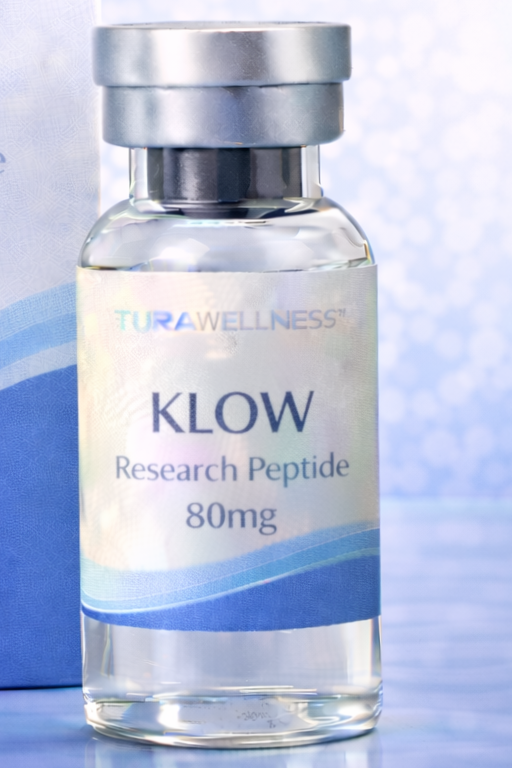
The KLOW Blend is the most comprehensive healing peptide combination available, combining four powerful compounds: TB-500 (10 mg), BPC-157 (10 mg), KPV (10 mg), and GHK-Cu (50 mg). This 80 mg total blend represents the ultimate approach to tissue repair, inflammation control, and regeneration by adding KPV (a potent anti-inflammatory peptide) to the GLOW Blend formula.
Each component serves a distinct purpose:
TB-500 (Thymosin Beta-4): A synthetic version of a naturally occurring protein that promotes cell migration, angiogenesis, and systemic tissue repair through actin regulation.
BPC-157 (Body Protection Compound): A pentadecapeptide derived from gastric juice that promotes localized healing, growth factor signaling, and tissue protection.
KPV: A tripeptide derived from alpha-melanocyte stimulating hormone (alpha-MSH) that provides potent anti-inflammatory effects, gut healing, and immune modulation without affecting hormone levels.
GHK-Cu (Copper Peptide): A naturally occurring tripeptide that supports collagen synthesis, gene expression modulation, and skin regeneration through copper-dependent pathways.
The "K" in KLOW refers to KPV, the additional peptide that distinguishes this blend from GLOW. While GLOW provides healing plus anti-aging support, KLOW adds serious anti-inflammatory and gut-healing capability. Think of KLOW as the complete package: injury recovery, systemic healing, inflammation control, gut support, and anti-aging benefits all in one vial.
This product contains 80 mg total peptide content at $119.99, making it the most potent and comprehensive healing blend available.
None of these peptides are FDA approved for human use. BPC-157 and TB-500 are banned by WADA under the S0 Unapproved Substances category.
How It Works
The KLOW Blend operates through four distinct but complementary mechanisms, creating the most comprehensive approach to healing and inflammation control.
TB-500 Mechanisms:
TB-500 provides systemic healing through actin regulation:
• Binds to and sequesters actin monomers for rapid cell mobilization
• Promotes cell migration over long distances
• Stimulates angiogenesis (new blood vessel formation)
• Releases anti-inflammatory peptide fragment Ac-SDKP
• Works throughout the body regardless of injection site
BPC-157 Mechanisms:
BPC-157 initiates and protects the healing process:
• Upregulates VEGF for blood vessel formation
• Modulates nitric oxide synthesis for improved blood flow
• Activates FAK-paxillin pathways for cell migration
• Increases growth hormone receptor expression in damaged tissues
• Provides gastric protection and gut healing support
KPV Mechanisms:
KPV provides potent anti-inflammatory effects through multiple pathways:
• Inhibits NF-kB activation (master regulator of inflammation)
• Suppresses pro-inflammatory cytokines including TNF-alpha, IL-1beta, and IL-6
• Acts through melanocortin receptors (MC1R and MC3R) on immune cells
• Transported into cells via PepT1 transporter
• Promotes gut epithelial barrier integrity
• Stabilizes mast cells and reduces histamine-related symptoms
• Provides antimicrobial activity against certain pathogens
Importantly, KPV retains the anti-inflammatory benefits of its parent hormone (alpha-MSH) without affecting pigmentation or hormone levels.
GHK-Cu Mechanisms:
GHK-Cu supports tissue quality through gene expression modulation:
• Delivers bioavailable copper for enzyme activation
• Serves as a cofactor for lysyl oxidase (collagen cross-linking)
• Stimulates fibroblast production of collagen, elastin, and glycosaminoglycans
• Modulates over 4,000 genes toward healthier patterns
• Regulates metalloproteinases for balanced collagen turnover
• Provides antioxidant effects
Synergy in the KLOW Blend:
The four peptides create a complete healing ecosystem:
1. BPC-157 initiates healing by establishing blood supply and growth factor signaling
2. TB-500 mobilizes repair cells and directs them to injury sites
3. KPV controls inflammation to prevent excessive damage and support healing
4. GHK-Cu provides building blocks for high-quality tissue reconstruction
KPV acts as the "fire extinguisher" that calms inflammatory processes, allowing BPC-157 and TB-500 (the "construction crew") to rebuild more effectively. GHK-Cu ensures the rebuilt tissue is of high quality with proper collagen structure.
Benefits
The KLOW Blend provides the combined benefits of all four peptide components, making it the most comprehensive healing solution available.
Comprehensive Tissue Healing
The TB-500 and BPC-157 components provide:
• Accelerated tendon and ligament repair
• Faster muscle recovery
• Enhanced wound healing
• Improved post-surgical recovery
• Joint support and cartilage protection
• Reduced scar tissue formation
Powerful Anti-Inflammatory Support
The KPV component adds:
• Suppression of pro-inflammatory cytokines
• NF-kB pathway inhibition
• Reduced systemic inflammation
• Control of autoimmune-related inflammation
• Mast cell stabilization
• Histamine response modulation
Gut Health and Barrier Support
KPV combined with BPC-157 provides exceptional gut support:
• Intestinal mucosal healing
• Tight junction integrity restoration
• Protection against leaky gut
• Support for inflammatory bowel conditions (IBD, Crohn's, ulcerative colitis)
• Reduced gut-related inflammation
• Microbiome balance support
Skin and Collagen Support
The GHK-Cu component provides:
• Increased collagen synthesis
• Improved skin thickness and density
• Enhanced skin elasticity and firmness
• Reduced appearance of fine lines and wrinkles
• Better skin hydration
• Support for hair growth
Anti-Aging Benefits
GHK-Cu provides gene expression modulation that:
• Shifts gene patterns toward more youthful states
• Supports DNA repair processes
• Provides antioxidant protection
Reduced Injection Site Reactions
The BPC-157 component helps moderate the histamine response that pure GHK-Cu can produce, making injections more tolerable.
Antimicrobial Support
KPV has demonstrated antimicrobial activity against pathogens including Staphylococcus aureus and Candida albicans, adding another layer of protection during healing.
What the Science Shows
Research on the individual components of the KLOW Blend is substantial. No studies have examined this specific four-peptide combination, but research on each component supports the rationale for combining them.
KPV Research:
Dalmasso et al. (2008) demonstrated that KPV is transported into cells via the PepT1 transporter and reduces intestinal inflammation. Oral administration of KPV reduced DSS and TNBS-induced colitis in mice with decreased pro-inflammatory cytokine expression.
Kannengiesser et al. (2008) showed KPV has significant anti-inflammatory effects in two murine models of colitis (DSS colitis and CD45RBhi transfer colitis), suggesting it as an interesting therapeutic option for IBD treatment.
Luger and Brzoska (2007) reviewed alpha-MSH related peptides including KPV, concluding that most of the anti-inflammatory activities of alpha-MSH can be attributed to its C-terminal tripeptide KPV, which inhibits NF-kB activation and reduces pro-inflammatory cytokine production.
BPC-157 Research:
Gwyer et al. (2019) reviewed BPC-157's effects on musculoskeletal soft tissue healing, finding it shows promise for healing hypovascular tissues with few reported adverse reactions.
TB-500 Research:
Malinda et al. (1999) showed thymosin beta-4 increased re-epithelialization by 42% at day 4 and up to 61% at day 7 in wound models.
GHK-Cu Research:
Pickart and Margolina (2018) reviewed GHK-Cu's effects on gene expression, finding it modulates over 4,000 genes toward healthier patterns.
Sources:
• Dalmasso G, et al. PepT1-mediated tripeptide KPV uptake reduces intestinal inflammation. Gastroenterology. 2008. https://pubmed.ncbi.nlm.nih.gov/18061177/
• Kannengiesser K, et al. Melanocortin-derived tripeptide KPV has anti-inflammatory potential in murine models of inflammatory bowel disease. Inflamm Bowel Dis. 2008. https://pubmed.ncbi.nlm.nih.gov/18092346/
• Luger TA, Brzoska T. alpha-MSH related peptides: a new class of anti-inflammatory and immunomodulating drugs. Ann Rheum Dis. 2007. https://pubmed.ncbi.nlm.nih.gov/17934100/
• Gwyer D, et al. Cell Tissue Res. 2019. https://pubmed.ncbi.nlm.nih.gov/30915550/
• Malinda KM, et al. J Invest Dermatol. 1999. https://pubmed.ncbi.nlm.nih.gov/10469335/
• Pickart L, Margolina A. Int J Mol Sci. 2018. https://pubmed.ncbi.nlm.nih.gov/30002323/
Dosing Protocol
The KLOW Blend (80 mg total) contains TB-500 10 mg + BPC-157 10 mg + KPV 10 mg + GHK-Cu 50 mg. Dosing is based on dividing this total appropriately across your protocol duration.
Standard Protocol
Frequency: Daily or every other day subcutaneous injection Cycle length: 4 to 8 weeks for healing focus, 8 to 16 weeks for comprehensive support Break: 4 to 6 weeks between cycles
Dose Calculation
With 80 mg total in the vial, common approaches include:
Daily injection approach (for intensive protocols):
• Reconstitute with 4 mL bacteriostatic water (20 mg/mL)
• Inject 0.4 to 0.5 mL daily
• Each 0.5 mL delivers approximately 625 mcg BPC-157 + 625 mcg TB-500 + 625 mcg KPV + 3.125 mg GHK-Cu
• Vial duration: 8 to 10 days
Every other day approach (for extended use):
• Reconstitute with 4 mL bacteriostatic water
• Inject 0.5 mL every other day
• Vial duration: approximately 16 days
Twice weekly approach (maintenance):
• Reconstitute with 4 mL bacteriostatic water
• Inject 0.5 to 1.0 mL twice weekly
• Allows extended vial duration
By Application
Gut inflammation and IBD support:
• Daily injection for 6 to 8 weeks
• KPV component specifically targets gut inflammation
• BPC-157 supports gut mucosal healing
Comprehensive healing (injury plus inflammation):
• Daily injection for 4 to 6 weeks
• Addresses both tissue repair and inflammatory control
Anti-aging plus healing maintenance:
• Every other day or 3 times weekly for 8 to 16 weeks
• Focus on long-term tissue quality and inflammation control
Post-surgical with inflammation control:
• Daily injection starting post-surgery (with surgeon approval)
• Supports wound healing while controlling inflammatory response
Administration
The KLOW Blend can be injected subcutaneously anywhere due to TB-500's systemic distribution. Common sites include abdomen, thigh, or upper arm. The solution will have a blue tint from the GHK-Cu component.
Draw Volumes by Vial Size
80 mg Vial with 4 mL Bacteriostatic Water (20 mg/mL total concentration)
Each mL contains:
• BPC-157: 2.5 mg (2,500 mcg)
• TB-500: 2.5 mg (2,500 mcg)
• KPV: 2.5 mg (2,500 mcg)
• GHK-Cu: 12.5 mg
Volume BPC-157 TB-500 KPV GHK-Cu Units
──────────────────────────────────────────────────────────────────────────
0.20 mL 500 mcg 500 mcg 500 mcg 2.5 mg 20 units
0.40 mL 1,000 mcg 1,000 mcg 1,000 mcg 5.0 mg 40 units
0.50 mL 1,250 mcg 1,250 mcg 1,250 mcg 6.25 mg 50 units
At 0.5 mL daily, one vial lasts 8 days. At 0.4 mL daily, one vial lasts 10 days. At 0.5 mL every other day, one vial lasts 16 days.
Reconstitution
Materials Needed:
• KLOW Blend vial (lyophilized powder)
• Bacteriostatic water
• Sterile syringe for reconstitution
• Alcohol swabs
Instructions:
1. Wipe the vial stopper and bacteriostatic water vial with alcohol swabs
2. Draw 4 mL of bacteriostatic water into a sterile syringe
3. Insert needle through rubber stopper at an angle
4. Let water trickle slowly down the inside wall of the vial
5. Do not inject directly onto the powder or shake vigorously
6. Gently swirl until fully dissolved
7. The solution will have a distinctive blue color due to the GHK-Cu copper content
8. If solution is not blue or contains particles, do not use
The blue color is normal and indicates the copper is properly bound to the GHK peptide.
Side Effects
The KLOW Blend combines four peptides with favorable safety profiles. Side effects are generally mild.
Common:
• Injection site reactions including redness, swelling, or itching (primarily from GHK-Cu component)
• Mild fatigue or lethargy
• Nausea (uncommon)
• Headache (uncommon)
GHK-Cu Specific:
The GHK-Cu component can cause histamine responses at injection sites. However, the BPC-157 component helps moderate these reactions, and KPV's mast cell stabilizing effects may further reduce histamine-related symptoms.
KPV Specific:
KPV is well tolerated with no notable side effects in research. Unlike many anti-inflammatory drugs, it does not weaken the immune system or cause the side effects associated with corticosteroids.
Strategies to Minimize Injection Site Reactions:
• Rotate injection sites
• Allow the solution to warm to room temperature before injecting
• Inject slowly
• Apply light pressure after injection
Theoretical Concerns:
BPC-157, TB-500, and GHK-Cu all promote angiogenesis. This raises theoretical concerns about use in individuals with existing cancers. No evidence has demonstrated this risk, but caution is warranted.
Contraindications and Precautions
Do Not Use If You Have:
• Active cancer or tumors (theoretical concern about angiogenesis)
• History of malignancy
• Known hypersensitivity to any component
• Wilson's disease (genetic copper accumulation disorder)
Use Caution With:
• Pregnancy or breastfeeding (no safety data)
• Severe cardiovascular conditions
• Autoimmune conditions (though KPV may help modulate these)
• Immunosuppressant medications
• Liver or kidney impairment
Drug Interactions:
Limited data available. KPV may have additive effects with other anti-inflammatory agents. Consult healthcare provider if taking medications.
Regulatory Status:
• BPC-157 and TB-500: FDA Category 2 bulk drug substances, WADA prohibited
• KPV and GHK-Cu: Not specifically regulated but injectable forms face restrictions
• Available as research chemical
Consult a qualified healthcare provider before use.
Comparison Table
Product Contents Best For Price
────────────────────────────────────────────────────────────────────────────────────────
KLOW Blend TB-500 10mg + BPC-157 10mg + Maximum comprehensive $119.99
KPV 10mg + GHK-Cu 50mg healing + gut support
+ anti-inflammation
GLOW Blend TB-500 10mg + BPC-157 10mg + Comprehensive healing $99.99
GHK-Cu 50mg + anti-aging
Wolverine Stack BPC-157 5mg + TB-500 5mg Injury recovery $49.99
Post-surgical healing
KPV Alone 10mg Pure anti-inflammatory $45.99
Gut inflammation focus
When to Choose KLOW vs GLOW:
Choose KLOW if:
• You have significant gut inflammation, IBD, or leaky gut concerns
• You need serious anti-inflammatory support alongside healing
• You have autoimmune-related inflammation
• You want maximum comprehensive support
• Histamine or mast cell issues are a concern
Choose GLOW if:
• Your primary focus is injury healing plus anti-aging
• You do not have significant gut inflammation issues
• You want to save $20 and do not need KPV's specific benefits
When to Choose KLOW vs Wolverine Stack:
Choose KLOW if:
• You want the complete package (healing + inflammation + gut + anti-aging)
• Budget allows for the premium option
• You have complex recovery needs
Choose Wolverine Stack if:
• Your main goal is pure injury recovery
• Budget is a primary concern
• You do not need anti-inflammatory or anti-aging support
Success Tips
The Blue Color is Normal
Reconstituted KLOW Blend will have a blue tint from the GHK-Cu component. This indicates the copper is properly bound. If your solution is not blue, there may be an issue with the product.
KPV Makes This Blend Gut-Friendly
If you have gut issues like IBD, leaky gut, or food sensitivities, the KPV component specifically targets intestinal inflammation and barrier integrity. Combined with BPC-157's gut-healing properties, KLOW provides the most comprehensive gut support of any blend.
Reduced Site Reactions
One benefit of KLOW is that both BPC-157 and KPV help moderate injection site reactions. KPV stabilizes mast cells and reduces histamine responses, while BPC-157 has general protective effects. Users often find KLOW more tolerable than standalone GHK-Cu.
Expect Gradual Results
The KLOW Blend works through multiple mechanisms with different timelines:
• Anti-inflammatory effects (KPV): 1 to 2 weeks
• Injury healing improvements: 2 to 4 weeks
• Gut healing: 2 to 6 weeks
• Skin and collagen improvements: 8 to 12 weeks
Combine With Good Fundamentals
Peptides enhance your body's healing capacity, but they work best alongside:
• Anti-inflammatory nutrition (reduce processed foods, sugar)
• Adequate protein intake
• Quality sleep
• Stress management (stress increases inflammation)
Need Help With Training or Nutrition?
Peptides support recovery and appearance, but they work best alongside proper training and nutrition. If you would like more information, please check out our website at turawellness.com
Injection Technique
The KLOW Blend is administered via subcutaneous injection.
Subcutaneous Injection:
1. Wash hands thoroughly with soap and water
2. Clean the vial stopper with an alcohol swab and allow to air dry
3. Draw the appropriate dose into a sterile insulin syringe (29 to 31 gauge)
4. Clean the injection site with an alcohol swab
5. Pinch a fold of skin
6. Insert needle at 45 to 90 degree angle
7. Inject slowly and steadily
8. Release skin fold and withdraw needle
9. Apply light pressure with gauze if needed
10. Dispose of syringe immediately in a sharps container
Site Selection:
Common injection sites:
• Abdomen (stay 2 inches from navel)
• Outer thigh
• Back of upper arm
Rotate injection sites to avoid tissue irritation.
Storage and Handling
Before Reconstitution:
• Store lyophilized (powder) vials in the refrigerator at 36 to 46 degrees Fahrenheit (2 to 8 degrees Celsius)
• Can be stored in freezer for longer-term storage
• Protect from light
After Reconstitution:
• Refrigerate at 36 to 46 degrees Fahrenheit
• Use within 4 weeks when reconstituted with bacteriostatic water
• Do not freeze after reconstitution
• Keep the stopper clean
• The blue color should remain stable. If color changes or particles appear, discard
Legal Status
United States:
BPC-157 and TB-500 are not FDA approved for human use and were classified as Category 2 bulk drug substances in 2023. KPV and GHK-Cu face similar restrictions for injectable use. The KLOW Blend is available as a research chemical.
WADA Status:
BPC-157 and TB-500 are prohibited under the S0 Unapproved Substances category. Athletes subject to drug testing should not use this combination.
Frequently Asked Questions
What makes KLOW different from GLOW?
KLOW adds KPV (10 mg), a potent anti-inflammatory peptide derived from alpha-MSH. While GLOW provides healing plus anti-aging, KLOW adds serious inflammation control and gut-healing capability. Choose KLOW if gut health, IBD, or systemic inflammation are concerns.
What is the blue color in the solution?
The blue color comes from the GHK-Cu (copper peptide) component and is completely normal. It indicates the copper is properly bound to the peptide.
Will KLOW help with gut issues like IBD or leaky gut?
Yes. The combination of KPV (which specifically targets gut inflammation and barrier integrity) and BPC-157 (which supports gut mucosal healing) makes KLOW the most comprehensive option for gut-related concerns.
Is KPV anti-inflammatory like NSAIDs or steroids?
KPV provides potent anti-inflammatory effects but works differently than NSAIDs or steroids. It inhibits NF-kB activation and reduces pro-inflammatory cytokines without the side effects of these drugs. It does not weaken the immune system like steroids do.
How long should I run KLOW?
For gut inflammation: 6 to 8 weeks For comprehensive healing: 4 to 8 weeks For anti-aging plus maintenance: 8 to 16 weeks Take 4 to 6 weeks off between cycles.
Does KPV affect skin pigmentation?
No. Although KPV is derived from alpha-MSH (which affects melanocytes), the KPV fragment does not stimulate melanocyte receptors and will not affect pigmentation.
Product Source
Research Grade KLOW Blend available at turawellness.com
Disclaimer
This guide provides educational information about the KLOW Blend (TB-500 + BPC-157 + KPV + GHK-Cu) based on published scientific literature and practical community experience. This is for educational purposes only and does not constitute medical advice, diagnosis, or treatment. These peptides are research compounds not approved by the FDA for human use. Always consult qualified healthcare professionals before using any peptide or medication.
References
1. Dalmasso G, Charrier-Hisamuddin L, Nguyen HT, et al. PepT1-mediated tripeptide KPV uptake reduces intestinal inflammation. Gastroenterology. 2008;134(1):166-178. https://pubmed.ncbi.nlm.nih.gov/18061177/
2. Kannengiesser K, Maaser C, Heidemann J, et al. Melanocortin-derived tripeptide KPV has anti-inflammatory potential in murine models of inflammatory bowel disease. InflammBowel Dis. 2008;14(3):324-331. https://pubmed.ncbi.nlm.nih.gov/18092346/
3. Luger TA, Brzoska T. alpha-MSH related peptides: a new class of anti-inflammatory and immunomodulating drugs. Ann Rheum Dis. 2007;66 Suppl 3:iii52-55. https://pubmed.ncbi.nlm.nih.gov/17934100/
4. Gwyer D, Wragg NM, Wilson SL. Gastric pentadecapeptide body protection compound BPC 157 and its role in accelerating musculoskeletal soft tissue healing. Cell Tissue Res. 2019;377(2):153-159. https://pubmed.ncbi.nlm.nih.gov/30915550/
5. Malinda KM, Sidhu GS, Mani H, et al. Thymosin beta4 accelerates wound healing. J Invest Dermatol. 1999;113(3):364-368. https://pubmed.ncbi.nlm.nih.gov/10469335/
6. Pickart L, Margolina A. Regenerative and Protective Actions of the GHK-Cu Peptide in the Light of the New Gene Data. Int J Mol Sci. 2018;19(7):1987. https://pubmed.ncbi.nlm.nih.gov/30002323/