

 Image 1 of 1
What It Is
Thymosin Alpha-1 is a peptide that your thymus gland naturally produces to train and activate your immune system. It is one of the most studied immune peptides in existence, with over 4,400 patients enrolled in clinical trials across the US, Europe, and China.
Your thymus is the organ behind your breastbone where T cells learn their job. T cells are critical for fighting infections and cancer. Thymosin Alpha-1 is the specific signal the thymus uses to mature these T cells and keep them working properly.
Here is why this matters. A synthetic version of Thymosin Alpha-1 called thymalfasin (brand name Zadaxin) has been approved in over 35 countries for treating chronic hepatitis B, chronic hepatitis C, and as an add on therapy for certain cancers. It is used clinically to boost immune function in patients whose immune systems are compromised.
What makes Thymosin Alpha-1 different from typical immune boosters is that it modulates rather than just stimulates. If your immune system is suppressed, it brings it up. If your immune system is overactive (like in autoimmune conditions or severe inflammation), it helps calm it down. This balancing effect makes it useful across a wide range of conditions.
Thymosin Alpha-1 is not FDA approved in the United States, though it has orphan drug status for certain conditions. It is available as a research chemical.
How It Works
Thymosin Alpha-1 works through multiple pathways to enhance and balance your immune function.
Toll-Like Receptor Activation
Your immune cells have sensors called Toll-like receptors (TLRs) that detect threats. Thymosin Alpha-1 activates several of these sensors (TLR-2, TLR-9, and others), which triggers your immune cells to respond. This is how it wakes up a sluggish immune system.
T Cell Enhancement
Thymosin Alpha-1 is particularly good at boosting T cell function:
• Increases your CD4+ helper T cells (the coordinators that direct the immune response)
• Increases your CD8+ cytotoxic T cells (the killers that destroy infected cells)
• Helps immature T cells develop into fully functional ones
• Restores T cell function in people whose immunity has declined
Natural Killer Cell Activation
Your NK cells are first responders that kill virus infected cells and tumor cells without needing prior exposure. Thymosin Alpha-1 directly activates these cells. In animal studies, it restored NK cell activity in immunosuppressed subjects.
Dendritic Cell Support
Dendritic cells are the teachers of your immune system. They capture threats and present them to T cells so they know what to attack. Thymosin Alpha-1 improves how well dendritic cells do this job.
• Stimulates dendritic cell maturation
• Promotes production of cytokines that drive immune responses
Cytokine Modulation
Ta1 influences production of multiple cytokines:
• Increases IL-2 (T cell growth factor)
• Increases IFN-gamma (antiviral and immune activating)
• Increases IL-1 beta, IL-3, IL-6
• Modulates TNF-alpha
• Increases IL-10 (anti-inflammatory)
Antiviral Effects
Ta1 exerts antiviral effects through two mechanisms:
1. Direct inhibition of viral replication and viral protein expression
2. Enhancement of immune function to eliminate infected cells
It also increases expression of major histocompatibility complex (MHC) class I molecules on infected cells, making them more visible to cytotoxic T cells.
Benefits
Immune System Support
Ta1 enhances overall immune function by:
• Increasing T cell numbers and activity
• Activating natural killer cells
• Enhancing dendritic cell function
• Improving antibody responses
• Supporting the body's ability to fight infections
Chronic Viral Infection Support
Ta1 has been most extensively studied for chronic hepatitis B and C:
• Multiple clinical trials show improved viral clearance
• Enhanced response when combined with interferon therapy
• Long-term follow-up studies show sustained responses
• Better tolerated than interferon alone
Cancer Therapy Adjunct
Ta1 has been studied as an adjunct to cancer therapy:
• May help restore immune function suppressed by chemotherapy
• Studied in melanoma, hepatocellular carcinoma, and non-small cell lung cancer
• May enhance the body's ability to recognize and fight tumor cells
• Generally used alongside conventional cancer treatments
Vaccine Enhancement
Ta1 can improve vaccine responses, particularly in:
• Elderly individuals with weakened immune systems
• Immunocompromised patients
• Situations with limited antigen availability
• Influenza and hepatitis B vaccination
Sepsis and Acute Infection
Ta1 has been studied in severe sepsis:
• May help restore immune function during severe infections
• Studies during COVID-19 pandemic showed potential benefits
• May reduce mortality in severe cases with lymphocytopenia
Anti-inflammatory Effects
Despite its immune-enhancing properties, Ta1 also has anti-inflammatory effects:
• Reduces TNF-alpha and IL-1 beta in inflammatory conditions
• May benefit chronic inflammatory conditions
• Can help balance overactive immune responses
What the Science Shows
Ta1 has extensive clinical research supporting its use in immune modulation.
Hepatitis B Studies
Mutchnick et al. (1991) conducted a placebo-controlled pilot trial in chronic hepatitis B patients. Results showed:
• Disease remission and cessation of virus replication
• Higher lymphocyte counts
• Increased IFN-gamma production
• Sustained response in 2 to 5 year follow-up
Multiple subsequent trials confirmed Ta1 effectiveness in hepatitis B, particularly in patients who lack HBeAg.
Immune Cell Enhancement
Li et al. (2003) studied Ta1 in chronic hepatitis B patients. Results showed:
• Significant increase in intrahepatic NKT cells
• Increased CD8+ cytotoxic T lymphocytes in the liver
• Decreased histology activity index scores
• These cells remained elevated even at end of treatment
Mechanism Studies
Romani et al. (2006, 2007) demonstrated Ta1's mechanism of action:
• Confirmed TLR-2 and TLR-9 agonist activity
• Showed activation of dendritic cells through TLR signaling
• Demonstrated induction of antifungal Th1 resistance
COVID-19 Research
Liu et al. (2020) studied Ta1 in severe COVID-19 cases. Results showed:
• Restoration of lymphocytopenia
• Reversion of exhausted T cells
• Potential mortality reduction in severe cases
Safety Profile
Over 4,400 subjects in clinical trials have demonstrated:
• Well-tolerated with only minor side effects
• No significant adverse reactions in most studies
• Sharp contrast to other immune modulators like interferon
Sources:
• Tuthill C, et al. Immune Modulation with Thymosin Alpha 1 Treatment. Vitam Horm. 2016. https://pubmed.ncbi.nlm.nih.gov/27450734/
• Li Y, et al. Thymosin-alpha1 increases intrahepatic NKT cells and CTLs in patients with chronic hepatitis B. Clin Exp Med. 2003. https://pubmed.ncbi.nlm.nih.gov/12479932/
• Dominari A, et al. Thymosin alpha 1: A comprehensive review of the literature. World J Virol. 2020. https://pubmed.ncbi.nlm.nih.gov/33362999/
• Tao N, et al. Thymosin α1 and Its Role in Viral Infectious Diseases. Molecules. 2023. https://pubmed.ncbi.nlm.nih.gov/37110771/
Dosing Protocol
Standard Protocol
Dose: 1.6 mg (1,600 mcg) subcutaneous injection Frequency: Twice weekly (commonly Monday and Thursday) Cycle length: 4 to 12 weeks depending on application
By Application
Immune support and optimization:
• 1.6 mg twice weekly for 4 to 8 weeks
• Can be used during cold and flu season
• May repeat cycles with 4 week breaks
Chronic infection support:
• 1.6 mg twice weekly for 6 to 12 months (in clinical trials)
• Often combined with other therapies
• Duration depends on clinical response
Vaccine enhancement:
• 1.6 mg twice weekly starting 2 weeks before vaccination
• Continue for 2 to 4 weeks after vaccination
Cancer adjunct therapy:
• 1.6 mg twice weekly alongside conventional treatment
• Duration matches treatment course
• Physician supervision required
Clinical Trial Dosing
Most clinical trials have used 1.6 mg twice weekly, which corresponds to the approved dosing of thymalfasin (Zadaxin) in countries where it is registered.
Administration
Ta1 is administered via subcutaneous injection. It has good bioavailability when injected and reaches peak serum levels within 2 hours.
Draw Volumes by Vial Size
10 mg Vial with 2 mL Bacteriostatic Water (5 mg/mL concentration)
Dose Volume Units on Syringe
───────────────────────────────────────────────
800 mcg 0.16 mL 16 units
1,000 mcg 0.20 mL 20 units
1,600 mcg 0.32 mL 32 units
2,000 mcg 0.40 mL 40 units
At 1.6 mg twice weekly, one 10 mg vial lasts approximately 3 weeks.
10 mg Vial with 1 mL Bacteriostatic Water (10 mg/mL concentration)
Dose Volume Units on Syringe
───────────────────────────────────────────────
800 mcg 0.08 mL 8 units
1,000 mcg 0.10 mL 10 units
1,600 mcg 0.16 mL 16 units
2,000 mcg 0.20 mL 20 units
This higher concentration allows smaller injection volumes.
Reconstitution
Materials Needed:
• Thymosin Alpha-1 vial (lyophilized powder)
• Bacteriostatic water
• Sterile syringe for reconstitution
• Alcohol swabs
Instructions:
1. Wipe the vial stopper and bacteriostatic water vial with alcohol swabs
2. Draw 1 to 2 mL of bacteriostatic water (depending on desired concentration)
3. Insert needle through rubber stopper at an angle
4. Let water trickle slowly down the inside wall of the vial
5. Do not inject directly onto the powder or shake vigorously
6. Gently swirl until fully dissolved
7. Solution should be clear. If cloudy or contains particles, do not use
Ta1 typically reconstitutes easily and produces a clear solution.
Side Effects
Ta1 has an excellent safety profile across extensive clinical use.
Common (Generally Mild):
• Injection site reactions (redness, mild swelling)
• Transient fatigue
Rare:
• Erythema (skin redness)
• Transient muscle atrophy at injection site
• Polyarthralgia (joint pain) combined with hand symptoms
Safety Comparison:
The lack of significant side effects with Ta1 contrasts sharply with other immune modulators:
• Unlike interferon: No flu-like symptoms, depression, or severe fatigue
• Unlike other biologics: No serious immunosuppression or infection risk
• Generally very well tolerated even with long-term use
Clinical Trial Safety Data:
Over 4,400 subjects in clinical trials have demonstrated favorable safety profiles. Ta1 has been used safely in combination with:
• Interferon therapy
• Chemotherapy
• Various vaccines
Contraindications and Precautions
Do Not Use If:
• Known hypersensitivity to Ta1 or any component
• Currently taking immunosuppressant medications deliberately (organ transplant recipients)
Use Caution With:
• Pregnancy or breastfeeding (safety not established)
• Autoimmune conditions (consult physician first)
• Pediatric use (safety not established in children)
Drug Interactions:
Ta1 has been safely combined with many treatments in clinical trials:
• Interferon alpha
• Ribavirin
• Chemotherapy agents
• Vaccines
However, it should not be used in patients deliberately immunosuppressed (such as transplant recipients on immunosuppressants).
Regulatory Status:
• FDA orphan drug status for certain conditions
• Approved in 35+ countries as thymalfasin (Zadaxin)
• Available as research chemical in the US
Consult a qualified healthcare provider before use.
Comparison Table
Compound Mechanism Best For
──────────────────────────────────────────────────────────────────
Thymosin Alpha-1 TLR activation Chronic infection support
T cell enhancement Immune optimization
NK cell activation Vaccine enhancement
Thymalin Thymic extract General immune support
Multiple thymic Age-related immune decline
factors
BPC-157 Growth factors Tissue healing
Angiogenesis Injury recovery
KPV NF-kB inhibition Anti-inflammatory
Cytokine suppression Gut inflammation
Thymosin Alpha-1 vs Thymalin:
Both are thymic peptides but differ in composition:
• Ta1 is a single, well-characterized 28 amino acid peptide
• Thymalin is an extract containing multiple thymic factors
• Ta1 has more extensive clinical trial data
• Both support immune function through thymic mechanisms
Success Tips
Timing for Immune Support
Consider using Ta1:
• Before and during cold and flu season
• Before travel to areas with infectious disease risk
• When immune system may be compromised
• As part of recovery from illness
Combine With Good Immune Fundamentals
Ta1 works best alongside:
• Adequate sleep (7 to 9 hours)
• Stress management
• Balanced nutrition with adequate protein
• Regular moderate exercise
• Vitamin D optimization
For Vaccine Enhancement
If using to enhance vaccine response:
• Start 2 weeks before vaccination
• Continue for 2 to 4 weeks after
• Particularly useful for elderly or immunocompromised individuals
Monitor Your Response
Pay attention to:
• Frequency of infections
• Duration of illness when sick
• Energy levels
• Overall sense of wellbeing
Need Help With Training or Nutrition?
Peptides support your body's function, but they work best alongside proper training and nutrition. If you want more information, check out our website: turawellness.com
Injection Technique
Ta1 is administered via subcutaneous injection.
Subcutaneous Injection:
1. Wash hands thoroughly with soap and water
2. Clean the vial stopper with an alcohol swab and allow to air dry
3. Draw the appropriate dose into a sterile insulin syringe (29 to 31 gauge)
4. Clean the injection site with an alcohol swab
5. Pinch a fold of skin
6. Insert needle at 45 to 90 degree angle
7. Inject slowly and steadily
8. Release skin fold and withdraw needle
9. Apply light pressure with gauze if needed
10. Dispose of syringe immediately in a sharps container
Site Selection:
Common injection sites:
• Abdomen (stay 2 inches from navel)
• Outer thigh
• Back of upper arm
Rotate injection sites to avoid tissue irritation.
Storage and Handling
Before Reconstitution:
• Store lyophilized (powder) vials in the refrigerator at 36 to 46 degrees Fahrenheit (2 to 8 degrees Celsius)
• Can be stored at room temperature for short periods
• Protect from light
After Reconstitution:
• Refrigerate at 36 to 46 degrees Fahrenheit
• Use within 4 weeks when reconstituted with bacteriostatic water
• Do not freeze after reconstitution
• Keep the stopper clean
• If solution becomes cloudy or contains particles, discard
Legal Status
United States:
Ta1 is not FDA approved for general use. It has orphan drug designation for:
• Malignant melanoma
• Chronic active hepatitis B
• DiGeorge anomaly with immune defects
• Hepatocellular carcinoma
It is available as a research chemical.
International:
Thymalfasin (Zadaxin) is approved in over 35 countries for:
• Chronic hepatitis B
• Chronic hepatitis C
• Immune enhancement
• Cancer adjunct therapy
Frequently Asked Questions
How is Ta1 different from other immune boosters?
Most immune boosters simply stimulate the immune system. Ta1 is an immunomodulator, meaning it can enhance suppressed immune function while also helping regulate overactive responses. This makes it useful for a wider range of conditions and generally safer than simple immune stimulants.
How long until I notice effects?
Immune system changes may not produce obvious symptoms. Clinical markers typically improve within 2 to 4 weeks. Reduced frequency of infections or faster recovery from illness may be noticed over 4 to 8 weeks of use.
Can I use Ta1 if I have an autoimmune condition?
Ta1 has immunomodulatory rather than purely stimulatory effects, and some research suggests it may help balance immune responses. However, autoimmune conditions are complex. Consult your physician before using Ta1 if you have an autoimmune condition.
Is Ta1 the same as thymalin?
No. Ta1 is a single, well-characterized 28 amino acid peptide. Thymalin is a thymic extract containing multiple factors. Both support immune function but through somewhat different compositions.
Can Ta1 be combined with other peptides?
Ta1 has been safely combined with many treatments in clinical settings. It may complement other health-supporting peptides. However, specific combinations should be discussed with a healthcare provider.
Product Source
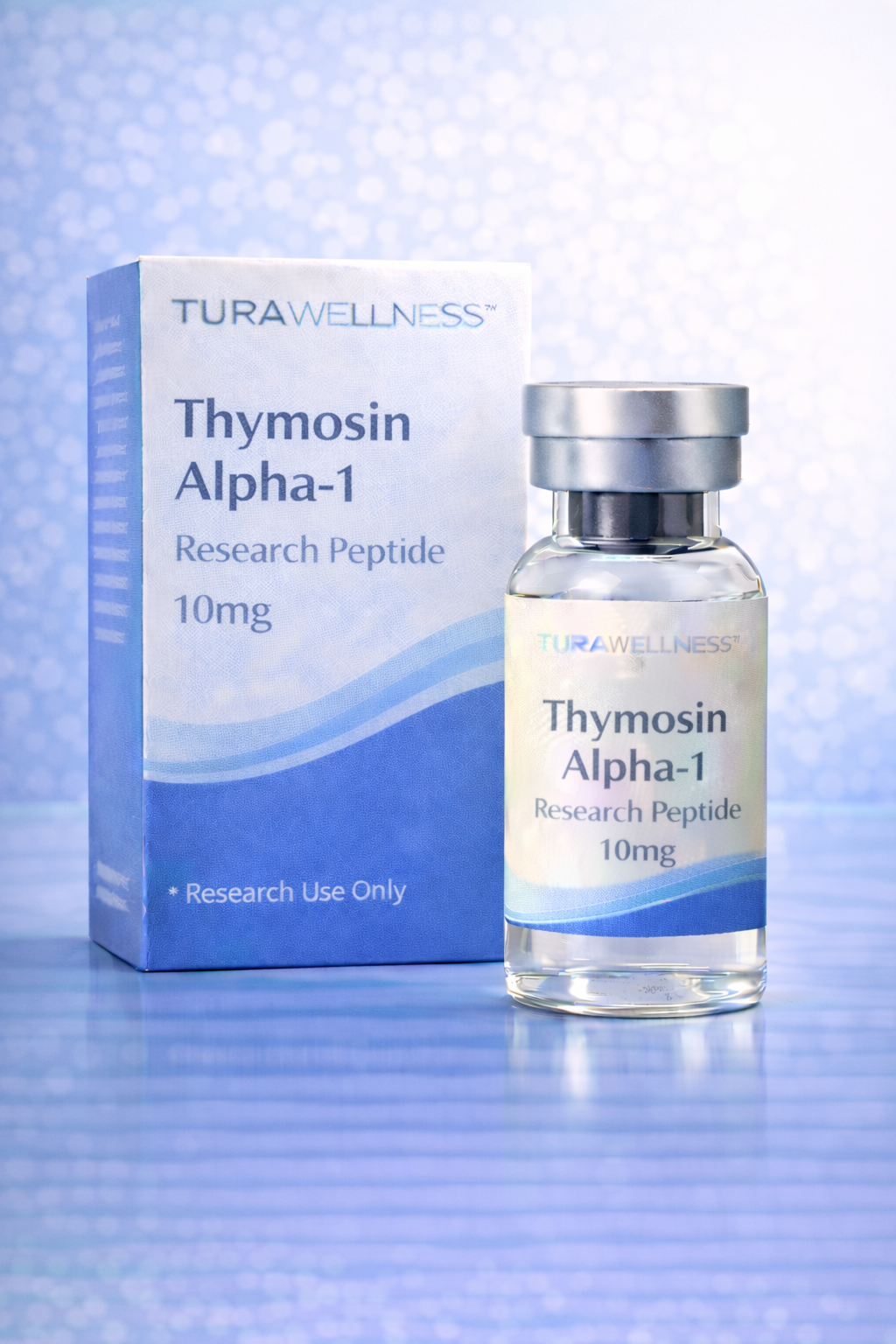
Research Grade Thymosin Alpha-1 available at turawellness.com
Disclaimer
This guide provides educational information about Thymosin Alpha-1 based on published scientific literature and clinical trial data. This is for educational purposes only and does not constitute medical advice, diagnosis, or treatment. Ta1 is not FDA approved for general use in the United States. Always consult qualified healthcare professionals before using any peptide or medication.
References
1. Tuthill C, Rios I, McBeath R. Immune Modulation with Thymosin Alpha 1 Treatment. Vitam Horm. 2016;102:151-178. https://pubmed.ncbi.nlm.nih.gov/27450734/
2. Dominari A, et al. Thymosin alpha 1: A comprehensive review of the literature. World J Virol. 2020;9(5):67-78. https://pubmed.ncbi.nlm.nih.gov/33362999/
3. Tao N, et al. Thymosin α1 and Its Role in Viral Infectious Diseases: The Mechanism and Clinical Application. Molecules. 2023;28(8):3539. https://pubmed.ncbi.nlm.nih.gov/37110771/
4. Li Y, et al. Thymosin-alpha1 increases intrahepatic NKT cells and CTLs in patients with chronic hepatitis B. Clin Exp Med. 2003;3(1):1-10. https://pubmed.ncbi.nlm.nih.gov/12479932/
5. Garaci E, et al. Thymosin alpha1 and cancer: action on immune effector and tumor target cells. Ann N Y Acad Sci. 2012;1269:26-33. https://pubmed.ncbi.nlm.nih.gov/23045967/
6. Romani L, et al. Thymosin alpha 1 activates dendritic cells for antifungal Th1 resistance through toll-like receptor signaling. Blood. 2004;103(11):4232-4239. https://pubmed.ncbi.nlm.nih.gov/14982877/